The Mediterranean diet is one of the best eating styles for women in menopause (and pretty much everyone, really). With an emphasis on heart- and overall body-healthy fresh fruits and veggies, whole grains, lean proteins, and healthy fats, the Mediterranean diet is not only good for you, it may also help tame menopause symptoms.
Conversation with Chef Sheila Gomez of the Malibu Beach Inn
In this conversation, Gennev Menopause Coach Stasi Kasianchuk talks with Chef Sheila Gomez of the Malibu Beach Inn about the nutritional value but also the gorgeous flavors, colors, smells, and textures of the foods that make up the Mediterranean plate.
You can watch a video of their conversation on YouTube.
“
“
The benefits of the Mediterranean diet
Gennev Menopause Coach Stasi Kasianchuk:
The Mediterranean diet is one of the most beneficial and healthful eating styles, especially for women in menopause. But many of us don’t really know why or how to cook and eat Mediterranean style. So I asked Chef Sheila Gomez, an expert in Mediterranean cuisine, to take me through the benefits of the Mediterranean diet, both to our palates and to our physical health.
Well, let’s just jump right in. So thank you, Sheila, so much, for taking the time to do this podcast with us. I will introduce myself. So I am Stasi Kasianchuk and I am a registered dietitian, exercise physiologist, and a menopause coach at Gennev. So to give you a little bit of background, Gennev is a women’s health company that focuses on supporting women during peri and menopause, and food and lifestyle play a really big role in this. So as a dietitian and exercise physiologist, I focus on helping women to find strategies that can best help them.
And today we’re going to talk with you about the Mediterranean diet. You are a chef, so I’d love for you to introduce yourself, tell the audience a little bit about yourself, where you work and what you do, and then we’ll get into that even more as we go through the podcast.
Sous Chef Sheila Gomez:
Right. Hi, I’m Sheila Gomez. I am a Sous Chef at the Carbon Beach Club at the Malibu Beach Inn in Malibu, California. And as a sous chef, I’m basically the support staff of the executive chef. So I’m doing little bit of everything. I’m ensuring food quality, training some kitchen staff, ordering the food. And basically my goal is just to put out the best food possible and give the diner a great dining experience.
Stasi:
Awesome. That sounds like a very important role. And a role that I’m sure keeps you pretty busy.
Sheila:
It sure does. Yeah.
Stasi:
Well, thinking about the Mediterranean diet and I took a look at some of the foods that you provide at the Carbon Beach Club. They look amazing. So if I’m ever in Malibu, I’ll definitely stop by. That looks delicious and definitely with a Mediterranean influence and focus there. From a health perspective, so as a dietitian, I recommend the Mediterranean diets looking at really fresh, colorful fruits and vegetables, whole foods, fish, especially wild caught fish that can be provided for the clients that have access to that. Lots of healthy fats. So your olive oil, avocado, olives, this can really help to women to manage symptoms around menopause, including inflammation, joint pain, it’s good for brain health. A lot of women experience brain fog during menopause and providing foods from the Mediterranean diet can help their, can help their brain health.
So those are some of the, the reasons that we recommend it. I would love to hear more on your perspective of your approach to preparing these foods, and what that experience has been for you. Maybe as you’ve worked over your time at the Carbon Beach Club or any other experience before that?
Sheila:
I think the Mediterranean diet allows us to, when it comes to food, it really allows the ingredients to shine. So that’s a great perspective when you look at the Mediterranean diet. So as a chef it’s almost easier because you don’t have to do so much to change the food. If you have quality, seasonal ingredients, the flavors are out of this world and you really don’t have to complicate it too much. So as a chef you almost have to like hold yourself back from changing it too much and you want to show it for what it really is.
Stasi:
That’s great to hear. I and I think that that’s okay. No problem. That’s one thing too, I think a lot of women that I work with, especially if they haven’t been used to preparing foods and now they’re focused more on their nutrition, they get the concern that eating healthy is going to taste bad or it’s not going to have flavor. It’s not going to have something that they’re going to look forward to eating. But based on what you said, the Mediterranean style of cooking really already has flavors and the preparation is really just emphasizing those flavors.
Sheila:
Exactly. When you grab like, you know, seasonal like squash, it tastes amazing. You really don’t have to do much. Sea salt and olive oil go a long way, which is a good key part of the Mediterranean diet: olive oil. There’s so much flavor in good olive oil and I think a lot of people shouldn’t shy away from the simplicity of the Mediterranean diet.
It’s not as boring as one would think, you know?
Stasi:
Yeah. Yeah. And I like that you mentioned not shying away from olive oil sometimes, because weight management is also a concern during menopause. Women think any type of oil and they automatically think fat, high calories. I can’t have that. Same thing with nuts. I hear that a lot. Oh, I can’t have nuts because they’re high in fat or they’re high in calories. And I love the, the point that you make around this is if thinking about food in terms of flavor, the Mediterranean diet, following a Mediterranean nutrition plan, gives you an opportunity to shift from calories and nutrients and really start thinking about flavor and enjoyment of the food, and in turn you get the benefit. So something like olive oil, well yes, from a calorie standpoint it is going to be higher because it is primarily or it is all fat and has higher calories. The benefits of that olive oil I would say supersede the concern around the core content, especially if it helps you to enjoy a meal. I would imagine that something prepared in olive oil is going to be much better than if it’s just prepared in a pan by itself. You might not be able to get it out of the pan also if you don’t use some type of oil.
Sheila:
Exactly. And you know, I encourage people to even just take a tablespoon of olive oil and see and like taste it and really know what you’re getting. And that’s what I love from a chef standpoint is that you really go into the flavors, individual flavors of all our ingredients. And I think we’ve kind of gotten away from that as a society sometimes with our prepackaged foods and our processed foods; like, have a spoon of olive oil.
Stasi:
Yeah, no, that’s such a good point. Do you have any recommendations on if someone’s looking to purchase a high quality olive oil, maybe for someone that’s, that really wants that top shelf olive oil, how they know that or middle of the road too, for someone that might, you know, be more budget conscious?
Sheila:
I think you want to just make sure it’s in the dark bottle and right compress olive oil. California makes great olive oils, which, I don’t think a lot of people know that you don’t have to get Italian olive oil or Spanish olive oil. Like we make California, we make olive oil here in California. So as long as there’s a harvest date, you can really see where they get their olives from and pay attention to where they’re sourcing it from. But otherwise, you know there’s a plethora of olive oils ranging from high price to low price. You just kind of know what to look for, whether it’s the packaging of the dark bottle and where the olives are sourced from. If you get a harvest date, that’s even more of a plus.
Stasi:
Awesome. That’s good to know. I’ll have to take it and check that out next time I buy olive oil as well. What about the tasting of something like olive oil? You mentioned, you know, just taking a spoonful. What should someone look for from a smell, taste standpoint?
Sheila:
There should definitely be a peppery aftertaste that ensures like the freshness of your olive oil. It should be a little bit bitter. There are different kinds of olive oils from different, you know, types of olives. But the freshness I think does come with that kick and that’s how you can tell.
Stasi:
Okay, excellent. Well, we’ll get some people out there tasting their olive oils to help with flavoring things. What other ingredients would you say are your go-tos when it comes to flavoring foods simply? You mentioned salt, pepper, olive oil, anything else that stands out to you?
Sheila
Onions and garlic are probably my top two. They can make anything taste so much better. I think they’re really underrated. You know, onions and garlic. Citrus is great. Whether it’s oranges or lemons, that always adds a wonderful element to any dish you’re making, adding some acidity. And vinegars as well. I think that, I think really just those basic ingredients will give you a rounded taste in any dish you’re doing.
Stasi:
Yeah, that’s a good point. It sounds like there’s, you know, there’s a, there’s a fat component with the olive oil and you’re getting some of the acidity balance with the vinegar or citrus and then really some of those, aromatic flavors of garlic and onions.
Sheila:
Oh, fresh herbs as well, any fresh herbs. Rosemary, oregano, mint, like there’s so many. Grab anything and try it. Cilantro, they all taste different, but they all taste wonderful.
Stasi:
Excellent. Yeah. Simple things that can make a big difference. And just to put the dietitian plug in here, all of the things you mentioned have so many nutrients and this is a great way I think thinking about the flavor aspect that you talked about. So again, changing that perspective of preparing a meal based on flavor or preparing a meal based on simplicity. And then in turn you’re adding, you get the benefit of the nutrients of all these things. So you mentioned the citrus that’s going to be a vitamin C, which is definitely an anti-inflammatory component as well. And then even some of the garlic and onions, great for the fiber components of garlic and onions, great for digestion. And then they also provide, plant chemicals, phytochemicals that can help with detoxification. So here you are preparing a flavorful meal and supporting your body at the same time. So this is great to hear.
Sheila:
I really think people forget that herbs, you know, are plants and provide nutrition.
Stasi:
Yes, I completely agree. I don’t know that we think of when you’re adding herbs to something or to add herbs, you are providing additional benefits. And they certainly lots of anti-inflammatory benefits and all the herbs that you mentioned. And in small amounts, you don’t need to have a whole bunch of cilantro on one plate to get the benefits. You can use them to add flavor without, uh, having this pile of cilantro on it unless you want it. I mean some people are cilantro fans.
Sheila:
That’s true. Yeah.
Stasi:
Well, let’s talk, you’ve mentioned a lot of these ingredients. I’d love to hear what’s some of your tips are in terms of preparing foods or even some really easy recipes to do. And what comes to mind when you, you talked a lot about just trying things and I love, it sounds like you’re really encouraging people. Just get into the kitchen, put some ingredients together and don’t be scared. Yeah.
Sheila:
See if you like it.
Stasi:
Worst case scenario, it goes in the compost, but that’s okay. but hopefully someone in the family likes it. So what have you experimented with? Maybe share, you know, obviously you have a background in, in food and culinary preparation, but things that are almost fail-proof if someone were to just throw things together and try to experiment.
Sheila:
I think if you start with a lean protein or a piece of good salmon, you have your base there. And again, it doesn’t have to be the main star of your meal, but you know, if you would like some protein, start with that and then start with a good base, whether it’s like a baked sweet potato or a cup of cooked whole grains: farro, bulger, couscous. There’s so many different grains you can start with: brown rice. So you have the protein and your grains as a base and just roast some vegetables, whether it’s squash or even more onions. cipollini onions, asparagus, have your roasted vegetables. And then, I dunno, dress it up with a little Greek yogurt with some garlic and parsley. I think it’s a great, you know, well-rounded meal. And it didn’t require a lot. You just had to cook some fish, cook some grains, roast some vegetables, and then just, you know, add some pizazz with some Greek yogurt.
Stasi:
Well, and that’s a great point too, of things that are already prepared. You don’t have to make the Greek yogurt, you know, it’s already something that you can just add. I’m again going to add more protein from the Greek yogurt. You’re going to get the benefits of the calcium, vitamin D, magnesium, a lot of nutrients packed onto that plate. And I’m envisioning this plate as well and I see just a lot of color on there. Would you say that the majority of your plates are colorful that you prepare?
Sheila:
Yeah, I mean with any vegetable you’re already adding a spectrum of colors. And then that’s usually what speaks to me. Like just throwing on a handful of herbs. Such vibrant things, you know, that you want to eat it and then you finish it off with some bright green, peppery olive oil. You’ve really got a complete meal without really trying hard. It’s really just nature’s like a table and you’re just putting it together.
Yeah, that’s what it kind of gets me excited about cooking. Like there’s so many ingredients and you can put in whatever that you feel like having as long as it’s fresh and it’s whole, wholesome. Yeah, the possibilities are endless really.
Stasi:
Yeah. The simplicity of whole food ingredients, thinking about color on your plate. And I liked the point you make too about making a plate look good. You know, when a plate looks good, I would say we all want to eat that food versus if you look down at a plate that’s just kind of blah, maybe all the same color doesn’t have, that pizazz that you talked about. So simply adding just a handful of herbs, you know, and drizzling that olive oil can really make it, you know. It’s Instagram picturesque without too much effort. It doesn’t have to be flawless.
Sheila:
Don’t give away the secret!
Stasi:
You know, but if, if everyone sat down to a meal that way or thought about your plates. You know, how much, how much nature is on your plate when you look at it is a great approach. And then also what can you do to add flavor, adding more of those herbs? Thinking about the garlic and onions as basics. I mean we’re not talking a lot of ingredients or a lot of time to prepare.
Sheila:
Yeah. Even a slice of lemon, like they can elevate anything, you know, it’s just, I feel like we’ve gotten away from a lot of just normal things that have been in front of us this whole time. You know, you don’t need the ketchup. Grab the lemon!
Stasi:
Exactly. Yes. Yeah, for sure. So that’s definitely more whole food and fresh versus ketchup that can last in your refrigerator for another couple years.
Sheila:
Lemons: Nature’s ketchup.
Stasi:
You coined it here first. Yeah. And way more anti-inflammatory properties in the lemon that you’re probably going to find in the ketchup.
Sheila:
Cheaper as well.
Stasi:
Yes, exactly.
Gennev:
You can now manage your menopause with Gennev. We’ve helped thousands of women take control of their health with our team of doctors, coaches and products. Join our membership program called HealthFix and work with one of our menopause coaches on your personalized menopause plan. Learn more at Gennev.com.
Stasi:
Well, one thing that comes through, I do have some clients who are vegetarian and you did mention, you know, salmon as a protein source. What would you recommend as your plant based protein source that’s go tos that fall into this style of eating?
Sheila:
I think beans and legumes are pretty amazing. You know, chickpeas, I love chickpeas and I’m a big fan of peanut butter as well. I know. Yeah, I know the jury can be out on peanut butter, but I’m a fan of peanut butter. Really nuts and quinoa’s a great one also, but there’s a lot of”¦ Tofu is great. But you know, I’m a meat eater so it’s kind of hard for me to be like, Oh I eat this also.
Stasi:
Hey, I appreciate your honesty. But you mentioned some great ones there that are going to again pack a lot of nutrients. Fiber is going to be a really great benefit of some of those plant-based fruit proteins like the chickpeas, the legumes. So another benefit there for digestion and overall gut health. And the other, I like how you also pointed out quinoa. I think a lot of people forget that quinoa is a higher protein grain and certainly can contribute to protein needs while also being a complex carbohydrate. And again, more fiber, vitamins, and minerals in that as well. Yes. Good reminders there, how to, how to incorporate things. And I think like you said, you, you can still have those even as someone that eats more meat; there’s ways to incorporate those as well.
Sheila:
Yeah. And I find that I discovered stir frying quinoa is an amazing way of just getting a quick meal and throwing in your veggies and getting your full serving of vegetables, you know?
Stasi:
Absolutely. And do you cook the quinoa first or do you just cook it in the stir fry?
Sheila:
I try. I cook the quinoa first. I’m a big fan of like preparing, uh, you know, a good amount of greens, whether it’s rice or quinoa or farro. I just like to have that on the side and it’s ready to go whenever you need a quick meal.
Stasi:
Yeah, no, that’s a good point. And so do you prepare that beforehand and then you can add it in in different ways?
Sheila:
Yeah, that’s what we usually do cause we even when feeding our staff and such, we’ll just have a good amount of, you know, precooked grains and we just toss that together with some kind of salad or we’ll make some protein into it and it’s very versatile. And I imagine that would work at the home scape as well.
Stasi:
Yeah, absolutely. And that’s a good point too from the convenience standpoint and because you can prepare those grains, you know, one day, maybe it’s on a Sunday, you prepare a large batch and then you can incorporate it into various meals throughout the week. So a little bit of meal prep. Some clients I work with love the meal prep option and they’ll prepare their meals for the week. Other people are like, please don’t tell me to prepare my meals for Monday through Friday. I don’t even know if I can get through Monday. So, so, but having that balance of here’s a simple step, just choose one thing, choose maybe one week, it’s quinoa, the next week it’s brown rice. Make a double or triple batch depending on how many people you’re cooking for. Have that in the fridge and then you can reheat it so you can add it to that stir fry. Another great option to get brightly colored vegetables there. You could add it to a salad and make kind of like a grain bowl is what comes to mind for me. Or you can just have it on the side with another lean protein and more vegetables.
Sheila:
You know what I found is also very good, versatile for whether sweet or savory: oatmeal, like steel cut oats. I don’t think a lot of people think about the savory side of oatmeal. Like you could heat some oatmeal up with some vegetable stock. And just have some roast veggies. And again, another lean piece of fish or you know, no fish or no meat, oatmeal and roasted vegetables actually are a very good thing. We kind of forget that cause we’re just thinking of our, you know, oatmeal, brown sugar and pecans.
Stasi:
Exactly. No, I love, I’ve seen more recipes for the savory oatmeal and it’s interesting, I was actually looking at some yesterday thinking I need to try that. I have not tried a savory oatmeal. But some of them just look so satisfying where you do have, like you said, I love the idea of a vegetable broth or even you know, chicken broth or beef broth that’s going to provide more depth and flavor. I think we get confined by rules of breakfast has to be sweet, you know, lunch and dinner are savory. Break the rules. We’re telling people to break the rules.
Sheila:
Savory yogurt and savory oatmeal.
Stasi:
Stepping outside the box of which, finding those flavors is another way to decrease sugar intake. Which you know, as a population we know that that continues to increase. And there’s places for sugar. You know, I think it will be with clients that are trying to find a balance there, there’s a lot of people want to decrease their amount of sugar and that’s a great way to do it though, is by focusing more on those savory flavors. It doesn’t mean you have to take out flavor altogether, but let’s swap them. And that, and decreasing sugar for women during menopause can really help to better manage hot flashes and joint pain. It, you can even help improve sleep and also moodiness, and dealing with mood changes. So great benefit there and still be able to have some enjoyment of experimenting with something else.
Sheila:
And I think people need to just remember like when they’re cooking for themselves and making meals for themselves, they’re taking control of their sugar intake. You know, cause going out for a salad that you think is just a salad can contain a lot of sugar without, because you haven’t prepared it, you don’t know what we’re adding in the restaurant, I can be adding, you know, two cups of sugar to your salad. You don’t know that. So when people take the time and prepare food for themselves, they really are taking a big step in taking control of their health.
Stasi:
Absolutely. Yeah. And I think that’s a good point too, of food preparation is an opportunity to take control. During menopause, there’s a lot of things out of your control, but focusing on those things that you can control can be a really great benefit from a health standpoint and also from a psychological standpoint where there is that, you know, this is something I can do right now and I’m going to focus on that. Whether it’s for just yourself or even for your family.
Sheila:
Yeah. Take the power back.
Stasi:
Exactly. Your hormones, your hormones may be out of control, but you could still prepare a meal simply.
Sheila:
Yeah. Don’t blame the hormones.
Stasi:
Exactly. They, they, uh, they can’t, the hormones are not going to dictate whether you’re making a meal or not. You can still do that. Based off of your experience, and do you have any resources that you would recommend, whether it’s someone that’s just starting to get into cooking this way, whether it’s a book or website, or just tips for when you’re looking for ingredients like this that could help someone get started?
Sheila:
I mean, the Internet is really everyone’s best friend. I don’t know, specific sites, but even just when we were talking about the Mediterranean diet, I just put, put those two words in and the results were endless, you know? But actually I also encourage people going to the library and just looking at the cookbooks that they have there. You don’t have to spend money on a cookbook, but you can visibly see the beautiful pictures of vegetarian cookbooks or Mediterranean cookbooks. There’s so many resources out there. But I’m a fan of the Internet and also the public library and having a physical book that you can hold and that provides so much inspiration.
Stasi:
Yeah. Well, and it aligns with what your recommendations are in terms of preparing a Mediterranean style food. Keep it simple. Just do stick to a simple Google search, see what comes up, get some inspiration of ideas to try or go to your local library where you can check out various books and see the pictures, which I think the pictures, like we talked about, just the color of really getting an idea of like this is what simple cooking can look like and what your plate can look like and, and not being, not having to worry that it needs to take a lot of time or that needs to take a lot of energy, but just being able to visualize that and go for color.
Sheila:
Yeah. I’m also a fan of people trusting themselves. Like I think people are very much like, Oh, I don’t cook. I don’t know. It’s like, but you know, everyone knows what they want to eat, what makes them feel good and it’s this trusting yourself again to make good decisions and you know. You’re not going to poison yourself with your cooking, I promise.
Stasi:
Yes, exactly. And if the first bite, it doesn’t taste that good, then maybe you know, try again tomorrow.
Sheila:
Exactly. It’s just one meal. That’s what I also tell myself. Like when the pressure is like, hitting you hard about cooking this dish. It’s just one meal. Chances are you’re going to eat again and it’s going to be better. And you won’t make the same mistake that you did “ if you made a mistake.
Stasi:
Yeah, exactly. Sometimes mistakes could maybe turn into the best secret ingredients.
Sheila:
Genius! Half of cooking was a mistake.
Stasi:
Yeah, exactly.
Sheila:
But we’re not here to talk about that.
Stasi:
Well, I do think that might be a good, no, maybe not chocolate chip cookies, but what about”¦ we talked about savory, there’s a lot of savory and flavor in Mediterranean style foods, but what about dessert? Do you prepare those in your work? Are there more Mediterranean style desserts that come to mind?
Sheila:
Mediterranean style desserts. I mean, I really think the Mediterranean style desserts focus on fresh fruit. Some honey, maybe, perhaps a little, you know, a little cheese. That’s what I find too. You know, and honestly, those are great together. Nuts and honey and a little, again, yogurt. It’s a great dessert. Fresh fruit with some honey also. Delicious. Yeah. And you know, panna cotta is not super Mediterranean but you know, in that, in the essence of this like a little dairy and also highlighted with fresh fruit. It’s delicious. But again, it’s back to keeping it simple as far as dessert.
Stasi:
Yeah. And I think that’s a great way too to be able to, like you said, the fruit, you get a little bit of sweetness, add a little bit of honey, but you’re in control of how much honey you add. If you want a little bit more and then balance it with maybe a couple of slices of cheese. So you have also some of that savory or, or the yogurt where you’re going to get some sweet and then also a lot of nutrients. And that’s what I find that women do experience as their hormones are fluctuating, sugar cravings. I mean buttons, you know, often if they suppress those and say, I’m going off all sugar, I’m not having any sugar at all, then it comes back with roaring vengeance of yes, you will have sugar. And then all of a sudden it’s like mindlessly to the store for the ice cream. Exactly. Yeah. So having something, preparing ahead of time, having fresh fruit available, a little bit of honey, little bit of yogurt. Cheese can be a great way to counter that.
Sheila:
Or you can bake. If you want things more cooked, like bake the whole apple, bake the whole pear and then sprinkle some, no, maybe a little brown sugar. I think you’ll be all right.
Stasi:
Yeah. Yeah. Great. That’s amazing that when you add heat to fruit, tht how it can bring some of those flavors together or concentrate some of the natural sugars in there.
Sheila:
Yeah. I think it allows, the Mediterranean diet allows you to be more creative because you know, it’s not confining you. I think you’re just trying to find new ways to enjoy foods that are really good for you.
Stasi:
Yeah, exactly that creativity. Well, I like the all of these points that you had. I think, you know, the takeaways that I have are: keep things simple, you know, try fresh ingredients, herbs add a lot of flavor. Onions and garlic add a lot of flavor, find your favorite olive oil. And then also don’t be afraid to get into the kitchen and just experiment, look at your plates. It should be a plate from nature, the majority of it. And really start thinking about flavors as opposed to calories and nutrients. Using a different lens to look through and building meals can provide a lot of nutrients and enjoyment around the food which is also really important. Yeah. Any other take home points that you have at this point or, uh, information you want to provide about the Carbon Beach Club? Anything as we finish up here?
Sheilaa;
Really not so much, but you know, I think everyone should just remember it doesn’t take that much time to cook yourself a good meal, whether it’s a salad or soup like it “¦ Though some of these things can take as little as 10 minutes. You know, you just gotta want to do it and you know, take a chance, throw it in the pot “ what’s the worst that can happen?
Stasi:
Exactly. Consider it an adventure and an activity for the day. A learning experience.
Sheila:
Yeah. And it’s a great connection with yourself when you’re preparing your own food. You know, you don’t need a chef like me to do it for you. You can do it. No one knows your body better than you and you know, why not feed yourself at times.
Stasi:
Absolutely. Yeah. Great. A great message there, just in terms of the overall connection into what your body needs and listening to that and then experimenting with actually making the food for it. Well, Sheila, thank you so much for your time and information. We appreciate this and really enjoy having this conversation with you.
Sheila:
Oh, I had a great time. Thank you so much.
Stasi:
Thank you.
Gennev:
Thank you for listening to this episode of the Gennev podcast. Remember, you can subscribe on iTunes, Google Play, Spotify, and just about anywhere you get your podcasts. Gennev’s your online destination for menopause doctors, coaches, products, and education. You can find us at Gennev.com. Thank
During the COVID 19 quarantine, many are looking for ways to maintain social and community connection.
Menopause can also be isolating, as women choose to stay home rather than face the possible embarrassment of a hot flash, flooding period, or other disruptive, hard-to-hide menopause symptom.
At Gennev, we don’t believe menopause symptoms should be considered embarrassing, ever. We also know that loneliness can be unhealthy.
So we invited psychiatrist Dr. Swapna Vaidya to talk with Gennev’s Director of Health Coaching, Stasi Kasianchuk, about ways we can stay connected “ through menopause, and through a pandemic.
Watch the video of this conversation on the Gennev YouTube channel, and don’t forget to subscribe!
“
“
Even as we slowly emerge, many are choosing to continue isolating to protect themselves or vulnerable family members. How are you dealing with the isolation? Have you found ways to connect with others that are getting you through? Or are you concerned you may be too isolated? Find connection with the Gennev Community and learn ways to rejoin the world at the pace that feels right to you.
Stasi Kasianchuk, Gennev Health Coach
Dr. Swapna Vaidya, Psychiatrist
Stasi
All right, so welcome everyone to our wealth weekly wellness webinar. Great to have you all here. Excited today to welcome back. I think our most popular guest right now who has is now on her third return, Swapna Vaidya and she is a psychiatrist and she is going to introduce herself and give a little bit more on her background. But today we are going to be talking about this idea around community, what that means right now during this pandemic and what it can, what we can do to use community to support us and how that might look as things start to transition as things are opening up and we’re looking at what this new beginning is going to be. All right. Swapna hello!
Swapna
Hi. Wow Stacy, that was quite an introduction. I’m honored. You know that you guys keep inviting me because I feel like I learned so much from each of you and I have a confession. I have signed up for your webinars, all of your webinars. I have been listening and learning so much. So, I really appreciate this website and this initiative that you know, Jill has created. It’s such a great support system for women. So, you know, very good question Stacy. As we were talking about the community and the essence of it, you know, as we are approaching more or less the six week or the seventh week of this pandemic and I mean I’ve lost count to be honest with you, easy to do, right? I mean it’s becoming so diverse; it’s becoming such a challenging issue as to how do we now pivot and what is this new normal to think about. And then as I communicate with other physician colleagues or I communicate with friends, we’re not on the front lines for each of them. It’s a different new normal and it’s a different experience. So, when I talk about what we should do, I think I would like to tailor it to individual approaches or family-based approaches rather than one size fits all.
There have been a lot of physicians who have been traumatized by this. They see the worst of the worst and it is true and we don’t know how this wider still acting and ravaging the human body. And I feel like my frontline physician folks, they are suffering from some amount of acute stress disorder and PTSD volunteer for the line which is in support line. And I feel privileged and honored that I can at least lend my support in that direction.
But hearing the stories are pretty daunting. But on the other hand, then we have different States which have seen different levels of cases. And now the question of economy opening that up as well as going back to some modality of routine is coming. And you know, when you see these different Facebook sites or support systems, there are all these diversifying views and I often find that people tend to judge not necessarily consciously but in an unconscious way because we are trying to portray what is it exactly that we would want to do. What I tried to say before is that one size won’t fit all. True. It’s so important to understand and have a talk with your family, you know, your unit members and see, Hey, where are we with our comfort level? What do we like to do? Do we like to socially distant walk or do you think that I can have a play date? You know, and kind of like with some families that I can trust. Right? You know, one of the women on Facebook, she said something to the effect of, don’t judge me. You know, I’m just, I have to send my kids to daycare and whatnot. And I just had to tell her there are no judgments here. You know what they’re, are, they’re difficult choices, difficult choices.
And I think all we can do is to be compassionate towards each other. Not beat each other down. Because what might be the situation for one family might not be the same for others. You know, some families might have caregivers, they may maybe lucky to have nannies, some just don’t have that option. Or do we do and how do we keep us safe with whatever knowledge that we have and filing. Follow the CDC guidelines of masking and hand washing and keeping ourselves socially distant as much as possible. It’s so important.
Stasi
That’s a great point. And there’s a lot of you illustrate that there’s a lot of moving parts and there’s a lot of layers and each person is experiencing their own, their own experience, their own pandemic and everyone can be having a different, a different experience around that swap. Now when we think about community generally speaking, related to mental health, what role, well I guess first the question is what is community so we can get everyone kind of on the same page with that from your perspective and then what role, the follow-up is, what role does that play in mental health?
Swapna
You know, we’ll bait questions and such an important, timely questions. You know, for me community is basic humanity. It’s literally the fact that we are all human beings. We are going through this unique experience, unprecedented experience and we are all in sort of these unchartered waters is really knowing what to do. But we are chaotic. We are anxious, we are getting restless, we are getting anxious. What we could do is to reach out to each other, you know, the human chain. That’s the most important chain here. I mean, for the sake of the widest, we should socially distance, right? But then on the other hand, paradoxically for emotional connection, it’s so important and in a way we are blessed. Like we do have technology, we have platforms that virtually connect. It might not be the same and I do agree that it’s, you know, you may miss the human touch, you miss seeing that person in front of you.
But these, there are some alternatives that you can reach out to. And community is exactly that. You define your community and you’ll find those people and make, make them your tribe. Community is tribe and what does tribe do? Support you.
Stasi
Yeah. That support and that support is key, especially during uncertain times. People, we need that support and balance. And what role, I mean, you touched a little bit on this, but, from your perspective and your training and background, what, how does community connect to supporting mental health and provide support? But what is, what is happening there in that connection?
Swapna
So, you know, I”ll tell you tell from our practice, I practice at a non-profit Hospital I am the medical director there. And what I see there is that we actually are very blessed that we work within public health.
The King County public health initiative has been extremely helpful, extremely forthcoming with the resources that they have provided for our patients. Whether it is shelters some of our less fortunate patients who don’t have a home to shelter in or a home to isolate and quarantine in. They have all been up to outreach, you know, so there are teams of outreach which are homeless outreach teams, which actually go to patients” places and see if they have enough medications and have enough food. And so I think that I have really found through this experience just such caring communities out there when it comes to outpatient mental health treatment, we actively corroborate and collaborate with them to make sure that our patients who have suffered a, a crisis within our inpatient systems are now getting the proper continuity of care that is community.
We want to make sure they have enough medications, they have enough resources, they have enough you know, a place to kind of quarantine if they need to or to isolate. And it”s, it’s so important to even ask this question, “what is it that I can do?” you know, what is it that you need? Because you need that. You may have Stacy so much more different from the need of somebody who was in acute crisis. Yeah, yeah. As a community, having an empathic listening point of view and providing the supports as much as you can, partnering with all these great resources and initiatives. You know, a hospital, a health system has a lot of initiatives and a lot of resources. As I said, that they have partnered with the public health and have helped tremendously within this crisis system.
Stasi
Yeah, no, that’s a good point too.
The, again, going back to those layers and community, providing that support and looking at how it is a collective effort, there isn’t one single healthcare provider probably in your system that could go out and do all of this. It’s a collective effort to support greater, greater people and really for that greater good and bringing people together is really powerful and can also help you know, they, that giving effort as a community can help other individuals feel like they’re doing something. They’re acting and they’re, serving in a way that can support their own mental health. Perhaps, it’s a two-way street.
Swapna
You know, you actually touched upon some very crucial points. So, it’s about your defense mechanisms. What you talked about was altruism. That’s such a mature defense mechanism that how can you help your community during these very trying times? You know, if your channel, your anxiety or your channel, the way you’re coping towards such a way that can also help your fellow human beings, that’s such a beautiful thing that happened even in this crisis.
Stasi
Yeah. Some of the goods, the silver linings and focusing on what you can control versus when it’s so easy to look at things that are out of your control, channeling that energy to the one thing or two or three things that you can do within your control is, is really powerful. It is.
Swapna
And you know, it doesn’t have to be such a huge initiative where you don’t have to overburden yourself but also find something that you connect with. Would be the way you share. Even if you share your experience. That’s what we are sharing with your community.
Stasi
Like fun and we had I don’t know if you saw, but on our Tuesday webinar, we actually featured a group of, of women who had come together to be able to support community with food. And then in turn we’re supporting restaurants and it’s kinda, it’s snowballing.
People are catching on and they want to give, and they want to do something so doing little things like that, it doesn’t have to be that big project. It could certainly even be something small. But there is that act of kindness, that act of doing something for just the fact that it’s the right thing to do really has some, some power right now in what we’re seeing and what we’re experiencing.
Swapna
Yeah, I was actually inspired, you know, I did listen to that talk and I was very inspired by what these women are achieved and you know, how that sort of like brought these women together for this common initiative and common good and kind of like, you know, translated into then a cascading effect of, you know, becoming more and more of it because kindness pays off. Right. You can kind of like see that and, and, and embrace that very positive and caring side of humanity that I think this pandemic has definitely showed us.
Stasi
Yeah, absolutely. Good to look on the positive side of things. Well related to that, what, and you’ve touched on a little bit this as well, but I want to bring it cause we are as Gennev looks to support women, especially during menopause, but how does community during this time, why is it important and why is it especially important for women?
Swapna
You know and again I think we are sort of gonna see the same thing. It’s the gender issue. It’s all of that. But honestly, I think they did some study which was a very small study that they found out. They surveyed a few women during this pandemic, and they found out how many hours they were putting in at work and work was everything. Right? Work doesn”t have to be just that they were working from home, but also the other things which could include taking care of your kids to get homework done. And you know, there was a significant difference in the amount of time the husband’s put in.
And then the question became why is that, right?
I mean, so yes, there is this traditional sort of ingrained way of how women have been culturally brought up or taught that we are the naturals, we are the caregivers. But this is not the normal natural time. These are unprecedented times, right? Men continue to sort of say that, okay, I’m going to take as much as I can. They may risk becoming overstressed and overburden. Well, I feel very important for men and women both, and I’m not going to just sort of like really actually, make it about gender. I’m just going to make it about partnership. Whoever’s in your household right now just bought and divide the chores or say, okay, listen, if I do the dishes, can you do this or anything like that or try to do something for each other. I don’t feel you’re the one carrying the brunt of this family.
Stasi
Yeah no, it’s interesting. And as I’ve been talking with my clients this week, especially as you said at the beginning where week seven, six, we’re not really sure, but it’s been going on long enough that we can’t really remember when it started. And as women just do, they go, they get the job done. They are, if they’re working, they’re still working, they’re taking care of their kids, their family, whatever their responsibilities are. And it’s easy to just go, go, go until all of a sudden something’s, something’s not right or something’s not feeling good. And I would say that’s, I’ve seen that in a lot of clients over the past couple of weeks where they’re realizing, Hey, something’s up. And some of them have realized they’re tired, they’re more fatigued, there’s not as many boundaries. So there’s not even the time in your car from work to home to decompress you, you leave your office and walk into the kitchen and start making dinner. , so these things that we take for granted of being able to take a breath, being able to take a step back isn’t there as much or what example, I had a client this week realized she hadn’t taken a vacation. They couldn’t go on spring break. And that was usually a time that they would rejuvenate. And then she realized, I just kept working and now I haven’t had a vacation. I haven’t had any days off. It feels weird to take a day off and stay home. Right? What is the deal?
Swapna
One of my patients told me, it’s like the Groundhog Day, right? You wake up the same day, you live it now you don’t know which month you’re in. I mean, almost the end of May. So, it’s just a, we all are sort of experiencing this unchartered way of a time. the whole concept of it has changed. We don’t know where we are right now. where are we going? Where are we coming from? You know, women really need to know that the fact is that they will and should ask for help. , and I feel like the husbands has stepping up and the partners are stepping up or you know their friends are stepping up because everybody has recognized that we really don’t know how long this is going to happen. Yeah. It can be coming the state’s opening too soon. You know, those other questions are still there. And again, those are the uncertainties that we have to now make it as if they are a part of our existence. Exactly.
Yeah. And that’s a you talked about the partnership and certainly household it was a community, whether it’s two people, six people, whatever, whoever’s in the household. , what about other aspects of community do you, for women, do you see that what other areas do you see might be beneficial for women to bring community to support them right now?
You know, I mean one of them is this platform, Jenny. I honestly feel like I’m being a problem. I’m not biased. I’m really finding out and you know, listening to the webinars, I’m telling you that there was so much that I learned. I feel like connecting to something that really gives you the sense of identity but make it something positive. Right? Like for me, I’ve connected with a lot of my school friends that I’ve known since I was five years old. I’m not going to tell you my age, but, and we are really talking about some things that we done when we were 10 or 11 and ones that are coming out of it. I mean they’re mind blowing like layers and connecting to that depth of who we will. That is a community. It could be your colleagues at work. I think one of my friends was saying they have a happier sort of like a virtual happy hour, you know, it’s kind of like an interesting game they play, it’s a word game and they divide teams and the teams virtual and it all sounded very complicated she works in Amazon, maybe one day we will get there.
But so, this is how the tech companies are reaching out and doing things. And then, it could be you know, your family, your family group, right, that you have probably not been in touch with for many times. Your cousin reunion. So many simple ways of doing it. For me, I’m also very much involved on the Facebook physician group, physician moms, and you know, I honestly get so much information and support from these women who are going through the same thing that I’m going through and balancing their careers and balancing this new normal. So whichever way you find yourself connecting in a positive way, that’s the key thing. Don’t get involved in some negative cycles that don’t get in these kinds of like Twitter Wars or Facebook Wars. You know, that’s not the point of this. We have social media, let’s utilize it to nurture our souls not go down.
Stasi
That’s such a good point. And I like how you covered a lot of different avenues for community. So, there’s community, through social media, that’s definitely option. And if you can find a Facebook group that you have common interests, perhaps it’s a mix of people you know, and people you don’t know. So, there’s that balance. It could be a community like Gennev, I love that example. We are a community and we’re welcoming all women in. and we want to be able to provide that support and that collective, especially with menopause as our focus, this menopause, adding menopause to a pandemic. I’ve been telling clients that they, they’re going to get an award if you went through menopause, if you’re going through menopause during this pandemic, you deserve an award because there’s just like some, some type of T shirt that says, I, I’m in menopause in a pandemic or I went through menopause and a pandemic because it is, it adds another layer to things. But being able to know you’re not alone, what you’re going through is a normal process and that is part of, part of the process. But you can ask for help. And again, giving that permission and help might just be a listening ear help might be what are some resources that I can use right now so that’s a great point. I love that. Obvious. I, I am biased, but as with you as well, I’m 100% fan of Gennev and what they’re doing. I wouldn’t work for a company if I didn’t believe in it. So, definitely a shout out to Gennev right there.
Swapna
Definitely. And you know, like as, as, as a woman myself going through changes, I have to say that it has helped me tremendously to understand what resources there are. I could do what could fit me my sort of like, you know, lifestyle and I especially love the Michelle Obama. Yes. I just loved that there was this way of kind of connecting in this way of emailing me or anyone else who’s going through this pandemic and make that I am not able to go towards my regular resources. I’m not able to go and have my, you know, Oh, let’s have a girl’s night or anything like that. We used to take those things for granted. Remember, I mean, remember the time when I go, yeah, that’s not happening, but it can’t happen virtually. It can Happen in a way that through community such as these I’ve been through, you know, blogs, it can happen through exchange of ideas and thoughts. I think through this, I mean, again, I know that this, these are challenging times, but I mean, I don’t know, maybe I am an optimist, which is kind, I kind of, you know, I think I have one, but I want to be a realist a bit, but I really want to say that I think through this that are opportunities to discover yourself, you know, to reinvent yourself and to pivot and see what else is out there. What else about yourself that you haven’t discovered to kind of sit and think and pause and see, you know?
Stasi
Yeah, absolutely. No, that’s a great point too of just how can you use this time to your advantage, this a time that we’ve never had before and I don’t think many people are going to want it to repeat, whether it does in different renditions, time will tell but how can you use it to your advantage? And that’s another conversation I’ve been having and, and maybe not the new normal, you know, sometimes thinking about we don’t know what normal is anymore. So, I’ve been using the concept of a new beginning. This is your opportunity to start something new and to take with you from this time what you want to take with it and what do you want to leave behind and start thinking that through.
Swapna
And I hear what you’re saying, Stasi.
Stasi
Thank you. You know, the sudden there’s something about the normal thing that I might, I don’t know how to define normal anymore. So, let’s think of a new word. but what I hear you’re saying too is just the part of what can support us in this new beginning is finding ways that we aren’t remaining isolated. Isolation is may not serve us long-term and while we have to do this physical isolation, how can we maintain socially connected and the community, whether it be family, friends, or , online platform, of colleagues or people you don’t even know has benefits to helping to start that new beginning.
Swapna
Absolutely. You know, I think that we can just really cannot I mean we have to sort of understand how community is the only thing that’s going to get us through this because this is a shared experience, you know, and the thing that can also help us out, you know, as we feel this anxiety or we feel like we’re getting depressed or you’re getting this instead of putting these labels, you know, I really feel cause that it’s important to understand what the context of these labels are, not alone. So, outreach and ask your friend, Hey, how you doing it? What’s happening with your kid? You know what I mean? Like it doesn’t seem to listen to me. Mommy fail mommy. So, I mean, and then I forgive myself and I say, hey look, he had no time yet. He’s having a stressful time. You know, I know screen time is a bit much more in my house and I used to allow, but there are ways that he’s coping too. I mean, what can I offer in that situation? And then we exchange ideas and then somebody will say, hey listen, have you thought about downloading this particular app? You know, my kids seems to like it. That’s the idea right there. So, we are learning from each other on so many levels. What happens that helps my kid. But most of the time it doesn’t. I try my hardest and best to kind of get him into interested and invested in different things. But that’s the community. This is what I’m talking about. A community that builds you up a that enhances you, that knows your soul, that makes you feel warm and fuzzy, you know, that is what you want to actually strive towards.
Stasi
Yes, exactly. That. I like how you use that term nurturing right now. I think we can all use a little nurturing, because there’s, there’s a drain on us and whether we realize it or not, what I notice and myself included, it’s like you’re just going along doing things and thankful for, to be healthy during this time. So, we think we see all this sickness and if we’re healthy, we think we should be okay. And when the reality is, like you mentioned, everybody’s situation is different and there may be times where I may be okay, I’m not in a hospital, but there are other areas where okay, I could use a little nurturing because it hasn’t happened.
Swapna
No, I mean, and speak of communities. So, I think I was telling you about, so I have a medical school friends on WhatsApp and one of my medical school friend’s daughter I mean, I think she’s wise beyond her years she actually writes a blog and I was, I just, I told her I’m going to use this, but she writes, and she talks about this concept, it’s a Danish concept. It’s from Denmark. It’s called hygge, H Y G G E but it’s pronounced Hooga. And I was like, what is that what does that mean, what is that? And she says it’s a mindset. It’s a mindset that makes you feel connected to what you’re going through. And it could be drinking a nice chocolate like that. I like a hot chocolate, she said, or just, you know, just being still in my mind or maybe painting, maybe not even doing anything, but that’s hygge.
So, try to find what is your inner hygge, you know, and it doesn’t have to be a comparative anything. It just has to resonate with you. She said it. No wonder she’s like, well look, people in Denmark and then they go through these very harsh winters and the happiness quotient of the index is not that bad there. So, I am telling you it’s, it’s funny that my friend is also a psychiatrist and I told her, your daughter’s completely following in your footsteps, you know, I think so. Our children teach us, you know, I mean having their insight into their world and how they will be going on that teaches us.
Stasi
And I think, you know, what you’re talking about too is being open to communities in different ways. Being open to that connection in different forms and we’ll have to, we’ll have to get that resource that you mentioned, and we’ll send it in the follow-up with this podcast. Cause that’s a great concept of really trying to be present and listen to what do you need in this moment to feel most comfortable. And it can look like a lot of different things. As a dietician, there’s been a lot of conversations I’ve been asked about food. And food is an area of comfort and lot of people find comfort in food. And there’s this, there’s a conflict. If someone’s trying to improve their nutrition choices and eat foods that we classify typically as healthier, but we know those comfort foods are typically refined carbohydrates are higher in fat. I ice cream comes to mind. Bread, there’s been a lot of bread baking, but I’ve had conversations on if that is what you need right now, it’s okay to give yourself permission to enjoy those foods rather than eat those foods and feel guilty about it. And then that perpetuates the cycle. Let’s talk about, you know, what that comfort looks like and then what are other things that can provide you comfort so, you’re balancing.
Swapna
and you know, absolutely. And I think, see this is the balance, you actually nailed it. So, one con you know, or extend and sort of take the other extreme of hygge and say, “Oh that is my who I’m going to overeat.” Because you have to understand the consequences. It was also balanced how you’re balancing your life right now. It could be about rewarding and it could be having cheat days here and there, but it’s also important about being centered. So, if you find other ways of coping and other ways of redefining your hygge, you know, which could be, as I said, perhaps immersing yourself in a book that you love to read week like me. So, somebody who is creative and can paint. Or for some people it might be having, you know, just kind of like a conversation with their friends that they have a scheduled date with their friends, they say, and you look forward to it. So, you have to be, find something in your life or in the time right now to look forward to. Something gives you fun. You know, it could be the connection with somebody that you will haven’t spoken to for a long time. It will be the great book that you always wanted to read, and they will have time things such as that or cooking a healthy meal. I mean we have you right here, Stasi. Healthy meals can also taste very nice.
Stasi
Absolutely. and having options around that or trying, trying to cook for the first time if you’re home more and, and, and embracing that process and learning from it. or perhaps you join a cooking community. There are resources. I know one of our guests formally, Monica Jacobson, she was way back at the beginning of our webinar series, she’s offering cooking classes on through, I think they’re through their online, the virtual cooking classes. And she does once a month, she does them with kids. And so, you can bring your kids and then there’s this large group and she’s leading those things so, that”s another thing, looking for those resources where you can you can find that community, learn a new skill, learn something you enjoy and something to maybe pass the time.
Swapna
Maybe some kitchen disasters, you know, I mean, I’ve even tried to get my son because here’s who goes cookies. Let’s start a bit sorry. So, it gives them a little insight as to, you know, how much sugar goes, and things and you might want to be balanced when it’s hard to teach a five-year-old.
Stasi
Yeah, that’s a lot. But good for you for I’m starting give young, you know.
Swapna
I said, well you’re not work. Let’s kind of like do something cause I’m bored. I’m bored. I said, okay, well then you know, and then we made a little mini-series. It was chef Shawn.
That’s great. He said at the end, subscribe to my channel to watch YouTube.
Stasi
He pays attention!
Swapna
Too much I tell you these kids are raised in an environment I don”t even know there will be studies done later.
Stasi
Yeah, it’ll be interesting studies done on this whole situation, the whole pandemic. We’re going to learn a lot right now
Historically, it’s been tough to start a business that caters specifically to women. Investors have often been reluctant to invest in a business focused on menopause, for example.
But that’s changing, with female entrepreneurs leading the charge, forming partnerships to support one another and the women they serve.
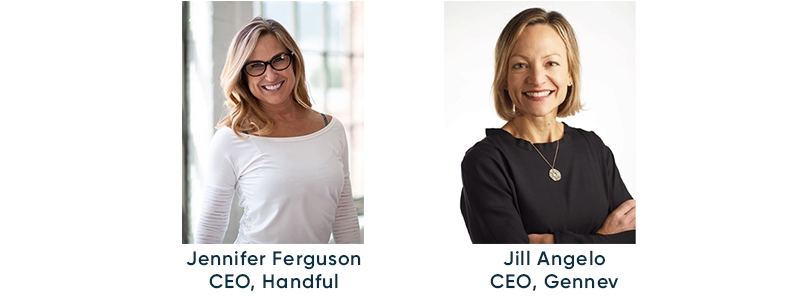
A Chat With Handful Active Wear CEO Jennifer Ferguson On Supporting Women
In this podcast, Health Coach Stasi Kasianchuk talks with CEO of Handful Active Wear Jennifer Ferguson and CEO of Gennev Jill Angelo about women, business, and the business of supporting women.
Love Handful? We do too! Listen to the podcast for a special code to save on Handful.
If you’d like to watch the video of their conversation, visit (and subscribe to) our YouTube channel.
“
“
Are you an entrepreneur or interested in becoming one? We’d love to hear about your trials and triumphs, so join us on the Gennev Community Forums!
TRANSCRIPT
Stasi Kasianchuk, Gennev Director of Health Coaching
I am Stasi Kasianchuk. I’m the registered dietitian, nutritionist and exercise physiologist and Gennev’s Director of Health Coaching. And I am absolutely thrilled to have both Jennifer, the CEO and owner of Handful Bras and Jill, Gennev’s CEO here today. The story it’s been an evolving process, this collaboration for this webinar and podcast. And I have to say I happen, you know, working for Jill. I know about her story and starting Gennev and obviously I work for the company and when I learned about when I learned about Handful Bras and their mission and read about Jennifer on her website, I was like, I gotta get to know her. And so and what ended up happening that when we’ll talk about this today we have some collaborations with Handful as the pandemic rolled out over the past several months and saw this opportunity to really come together with other women supporting women businesses that support women. And as I talked with Jennifer and knowing Jill, I was like this, we got to get these women together. So we’re going to do that today. So welcome Jennifer to our Gennev wellness pod, podcast and webinars that we have weekly, sometimes more than once a week. And can you just introduce yourself to our audience, give us a background on you and who you are. So we know more about you and Handful.
Jennifer Ferguson, CEO and founder, Handful
My name is Jennifer Ferguson and I’m the founder and CEO of Handful, which is active wear that supports you to grab life by the handful. And I have a background, I’ve just grown up active my whole life and then have been a group fitness instructor for over 20 years. And I was frustrated with the amount of changes I needed to have in my gym bag to try and keep up with my active, versatile, on-the-go lifestyle. And so after searching in vain for a base layer that could carry me from weekend to work to work out, launched Handful over a dozen years ago. I mean, we’re coming up almost on 15 years and come to find out other women were looking for these versatile items. And then we’ve grown from our bras, which were the hero to bottoms and tops as well. So thanks for having us.
Stasi
Excellent. Great. Well, I look forward to hearing more about Handful throughout the webinar. Jill, can you, for those of our audience that don’t know about your story and starting Gennev and, and your background, can you share?
Jill Angelo, CEO and co-founder, Gennev
Yeah, for sure. First of all, Jen, welcome. It’s fun to have other women entrepreneurs who are doing things for women. It’s just always fun to come together. So it’s, it’s really awesome to have you with us today. I’m Jill Angelo. I’m the co founder of Gennev. We started back in 2016 so about four years ago. And Gennev is, you know a virtual clinic and community for women in menopause. My story is, you know, I’ve spent my entire career in the tech space. I’ve had 20 years’ experience working in technology. First for a small software company that got acquired by Microsoft and I was at Microsoft for about 15 years. And you know, coming out of that experience, my personal passion has always been on women and girls confidence specifically and their development. And I was on a sabbatical from Microsoft, met my co founder who is credited with building Neutrogena.
And she really had, I think, a clear vision around menopause and how little women were served and how much they suffer in silence. And from that, you know, we, one thing led to another and you know, we decided to start Gennev because my experience working with women and senior women at Microsoft. I was as the chief of staff to the CMO, I did a lot to nurture our senior women’s networking group. And as we, as I heard their conversations transition over time from, you know, having babies, worklife balance, you know, postpartum to, well, my body’s changing, you know, I’m really tired all the time. Or has anyone had a hot flash? Like some of these things started to come out. It was something in the workplace we had never ever addressed. And so as I met my cofounder and we started to talk about menopause we saw a real opportunity to address something for women that just isn’t being met today. And so we found it. I founded Gennev we, and it’s gone from there into into what we offer today is as full range telehealth services for women, products and community and education all around menopause.
Stasi
Excellent. Yeah, that’s a great, just gives a good background and still in the story again around women and how much we do need to support and we need companies that support women as well. Jennifer, could you share your story on how you started Handful and where, what the aspect of focusing and supporting women, where that comes from for your company?
Jennifer
I as I mentioned earlier, I wasn’t feeling like I was being properly supported by my equipment, my, my active wear. And I was tired of sacrificing fashion for function, for feel. If something was fashionable, it certainly wasn’t functional and it certainly didn’t feel good. And if something did feel good, it, it didn’t look good. And as women, you know, we deserve to have our cake and eat it too. And so Handful really is stemmed from what we call the Handful High Five, and it’s the F words. We swear by fashion, function, feel, fun, and fight against breast cancer. And so our products are versatile to be worn, as I said from weekend to work to work out and it supports us literally and figuratively.
We have an optional modesty padding, a hidden pocket that is also for the one and eight women still getting diagnosed with breast cancer. And so you can wear the pads, not wear the pads, you can stack them up, you can also stash essentials. I’ve got my handy dandy lip gloss in there. Because women want to be hands free. So we want things that are functional, that are also fashionable and also feel good and also support a bigger cause. And so I started just after searching in vain for a product that I was missing and then I grew the team. And less than a handful of years ago, we decided to go full time. And I have brought on CFO, COO from Intel. Interesting. When you’re telling a story how a lot of the big corporation you’d get your experience and then you find your passion and you get to use it there. So I get to work with Jody our, our right hand woman, Tina manages the behind the scenes shoot, the silent but deadly accounts receivable, payable, et cetera.
And then we brought on Cary Goldberg, who’s our Director of Survivor Relations and she was a late stage three over a dozen year survivor and she is double mastectomy, no reconstruction, and she wears three pads on each side and is physically measuring half an inch taller. And it’s really such a metaphor for all of us of having proper equipment that feels good. It has us open our heart literally and figuratively to the world and stand taller. And that is just so important. That Handful is 100 of that a hundred percent about support. And then we’ve grown our team from there since then and we worked with a lot of amazing independent contractors. Our internal sales woman, she is a fitness instructor. Her motto is when in doubt dance it out. And we have, we take ourselves our products seriously, but we try not to take ourselves too seriously. So we have fun color names. So we’re all about the fun and the feel and the function and also the fight against breast cancer.
Stasi
That’s awesome. And such, I like the, you know, both of your stories interesting. They have technology backgrounds there, but that there’s also this idea that women don’t, we don’t need, shouldn’t be suffering, we shouldn’t be suffering. We should be supported. And when there’s something that you, both of you saw an area, a gap that had potential to be filled with a service and then you built a company that aligns with that, with that support as the focus. The whole company is built around that. So that’s fabulous to, to see. For both of you thinking your, your career, was it there always, was there ever an idea of when you started out as a working woman that you would be the leader of companies like the ones that you are right now?
Jill
For me? No. I’ll start there. I, you know, I grew up in a pretty entrepreneurial family. I grew up on a cattle ranch in North Dakota and it was like, you know, all hands on deck all the time and we had people that worked with us as well and I thought, I never want to be responsible for someone’s paycheck. Like, that’s too much responsibility, I could never do that. I want to work for a place where I can get out in the world and I don’t have to, you know, be so concerned about everything all the time. That was kind of my feeling, just having grown up through that. And it’s interesting how you come full circle because you know, I spent 20 years in kind of corporate, a corporate space and it was awesome. I loved it, but I was ready.
I was ready to do something with a big impact. And that’s what drove me to this, not because I desired to really start my own company or to, you know, think about, you know, the, the, the PNL or, you know, hire a team and so forth. I love all those things now. But it was the mission or the this needs to change sort of thing that really moved me to start this. And and I guess, and now more than ever, I kind of draw on my roots. So I don’t know, Jennifer, how it was for you, but I certainly, this was not in my plan. But now I’m, I’m really, really glad that I’m here.
Jennifer
Well, it’s interesting. I was born and raised in Montana and we also had a ranch, I did not grow up on the cattle ranch, but there were three times more sheep than people. And so if something needed to get done and you had a pulse, you know, I actually had someone in the South, you know, they talk about opening the doors for women. And I said, Oh, well, I, I, my family, we opened doors if someone’s hands are full. And this person said to me, Oh, that’s right, and you’re from the do it yourself state. I mean, if I sat there and waited for someone to open the door for me with three times more sheep than people that I might be standing there a while, and I didn’t realize it, but I, yes, it’s always been do it yourself and figure it out.
But at the same time, I’ve always been very passionate getting to work with a team. I’ve always been a team sport person, but I was fortunate, I didn’t really grow up with the labels because there were so few of us. I played on the boys soccer team. I got to play on, on basketball, gymnastics, anything that required. So it didn’t matter what your height was, what your, your age, nationality. I mean if you could participate, jump in and play. And so I feel really fortunate. I did grow up, I was one of the first people in my crew to get a computer. I mean, it was like the size of my body, of course, my first computer. And so I think I thought, Oh, I want to be the first female president of IBM. I mean, I just thought, you know, technology was so exciting and, and I just, I grew up with raised with a can do attitude.
I wasn’t, you know, told Oh women do this and not. So I always was very driven about getting to work with a team and work hard. And so I, that was always what I thought. Of course from here to there is never a straight line. So a couple children later, I’ve always taught fitness classes and then missing products that were versatile had led me to be launching this particular company. And then getting to work with an amazing team. It definitely goes with that. If you love what you do, you don’t work a day in your life. So I definitely feel very fortunate to have amazing team I get to work with and the amazing customers as well.
Stasi
That’s awesome. Yeah. No, I think I like what you said too about having that can do attitude of this is what we can do this. And I think that that’s something that talking with a lot of women, especially during menopause, when things are changing, things are different. And when that question comes up of I’m in either I’m in a different body or I’m in the same body feeling different. Can I do the things that I used to be able to do? And I would say that’s what we, a lot of conversations on. Yes, you can and it may look differently, but how is that going to, what is it going to look like now? Because you still can do those things. So I appreciate you emphasizing that can do piece. I think more women need to hear that because we can do things.
And we need that support to do that. Exactly. Excellent. Well, with my next question for both of you, it kind of along those same lines, is why is it important to support other women? And maybe generally. And then more specifically during this time around COVID 19. It was interesting when I reached out, I think I got in contact with Syd Sydney on your team, Jennifer. And she said, you know, it’s interesting. I reached out saying, how can we support you? What can we do? And she came back and said, we’re doing the same thing. We actually have some other things in the works around this with some other women run companies. So obviously that, that train of thought came up. Why, why do you think this is important right now?
Jennifer
Oh, I mean, one of my favorite messages now more than ever important is asking for help doesn’t mean you’re giving up. It means you’re not willing to give up. And I think that’s so powerful. And I think, you know, you look at people, you don’t always know what’s going on with them. And so I really encourage us to be really clear with what we need help with, how we can help, women love to help. And I mean that’s what has us get up and do what we do every day at Handful is supporting women. And the stories we get from people, I mean just Jill talking off camera beforehand, your running group wore Handful. And if a friend was getting married and, and that’s what we do. We come together, we celebrate. And I just, there’s an analogy when you run, if you run a mountain, you’re, you’re not supposed to look at the top because you just want to lay down and take a nap and it just doesn’t seem possible.
So you give yourself a little mile markers, you go, Oh, there’s, there’s that tree and Oh, there’s that sign. I’m going to just, that’s, you know, it’s the journey and one step at a time. And definitely having that support is priceless. There’s statistics that having just one friend, how important friendships and support is better for your health than quitting smoking. Of course, that is also, but like exponentially, it makes a world of difference. And so that is really what, what we’re all about is, is providing support for women. We receive it. Cary, our Director of Survivor Relationships has this amazing motto of you make it through the fire and you reach back through to pull someone else through. And so sometimes when I go outside of the fire, you know, looking for a hand and other times we’re back pulling through. So you know, that’s, that’s just why we get up and do what we do every day.
Jill
Yeah. I love the Director of Survivor Relations. I just think that’s really it says, it says it all in her title. You know, just to add on to your points around women supporting women, especially right now in these moments. You know, we often say women are on the front lines in many ways, so they’re essential workers. That term has become a new, you know, kind of a new term right now with women in healthcare with, with workers on the front lines, anywhere, men or women. And, but in particular what we’re watching right now is obviously women going through the menopausal transition. They, you know, hormonal changes creates mood changes and anxiety and stress in and of itself. It creates challenges sleeping in and of itself. It creates changes in metabolism and eating habits in and of itself.
You pile on COVID 19, and the stress and all the things, the uncertainty that’s related to right now, it just compounds all those things. So oftentimes when you look at, you know, the resilience of a woman that is headed into menopause and hand or has, you know, just started to experience some of those symptoms and is really figuring out how to manage them so that she can kind of take control of them and preserve her quality of life. The preparation women have done for menopause in many ways kind of almost has prepared them for quarantine or for this moment I think of extreme uncertainty because those things are just amplified. So I think in any case women who are managing their menopausal symptoms the more that we can support them and also help them through this moment because we’ve got a lot of those tools. Those programs though, you know, women who work with Stasi as our Director of Health Coaching with our HealthFix membership. We’re working with women on these sorts of things every single day.
And the more that we can, you know, double down and do that with more women during this time who might be suffering from those aspects of what, you know, uncertainty and this pandemic has brought the better. You know, one additional thing that we’ve done to support women during this pandemic was to expand our services. So our physicians are all OB GYN and they have obviously incredible experience in menopause and gynecology. But many of them have primary care experience as well. So we’ve expanded our telehealth services to also address primary care concerns.
Cause we’ve had women who come to us wondering if I’m having a hot flash or is it a fever and should I be concerned. And so there’s again, a heightened sense of, you know, concern and questions and anxiety right now. And the more that we can be here to support women through that transition and to partner with companies like Handful to have collective good in our work together. That’s all goodness. And that’s, that’s what we love to do. It’s what makes what we do even more meaningful.
Stasi
Yeah. Excellent. Yeah. No, I think both, you know, both of you mentioned just really the importance of coming together and recognizing that asking for help is a strength. To your point, Jennifer of there could, there’s messaging in cultures you know, our culture sometimes that that becomes, that’s a weakness. When in fact it really is a strength to capitalize on, on leaning in on each other.
And like you said Jennifer, the reaching through the flame when you’ve gone through the flame reaching through to help someone else come through. And that’s similar in menopause, you know, whether it’s someone that’s trend is gone through the process of menopause and has insight to provide and can support other women or as we are learning from on the coaching side and our telemedicine side. Let us give you the resources to help you be successful. And there’s no shame in asking for that help. We’re here to support you and all coming together to do that. I always think I have this vision of that. Like if we all hold hands in this world, it’s just going to be a much better place. And so especially on, you know, when there are things that women have in common, having that, that support is really important.
So that’s excellent. Well, with you know, some of the things that we have done too now working together we’ve been able to you know, with Handful we have a giveaway coming up that brings on other companies. Handful has generously offered that if you use the code GENNEV, you can get 20% off of their products. What about these companies coming together and women women run, women supporting companies coming together. How do you see that supporting the industry as a whole and making a statement? You know, we usually, we see so much competition and territorial and people are in silos and we’re breaking down those silos. So I’d love to get your vision on those, on that concept.
Jennifer
Yeah. Okay if I jump in here? I actually just got off a call right before this with this amazing group. They call them Movers and Makers through Title Nine, which I don’t know if you’re familiar with that amazing company, but Title IX was a legal bill that was my parents were fighting for me. I remember the picketing to give with a girls equal gym space. And so when I grew up being from such a small town, our basketball season was a totally different season because the men’s were a certain season and we didn’t have enough gym space. So we, we played in a different season. So my best friend was this amazing basketball player and scouts could not scout her because she played during a totally different season. And so Title IX of course has changed that. And if there is a voice team, you have to have a girls team at the same time and equal space.
So this amazing company Title Nine led by this awesome CEO, founder Missy, she 30 years ago, one of the original gangsters, I say just, you know, women supporting women and being active and they have our group, they have a group of us together right now. And oftentimes our brands would compete as you’ve mentioned. And yet we’re coming together. How can we, I mean I definitely together we’re stronger, you know, the acronym TEAM: Together Everyone Achieves More. I definitely agree with that. And I think there’s a different place for all of us. And I oftentimes I’m on network panels and they say what’s it like to be a woman in business. I, I pretty much everyone I work with are women. You know, our customers are women. We’re women you know, it’s obviously about supporting women. So there’s other genders and pronouns that support women as well, but predominantly, and I do really we work with women around support and so that’s what we work with.
And so even around the whole COVID as we were mentioning, and you were all were talking about working with physicians. I mean we have physicians that wear our product, I mean life’s a sport that profession, certainly a sport about being scrubbed up and one of the nurse, you know, bra strap would fall down and the, the surgeon’s like, why aren’t you wearing Handful? And so, so it’s great to give a code for people to be introduced to, to our product. And then also for the first responders this month because that was a huge thing. You know, the first week this happened, I felt like I got whiplash. I think it was a metaphor for all of us. You know, we’re just driving down the road, we slam on the breaks, we get completely rear-ended. And so we’re all kind of not sure what to do.
And then all of a sudden I was just overwhelmed with, you know, heaven forbid a company goes under, I mean, we’ve got to go under clawing for support. We’ve got to be supporting people to the very end. And so how can we help these first responders? And so we looked at what some of the other amazing women companies were doing. This other awesome women company email. They were giving a code for their bras and then they shared how the program they use. And then we piggyback. So now we’re giving 40% off for first responders so you can get on our website and we’re and then like breast cancer survivors, we give 30% off year round. I mean, we’re just all about people that are you know, dealing with extra challenges. We just know that that high five helps people keep going when they need it the most. And so a hundred percent banding together. And the big topic on our last call that I just haven’t stopped thinking I’m going to keep thinking is, you know, what do we all stand for and how can we come together to support that in a bigger way? And how can we be more inclusive and hold hands with more people of different ages, shapes, sizes, nationalities. So that’s definitely a goal of ours and we appreciate you bringing us all together to just keep that conversation going.
Stasi
Yeah, yeah. A great thing to do. In terms of just being able to, like you said, different companies coming together, we all have a role and we can highlight each other’s strengths and pick each other up. Sorry, Jill, what were you gonna say?
Jill
Yeah, no, I, you know, and I think one thing I love about even the, the fun, the great kind of partnership and promotion we’re doing together, Jennifer this week or in this period of time around, you know, just offering discounts and support to women across our different solutions and products. We typically tend to think about partnering, you know, like for us with brands focused on the menopause space or whatever. And I think stepping back to say, what do women in general need right now? And how can we support them better?
I think from a partnership perspective, you always are able to serve more. Like, why not do the work for the consumer to see other supportive products and/ or services that she’s going to need versus her having to go out and quote unquote shop for it or do her own research. When we come together because we have like-minded missions and we have different aspects of what we do, whether it overlaps or even if it doesn’t in our products and our services, I think it’s just so, so women are have enough to do already. So the more that we can again come together to give her a curated set of mission driven women. So, you know, you feel good about doing business with them in the first place as a consumer. But second of all, she didn’t have to go out and research all that or she’s also feeling supported in whatever benefits or discounts you’re providing her.
I just, I that’s just the right way to do things. I think as well, you know, coming from the corporate space where in an era where women really, we all had to, there weren’t as many of us or you know, it wasn’t the kind of climate where women lifted each other up because the way performance reviews were done or whatever. That’s an era that’s starting to evolve and change. I think, especially as entrepreneurs, you know what it’s like to be alone and to build your business alone and you don’t wish that on anybody. And so you start to really bind together because I kind of get what some of the struggles or some of the things you had to go through Jennifer, to start your business and to get it to where it is backed by a mission that you have. And it’s just such a community is so important no matter what change you’re going through. And as we even build businesses, as business owners, I think the coming together, while it’s good for the consumer it’s really good for us too because it gives us just a sounding board and like-minded group of people that get us that we can share the challenges with as with as well as the successes. And if we all win together, that’s a really amazing feeling too.
Jennifer
Yes. I, I heard a thing once that something which all practice my whole life is to be the most enlightened you wish upon others what you wish upon yourself. And it’s so amazing to get to celebrate the wins and sometimes it’s not you getting the win, but how great to to reach out and celebrate each other. And I think if we can take each other’s wins upon us as our own win and you know, there is really devastating compare-and-despair that’s out there, especially, you know, on the, in the social media world. And you know, just wish it was more of a high five celebrating each other rather than like, Oh man, I know she did that and how come not me? It’s like, well, high five she did that even though I haven’t done that, I might not ever do that. So I really try to come from that. I feel like I can come from that place of celebrating others as if it were my own win, I’m just better for all of us. So it’s, it’s great to get partners with likeminded support.
Stasi
Yeah. And I think that’s something too that can be hard for women in menopause when I’m working with them is that they are compare, they’re either comparing to their self from before or other women and that that experience is unique. So how can we help focus on, you know, changing that conversation to celebrating the wins of other people and celebrating our wins. We have wins too. Even if they’re not, they don’t look exactly like someone else. How can we celebrate our own wins? And then together collectively, that positive energy, that forward mode, that forward movement. Is is good for everyone as a whole.
Jill
Yeah. It’s just like what you see on the news right now when they wheel a COVID patient who was really ill out of the intensive care unit and everyone comes around and celebrates them, they’re all feeling obviously great for that patient. But they’re also celebrating the work they had to do together to, to keep them healthy and get them back to health. I just think that that is just, you know, it’s, it’s unfortunate that it takes moments of challenge and sadness and difficulty to bring out the best of human beings in our collective nature to want to be together, celebrate each other, you know, but you see so many examples of it right now, which is super motivating. So if there’s a silver lining that’s, that’s one, that’s a big one right now.
Jennifer
Yeah. Well, and you mentioned earlier though, it’s kind of like your friend getting married. I mean, you were celebrating, you know, so I do think it is an important reminder, especially as entrepreneurs like any, anyone, you know, we always feel like the inbox is exploding. And there’s so much to do, but it’s so important to stop and celebrate what you have accomplished. And, and yeah, I think bringing people together to do that is exponentially powerful. And I just love that we’re, we’re talking about menopause. I love that we live in a day and age where we can, we talk about things. I’m the youngest of four, so I’m always saying like, now when did you guys go through it and when did Mom go through it? And just trying to give myself an idea. And I just, I feel so grateful that we live in an era where we can talk about those things because I do think to all your point, the support and the resource, I need to just have to figure all this out in private is, yeah, no, we, we’ve all got too many other bigger, better things to deal with that if people like your company and our company can hand them resources so that they
Working out has gotten trickier lately, and not just because we’re all trying to exercise at home with less space and equipment than we’re used to.
As our bodies change over time, it is normal for our exercise routine to need adjustment as well. In this podcast, Gennev Director of Health Coaching Stasi Kasianchuk talks with Robin Jones, owner of the barre3 studio in Corvallis, Oregon, about how to move safely and effectively for all-round better health.
Watch the video of this conversation on YouTube.
“
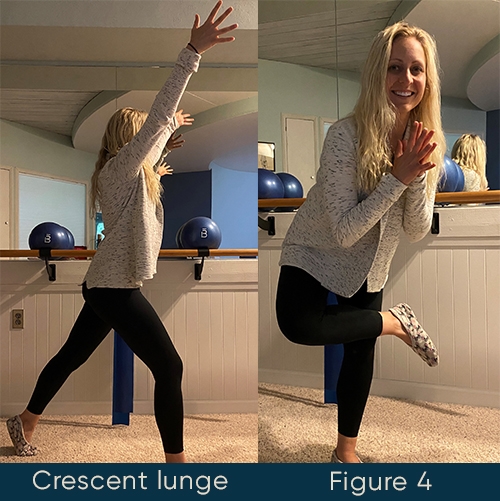
TRANSCRIPT
Stasi Kasianchuk
I’m really excited today to have Robin Jones here from barre3 Corvallis. I am Stasi Kasianchuk, I’m a registered dietitian nutritionist, exercise physiologist, and the Director of Gennev’s Health Coaching. And this topic today, the Workout for Michelle Obama’s Generation is so timely with the launching of her movie, Becoming. Robin, you’re going to hear her story about how this all connects and it really does come back to how women of Michelle’s Obama’s generation of this perimenopause, post-menopause phase can find movement to support their body. So Robin, great to have you here. Robin is a friend of mine and the owner of the barre3 studio that I am a part of, so really excited and really appreciate your time. Can you introduce yourself and tell us about yourself, tell us about you for our audience?
Robin Jones
Yes. Hi, Stasi and thank you so much for inviting me to chat with you today. It’s really quite an honor to get to share what we do at barre3 and kind of how I got there. My name is Robin and I am the studio owner of barre3 Corvallis here in Oregon. And I came to be here serendipitously, frankly because I was looking to scratch my own itch. I was born in San Diego and my husband was born and raised in Corvallis and at the time that I found barre as a practice, we were growing two small businesses. And I was really looking for a way to break up my day and move my body in a way that felt good. And I discovered barre because all these studios opened in San Diego, kind of one after the other and I fell in love with a space that had an amazing community.
And that is something that really resonated with me. And one of the things that no one tells you really about business ownership is that it can get really lonely. And so you’re, you’re working here on your laptop all day long and, and you’re trying to plan all these things and sometimes you just need a break and meet people and talk to people. And for me, scheduling my barre class mid day was exactly that. So I would go take a class and I would get to meet like minded people and move with them. And so quickly my practice became something so much more than exercise. And when we ended up moving to Corvallis in 2012 I really felt the need to bring this practice to this community because if I needed something like that I felt like somebody else out there probably needed it too. So after a long while trying to figure out how to make it happen, in addition to having two other small growing businesses we worked it out and opened in 2014. So I’m really excited to be here and really the community piece of barre3 has a lot to do with why I love it so much. So.
Stasi Kasianchuk
Yeah, no, I appreciate that Robin and giving that background and I will attest to the fact that you have an amazing community there. Definitely part of the reason that I am part of your barre3 studio. The workouts are obviously great and we’ll talk a little bit more about that. But having that community and that support and if anything now more than ever, that community is so important. So so thank you for six years ago creating something that’s so supportive today during a pandemic still. So I appreciate that. So we’ll I definitely want to hear more about your story and what you’ve learned in the six years of being part of barre3. But I wanted to go into the title of our talk today because when I first reached out to you and told you about Gennev and and asked you to be a part of one of our webinars, you shared this amazing story of getting to actually see Michelle Obama as a part of Oprah’s tour. And I’d love for you to talk about this connection and why we’re talking about barre3 as a workout that Michelle Obama’s generation could do.
Robin Jones
Yes. Oh my gosh. So I had the privilege of going to see Michelle Obama when she was doing her Becoming tour here in Portland. And then again had the privilege to see her in early this year, February or so in Brooklyn when she was touring with Oprah’s 2020 Vision tour. And she’s just inspiring to me on a lot of different capacities. But particularly what stood out for me when I saw her this year was when Oprah asked her about what she appreciated most about her body. And obviously with like the work we do at barre3, you know, her answers was like what really resonated with me and what she focused on was just about loving her body because it was hers and hers alone. And that she really tries hard not to judge it and she really tries to honor it and to realize that it’s changing.
Right. And I love, she had said that our bodies are living things and so we’re, we’re not machines and that we need to fuel it and we need to feed it and we need to take care of it and it needs sunshine and all these wonderful things because if we don’t take care of it, then our body starts to fail us as we age. And it seems so simple, but when she puts it in those terms, it’s like, it’s like, yeah, that’s exactly right. Like our bodies are changing as we age, as we grow older, as we develop. And, and my body today at 40 is not the same as the body that I had at 20 and I think that so often a lot of women try to create this sort of future unattainable goal of like, I want my body to be like it was when it was 20.
And I love what Michelle Obama had said at the time because she likened it to, to being 20 years old and trying to fit into your overalls when you were 10. Right? Like, it’s, it’s, it seems like, obviously like, no, that’s like unrealistic. Like why would you ever want to do that? And, and she said so often women have that mindset. Like, I want my body to be what it was like pre-baby. I want my body to be what it was like, you know, when I was in my early twenties. And what I love about what she said is that what really she focuses on as far as wellness is just appreciating and loving her body as it is in this present moment. And she talked about specifically like her body at 56 is so different than her body at 36. And so why should I try to move it in the way that I moved it when I was in my thirties because now I’m in my fifties and what it needs today is just so different and, and I felt like that was such a healthy mindset. And I feel like that’s certainly, I, myself included, have battled those thoughts of like, Oh gosh, you look at your pictures from before and you’re like, why? Oh man, I wish I could look like that again. And then you realize, well, like why, I mean my body has changed so much. It’s experienced so much. So like why not just honor your body as it is today? So I really loved that piece of it.
Stasi Kasianchuk
No, that’s so important. I think, you know, working with women in peri and post-menopause, it’s a hard time. Not only is your body changing, but because of the hormonal changes that can also change how you’re feeling day to day, moment to moment. And that, those are some of the conversations I have with my clients is really about, okay, what, what having them understand what is happening. And it really does tie into that dynamic that dynamic process we go through as humans and especially as women. And especially if, if you have had children, like you’ve experienced some of these, these dramatic changes of your body and menopause is another one of those and you bring up such a great point and that you movement is still important. Movement can still have so many benefits from health related benefits to mental health, to just being able to provide that balance and support, but it may not look the same and that’s okay. And I think giving people permission to explore something new and different can be scary because it’s new and different, but it can also be exciting. And when they find what works can really be helpful.
Robin Jones
Oh, completely. And I think that’s the other piece of what Michelle had said is she’s like, I have to find my own balance and I have to walk my own path. Right? And I have to, to know what that looks like for me in my present moment. Right? So I may have ran marathons when I was younger, but that’s just not what my body needs right now. And that’s just not what I need to do with it right now. And I think that’s like the struggle, right? Because we can also overdo it. We can also like diet and exercise really hard and look a certain way or, or, or weigh a certain amount and then, but at the end of the day, our bodies are like broken inside because it’s not what we need. Right. And I think that’s so much of what I love about barre3 is that it really is adaptable to different bodies, changing bodies.
And that every day the practice is different. It feels different and it, and it gives us space to be present in our bodies and to realize this is what I need today and, or this is not what I need today. And then to modify and adapt to what, what we, what we need today.
Stasi Kasianchuk
Yeah, it has really a great balance of a lot of different things. For our audience members that may not know about barre3, can you give us a breakdown of what does it entail and what is the approach so that it really is for every body that wants to try it?
Robin Jones
Yeah, no, definitely. So barre3 is a full body balanced workout combining strength conditioning, cardio, and mindfulness. And again, like what I really love about barre3, it’s low impact movement. And so it allows us to age gracefully without pain, which is really important as our bodies change our movement really, it embraces listening to your body, right?
So we offer lots of ways to adapt, to modify. You can take it up a notch, you can take it back a notch. It depending on what you need and, and again, like every day is different. But also it’s like a movement that focuses really on like the feeling and movement, creating joy and like what that feels like in your bones and your muscles. And it isn’t about you need to do it this specific way and it’s regimented. And if you don’t do it right, then you feel like you’ve failed in some capacity. It really isn’t about that. And so, so I love that because it releases us from this pressure of like that future unattainable goal, right? Like, so if I can hold a plank for five minutes, then, Oh yeah. I finally like have achieved this like this, like some pinnacle of success.
Like barre3 isn’t about that. It really is about tuning inward and listening to what your body needs. And Hey, like if you’re going to hold that plank for a minute, then awesome, good job. Feel that success and feel what that feels like to feel strong in your body, but if not, and you need to modify, you need to come down to your forearms or something, other position that feels kinder where you can also feel that same level of success good for you. Right. So I love that those are the different elements of barre3 that I’m really proud of. And then the last bit of it it was really that mindfulness practice, right? So instead of just doing as the instructor does, it really is like listening to what you need and, and being really truly present and like the muscles you’re working and, and what you’re doing and why you’re doing it. So really being able to educate our clients on how this benefits their body for functional movement every day I think is a big part of what we do.
Stasi Kasianchuk
Yeah, such a holistic approach and I’ll, and I love the mindfulness piece when that was added a few years ago I’ll be the first to admit that I am not going to do mindfulness practice even though I know the benefits of it unless someone’s telling me I have to do it. So incorporating it into a class is genius and I look forward to that five minutes at the end where I have permission to focus on my breath to slow down and to breathe.
Robin Jones
A hundred percent. And what I feel like the value is there as a, we still have an opportunity to educate right on that piece of like why mindfulness is important and how it can serve our body physically. Like it isn’t just this like if they’re y’all woo, like take a moment to clear your mind. Like it isn’t really that that there are actual physical benefits to focusing on breath and that’s an educational moment right in our class to, to give clients that space to do it too. But also to explain like the benefits of lowering anxiety and stress and lowering your blood pressure and allowing your like diaphragm to expand and contract and create like elasticity there. Right. Versus like, so much of us are used to kind of sucking it in, you know, like holding our, our belly in and not allowing it to like be mobile because like, Oh, we got to like fit in these jeans and we’ve got to, you know, look a certain way and, and we’ve lost that ability to like mobilize our diaphragm. So those like very physical reasons to practice mindfulness, I think is definitely an educational bit for us to continue to, to share.
Stasi Kasianchuk
Yeah. No, it’s such a great way to incorporate it in a way that’s tangible too. Sometimes mindfulness, automatically people jump to, Oh, I have to do an hour of meditation. I’m going to get bored. My mind’s going to wander. I can’t do it, then I feel defeated. So it’s no, it’s five minutes of what you can do. And even those five minutes, you know, and can provide benefits, especially when you start to do them over time. And especially for women with menopause, I mean that the mindfulness practice can help with hot flashes. The exercise can help with hot flashes, it can help to support sleep, everything’s all connected and it can be a great simple way. It’s economical. You don’t have to pay anything for it. And you’re just focusing on your breath. So I think that that is a really great great piece to add to that.
Robin Jones
It’s so simple, right? But it’s like, it’s so simple, but we, we often don’t do it. And I love it, the thing about breath work, it’s like, it’s like the one function in our body that happens both consciously and unconsciously. Right? Like we breathe when we’re alive. We don’t have to, we do it even if we’re not thinking about it. Right. Also have the power to control it, to like harness that and like manipulate it in a way to better serve us. It’s like amazing.
Stasi Kasianchuk
Yeah, no, it’s definitely and it’s something, it’s very easy to take for granted that, you know, we’re just going to breathe on our own, but by providing that additional support we can make, are we going to enhance our body’s efficiency of every breath by retraining it a little bit. Can you also share a, one of the other things that I think barre3 is really helpful for, especially for women that are either starting an exercise program or restarting and with menopause there can be more joint pain. The decreasing estrogen levels can result in more inflammation. Sometimes that appears in joints for some women and that can make them fearful of starting exercise. Can you also talk about the structure of how barre3 has been put together with professionals? It’s not just, you know, Oh, here’s the workout for today. This, this sounds good, that there’s methods, there’s training. And there’s a, there’s a method to the madness in terms of how the workouts are built.
Robin Jones
For sure a hundred percent. And that’s one of the things I’m most proud of, to be part of a franchise who has so much of a commitment and investment in research and development on the body, right? So barre3 is has always been low impact to be accessible. And we focus a lot on isometric holds, which is where the body, the muscles are taxed at its maximum and you’re, all you’re doing is simply holding, right? So you’re sitting in a chair or you’re in power leg or you’re in a horse pose, a wide turnout position, and you’re just, it’s like a moment of stillness, right? Your body is working really, really hard. And then we layer in this small range of movement. So it’s like a one inch range of movement, which when people hear barre, they’re like, Oh, it’s those tiny little things.
You know that, that, that you feel so much of a burn but you don’t even, it doesn’t look like you’re doing very much. And that is like an isometric hold with a little bit of release really is what it is. So your muscles are working really hard, but you’re giving it a little bit of a break every time you move. And then on top of that, we layer in dynamic movement, right? So that ability to flush out the oxygen and blood back to the muscles that need it. So we layer in that kind of strategically, that three layer process all throughout class and we work the entire body. So it’s really efficient. So we heat the cardiovascular system, we open up our hips, we open up all the joints and then we move into these elements where we like work the leg muscles and then we work the back body muscles. And then we work the core, which is abdominals and glutes. And then go back to like breath work and then move our body in ways that you don’t normally move your body. Right? So like laterally. So important to move your body 360 so that when you do functional things at home like garden and you’re like turning and twisting and all these things that your muscles are there to support you in the ways where it can prevent injury.
Stasi Kasianchuk
Excellent. So many benefits there and, and that translation to, to everyday activity. You know, and barre3 if you’re someone that wants to train for a five K or some type of athletic event, barre3 can serve that. But its foundation is in those everyday movements so that you can enjoy life, that you can feel good doing life’s lifestyle activities and enjoy the workout too. Cause there’s certainly, again, coming back to that community and that connection that you have in that 60 minutes.
Robin Jones
Exactly, exactly. I mean one of my proudest things is that our oldest client today is eight, has been 81 was 81. Youngest is 14. Right. So to like have an offering of a practice where you can give someone who is [missing] a place where they can feel successful and moving their body equivalent to a 14 year old or we’ve even had Olympic athletes in our studio, it’s like to be able to offer something of that wide of a spectrum. I think it’s such a gift to be able to share because you know, everyone can feel successful in the practice, can feel challenged in their practice, but they’re doing it in ways that are very different looking. Right. It isn’t just like this one how to do it this way. So yeah. I love that so much about it.
Stasi Kasianchuk
That’s awesome. Yeah, no, I think it serves a wide range of people. Well, Robin with your six years of working here or start or opening the studio and getting it established. And you talked about your story in terms of why you started barre3, now as you look back and with what you have learned, did you imagine six years ago that this would be the journey that’s unfolded?
Robin Jones
Certainly not. No. Sure. It’s, it’s, it’s been such a wild ride in the best way possible. And what I’ve learned in the last six years has like absolutely nothing to do with like business or ability. I mean, and, and this is like one of those things, right? Where we, I do it and I’ll speak for my team: We all do it. We do because we love it. And so there’s a reason why we’re all motivated in that capacity. And I think for me, I’ve learned so much about the power of the collective spirit and in particularly right now in this moment where we’re engaging with our clients on a virtual level, right? We don’t get to interact with them like we normally do. There’s so much power in like the ability to help each other mentally and emotionally when we are doing things together, right and, and even scientifically, the power and the joy of movement and how moving together even virtually can stimulate joy.
Right? And so that has been such a big learning for me. I mean, obviously like I opened the studio because I wanted a place to work out. And then I got all these ancillary beautiful benefits out of being able to be the owner, right? I have this wonderful community and all these amazing friends. And but then going back to owning the studio for six years, I think I also learned that investing in people goes a much longer way than investing in things and widgets and whatnot. And that’s always been kind of my primary driver is my team. And when I say invest in people, I don’t mean money. I mean, I mean time, right? And really getting to know the people who you surround yourself with I think goes a long way as far as like even personal emotional benefit. And so that’s been really beautiful.
I’ve learned also that like everyone has like an inherent native genius and sometimes you just need somebody else to remind you or to tell you or to open your eyes to what that is. And so I’ve had the benefit of being able to do that for other people. And I’ve also had the benefit of being able to receive that and realizing for myself like some of what are those things are. And so that’s been really beautiful. So yeah, lots of things I learned from barre3 that I, I didn’t think that’s what I was going to get out of it. And I think too, just learning to accept, like, and be happy for my body for how it is instead of criticizing it for what it’s not. That was a big learning for me. As far as like fitness, right? Like I, I, I think early on when I first opened the studio a lot of self doubt, a lot of, well I’ve never done this before.
I’ve never taught fitness. I don’t know how to teach exercise and a lot of self doubt of I don’t, I don’t look like the typical fitness guru. Like I don’t have those abs. I don’t look that way. You know, there was a lot of self doubt there and I think there was a lot of self criticism of like, I don’t look the part so I certainly can’t be successful in the part. And that was a big learning for me over the last six years of like, you don’t need to look a part, like you have the ability to make an impact without looking a certain way. And, and, and then even though it’s still in everyday practice, that like self-criticism has gotten quieter. And so I think that’s that’s a been a beautiful gift for sure.
Stasi Kasianchuk
Yeah, that’s a, that’s great to hear that you’ve been challenged in that way and then have really overcome that. And it reminds me of, I still remember the moment of when I had gone to the the barre3 in the vineyard event in June, I think it was June of 2018, 2018 and you were leading an exercise class for like over a hundred people out in this vineyard which was an amazing setting. Hopefully we’ll get to do that again someday. But I remember specifically you meant, you telling us that we’re doing an exercise and again, these exercises that are small movements. No one be fooled “ if you have not tried them and you’re like, ah, no, I don’t do small movements, it’s too easy. Try to hold these small movements for extended period of time. They get really hard. But you brought up the fact that we can, we have the power to change the conversations we have with ourselves in our head.
And that just always stuck out with me. It was at a time where I was having particular challenges and it really hit me to say, no, I can, I can change this conversation. I have complete control over this. I may not know exactly what the outcome’s going to be, but the conversation here and now, I can work on changing that. And that’s always stuck with me and someone who does also appreciate challenging my body through movement. I like how that can translate into other areas of my life. And now working with women in menopause that it is a challenge. It’s really hard. When you really feel that you wake up the next day and your, your body is different and those feelings are real and having to challenge those conversations can be really difficult. Can you share some of what, how you challenge your conversations as over the last six years when those doubtful voices were louder than they are now?
Robin Jones
Hmm. It’s, it’s a practice. It is, it is hard and, and I every day I think I’m reminded that we still have a lot of work to do, right? Like I still feel like so many people, or I guess self-awareness is like one piece of it for me. It’s like when in those moments when I have those tendencies to be like, ah, that that was not the best of what I have to offer and I start to spiral into like self criticism. It just, I just create this like moment of self awareness of like, okay, I’m feeling that. Right? And I’m having that thought and then I have to like separate, right? Like my thought from like, okay, what’s reality? Right? So like, yeah, maybe that class wasn’t how I wanted it to be and I whatever, like it wasn’t perfect. And that’s okay.
And I think I just like, I allow myself to just become aware that I’m having these thoughts and it’s not that I like, it’s not an exercise really of like, okay Robin, stop thinking about that. Right? Like it really is just like, okay, how’s the thought? Like that’s fine and, but just know like that thought doesn’t define you. It doesn’t, it doesn’t define who you are. It was a passing thing. Like you, you didn’t do what you expected to do in that moment, but that moment is past, right? Like it’s over. That was a temporary thing, so like move on. I think to me that, but it’s taken a lot of work, like self discovery work for me to get to that point where I’m just like, okay, you can still have that thought. And then oftentimes I just reach out to girlfriends and be like, eh, like, like yesterday I had reached out to Brodick and Rachel, I’m just like, no, there’s just some days you’re just sick of the sound of your own voice.
Like I like taught last night and I’m just like, I am just sick of the sound of my own voice. And I, I had planned to say certain things and like for me, often if it doesn’t resonate, I won’t say it. But there’s just those moments, right? And so for me, I reached out to my friends and I’m like, Hey, this is how I was feeling. It was kind of feeling funky and you know, they, they’re just like a sounding board and they helped me realize again, like, okay, that’s fine that you feel that way, but the reality is probably it doesn’t translate that way. Or people do want to hear what you have to say and things like that. But so, so creating awareness I think was like the first part of like, I’m having these thoughts and not letting it control like my behavior.
And then also having good sounding boards, right? Like that community piece, those friends again who you can be really vulnerable and honest with and say when you have those moments and those thoughts how I’m kind of feeling kind of funky, is that real? Is that not real? Okay. And if they tell me it’s not real, I’m like, okay, I’m just going to like acknowledge that wasn’t real and then I’m going to move on. You know? So I think it’s okay to have those feelings of self doubt every so often. It just happens, I mean it’s natural, but then if you have a healthy community, healthy people around you who can be your sounding board and if you can just not beat yourself up so much about it. Right. I think that’s like, that’s the biggest, that’s the biggest thing. And then again, like what we practice, we get really good at.
So if I keep practicing that, Hey, I’m, I’m, I’m doing enough. Yeah, I’m doing fine, I’m okay. Right. Even the simplest things, like if I can keep just practicing that, then I think it like ends up being better. But it’s, it’s like we still have a lot of work to do, right? To help other people have those realizations and to help other people feel really comfortable that there isn’t this future unattainable goal and that where you are right now is okay and if you’re feeling a certain way today, it’s okay and it’s a temporary passing moment.
Stasi Kasianchuk
I love that. Those are all such great reminders. And I think, you know, the, one of the things we’re doing here at Gennev is we want to change the conversation around menopause. That it shouldn’t be this dreaded, shameful time of a woman’s life. We’re all going to go through it. Every woman does, every woman has. And that piece I think you talked about about building the community is also really supportive for women too. Even though every woman’s menopausal experience can be unique, knowing that other women are going through this or will, and having the courage perhaps to be a little vulnerable. And like you shared yesterday with, you know, your community of sharing, this is how I’m feeling right now. And then have that conversation of, well, is this, is this real and in menopause you really are probably feeling that right now. But it can pass and menopause itself is not forever. So there is that time through it, but, the power of talking about it, I think that’s what I seen so much with women is let’s just talk about what’s going on. It may not go away, but just talking about it turns down the volume. It gets it out of the head.
Robin Jones
A hundred percent and I think that that shared experience, right? It requires us to be vulnerable to have these shared experiences. But to your point, like it helps to, helps you realize that Hey, this is normal in some capacity or other people feel that so it’s okay. And that’s the biggest thing, right? We fight like this idea that we’re the only ones feeling this way. It’s like this and this notion of like lonely, like I am the only one going through this particular thing. And with menopause I can imagine, right? It’s like I’m the only one feeling these things in my body. I’m the only one experiencing these changes in my body when the reality is, it’s like, no, like a lot of a lot of women who are going through menopause probably have felt the same way, but like to your point, we don’t talk about it enough, right? Like we don’t share that enough. And so people feel like they’re alone in that experience.
Stasi Kasianchuk
And the, the loneliness ends up being more detrimental than sometimes the symptoms depending on that. Yeah. Yeah. Well, and an
We’re all looking for ways to optimize our health and especially our immunity “ things we tend to take for granted when we’re feeling good and there isn’t a pandemic going on.
The basic ways we strengthen our immune response are the same, whether we’re worried about COVID-19 or the flu or staying healthier through menopause: wash hands often, don’t touch your face, eat well, sleep well, exercise.
However, we live in world of pre-packaged food that’s high in sugar, bad fats, salt, and calories, but low in nutrients “ and it’s easy to get, doesn’t require much prep time, and let’s admit it, it tastes pretty good. That can make getting the right nutrients in the right amounts at the right times more challenging.
To help women ensure they fill nutritional gaps, Gennev Director of Health Coaching Stasi Kasianchuk and Naturopathic Physician Wendy Ellis teamed up on a webinar all about how to supplement. See the video of their conversation on YouTube.
“
Of course, there’s no substitute for a healthy, balanced diet, but when that’s just not possible, supplements can help. And stay turned for Gennev’s supplement pack for women “ created by Dr. Ellis to provide nutritional support but also to help manage menopause symptoms in this challenging time of life. Coming soon!
Also, check out Dr. Ellis’ article on how to choose the right supplements, so you know what you’re getting!
TRANSCRIPT:
Stasi Kasianchuk
I am Stasi Kasianchuk. I’m a registered dietician, nutritionist, exercise physiologist, and Director of Gennev’s Health Coaching Program. And today I’m really excited to have one of our consulting physicians Dr. Wendy Ellis. She’s a naturopath and she also has her own practice in Seattle and I’m going to give her a chance to talk about her role with Gennev and a little bit more about herself. So Wendy, go ahead and introduce yourself.
Dr. Wendy Ellis
Sure, thank you. As Stasi mentioned, actually Stasi and I had the opportunity to work at another wellness company a couple of years back. So it’s really nice to be working with people who already have a shared interest. I’ve been in practice since 2002, which is a long time and really focused more on menopause starting in 2005. So I’ve taken my practice really along the way. I’ve done work in genetics and I’ve done work with other physicians, but I’m currently in my own practice primarily focusing on menopause. But it’s been really great to consult with Gennev since last summer with some of our products, which we’ll talk about that are specific for menopause.
But we’ll also soon be doing telemedicine consultations for menopausal women as well. It’s something that I feel very passionate about, especially as I approach menopause myself. But I really like menopause in practice because I feel like it’s, it really doesn’t just involve giving someone hormone replacement. It involves every aspect of their health, whether it be how well they’re sleeping or are they exercising, are they, you know, we are at increased risks for so many things just by going into menopause. And so I feel like it’s really great to hit on all the many aspects of health while helping them through menopause.
Stasi Kasianchuk
Excellent. Well, we, and I, are very glad to have you as a part of Gennev and excited about this topic today. You mentioned menopause puts women at greater risk or there are different challenges women face during menopause. And right now as we’re going, as we’re in this pandemic with COVID19, I’m getting a lot of questions from women of “What can I take? What can I do?” And I know you have a background with your medical training around supplements. So we brought you on today to really discuss the supplements. And just could you start off by talking about immune function COVID19 and how do supplements play a role here if they do? But give the audience just a basis on some of the things to be thinking about this virus and our immune system.
Dr. Wendy Ellis
Right? So if we think about the public in general, like what we’ve really noted with the data that’s been collected thus far and Coronaviruses are not a new virus, although this is a new strain of Coronavirus that’s new to all of us. And so when it comes to viruses like that, it really depends. I really liked a quote that I heard the other day that really said, we need to not so much focus on the virus so much as we need to focus on the host, which is, you know, which is us. And so whether we have a host that is a five-year-old person or an 85-year-old person, I think one of the most important things that we can do is have a, have good foundational health to be able to fight viruses off because the data there’s a study out of Italy now that suggests that 80 are actually 43% of people that are infected have no symptoms.
And so, you know, we can’t just, you know, as especially as we start to unfold our rollout of re-introduction to life, we’re going to be exposed to people and what we can do to reduce our own risk as to the most important thing. And so that’s when supplements come in.
There are certain supplements that really help improve our immune system. And I know that if we look at data about, you know, traditional studies that have looked at supplements, oftentimes supplements fail. And it’s because they’ll take someone that’s in a full-blown outbreak of something or a full-blown health condition. And just by giving them a vitamin, it’s not going to just automatically take it away because you’re looking at years and years or decades of damage. And just by taking, for example, vitamin D or a B vitamin, it’s not going to undo that damage.
But what we can do is we can prepare our bodies with supplements to improve our immune systems. So our bodies are stronger and more able to actually fight off a virus because this more, this recent virus basically starts in the nose and it basically has all of the head symptoms. So people will have headaches, congestion, sore throats, you know, sometimes they’ll have body aches. But if we can stop the replication of the virus by taking things like vitamin a and vitamin D those are the things that can actually help ramp up your immune system to fight the virus. So the counts are reduced. So it doesn’t further travel down into the body and become a more aggressive viral illness.
Stasi Kasianchuk
Got it. So it’s about supporting, again going back to that host, it’s supporting what’s already there. Not creating something new and not completely, you know, eliminating any symptoms you may have. It’s more helping your body to fight the virus that’s in there.
Dr. Wendy Ellis
Exactly. And what I think the challenge is… yes, there are some antiviral medications, but very frequently those medications have to be started at the first onset of the virus before it replicates and invades all of our cells and starts mutating. And so if we can support the body while the virus is in its lower counts by taking things like vitamin D or vitamin a or herbs and we can talk about some of the most important things that we recommend then you can basically try to keep that at Bay and help the body’s innate ability to support this sort of immune system to work for us instead of against us. Exactly. Okay. So working with what you have, I guess is the summary of that piece of it. Yeah, exactly. And you know, it’s like the virus attacks our bodies, basically, it sort of goes undetected for sometimes a week or two before our bodies are able to, before the immune system is saying, “Hey wait, there’s something here that shouldn’t be here. I’m going to mount a response against it.”
So, to try not to get too technical, we have something called cytokines. And cytokines are there: they could either be pro-inflammatory or anti-inflammatory. So as most of us are on this webinar, we’re sitting here in a chair and our bodies are producing more interleukin six which is an inflammatory cytokine. But if we got up and we went for a run after this, then our body is in response to exercise, produce more of the anti-inflammatory cytokines like interleukin 10 and so, you know, I think the most important thing is to support our bodies, not only with supplements but also with lifestyle factors that create more of an anti-inflammatory response with our cytokines versus further producing more of those inflammatory cytokines. So the whole idea of, you know, some of the medications that are being recommended or suggested by sort of laypeople, some of those really work to reduce that cytokine storm that they’re discussing.
And basically, you know, we can, we can work on that with basic lifestyle things. And obviously, a cytokine storm is a very dangerous thing and that happens much further on in the, in the disease state. And also the people who are more susceptible to that are people who have high blood pressure. They already have lung conditions. They have. Actually I pulled some data on that and in some of the studies that have been done, I think one-third of patients who succumb to the disease had preexisting lung disease nearly as many had type two diabetes and then at least half as many as half have high blood pressure. So, of course, those are things that happen for a long time before. And so anything we can do at present to reduce our risk of those diseases is going to help us in the long run.
Stasi Kasianchuk
I love how you made that connection. It’s not, there’s no one-stop shopping. There’s not a one fix-all for this. And so much, again goes back to how can you make yourself the healthiest environment and those lifestyle things, which we’ll definitely talk about. You know, that’s my, that’s my favorite area to get into. On how that can help. How you can decrease blood pressure or improve blood pressure markers, improve blood sugar management, and then, in turn, decreases stress on your body and can support your immune system.
Dr. Wendy Ellis
Yeah, and I think there’s a lot too. There’s a lot to be said about, you know, we’re working on things like a vaccine, right? But viruses, they mutate. So when they go into the cell, they start to replicate and they replicate at a very rapid pace. And then mistakes get made in the, in the RNA to, to would that replication. And so with this virus, it’s actually a slow, a slower mutation. So a vaccine will be helpful for us. However, I always tell patients that, you know, this year it’s the Covid-19 virus. In the next coming years, there will be other viruses that were not vaccinated against because they’re new. And so vaccines, although are very important, just like flu vaccines, can be very important. We can’t predict what viruses are going to come in the future. And so we need to prepare our bodies as best we can to help our bodies innately fight that off instead of trying to think of all the vaccinations that we could possibly need. Cause we just don’t know.
Stasi Kasianchuk
Yeah, absolutely. And what a great way just to be more proactive than reactive. So we’re setting ourselves up for success. Yep, exactly. Well, let’s start talking with some of those supplements that can help with that. I know I’ve received questions from clients just tell me what supplements to take, what should I be buying? And it looks like the supplement industry is doing very well right now. So it’s kind of interesting to see what’s marketed out there. It would love to hear how you approach this as a credentialed, experienced practitioner with training and expertise around supplements. How do you approach this with your patients and what would you recommend right now?
Dr. Wendy Ellis
Well, when this first rolled out in March in the state of Washington I put a newsletter out that really was trying to help patients know which supplements are the best for this. And this was independent of any health condition that someone might already have. And so for those of us in the Pacific Northwest, actually, you know, most of the US, we’re low in vitamin D. Most of us are low in vitamin D because we have jobs that have us working inside most of the time. And even when we’re out in the sun, I mean, in Washington, read a latitude that even when we’re out in the sun, we don’t get a whole lot of vitamin D except for a few months of the year. And so because of that, and, and even when we’re outside, we’re covering ourselves with sunscreen because we’re trying to avoid skin cancer.
So we’re basically at risk of having low vitamin D levels. And I think that people who have darker skin pigment or even at more a higher risk of having vitamin D deficiency. And then as we’re, we’re a society with a lot of obesity and obesity also decreases our vitamin D levels. We just automatically, you know, are, have reduced vitamin D and so we have a lot of risk factors that are innately built-in. So vitamin D. If there was one supplement that I would recommend taking across the board, it’s vitamin D and vitamin D is a very important antiviral. It’s anti-inflammatory. Again, vitamin D is not, you know, you can’t get a virus and just take a bunch of vitamin D and expect that it’s going to cure everything. But it’s a really important vitamin for our immune system, for mental health, for our bones.
There is just so much that vitamin D does for us. There’s a lot of information about vitamin D and cancers and how it reduces cancer risk. And again, you can’t get cancer and take a bunch of vitamin D and expect it to go away. But if you have a long history, or a longer history, of taking vitamin D that is protective for you and then the dose of how much to take. Of course, this depends on how old you are, what your skin color is, whether you are overweight, whether you’re pre- or post-menopausal. And it’s not so much, I think a lot of the data, it makes me a little crazy because it says, well, you know, it used to be 400 IUs, which was definitely not enough to get us up to a healthy blood level. So it really depends on your blood level more than it depends on the dose that you take. So when it comes to vitamins like vitamin D, it is a fat-soluble vitamin. You can take too much of it, which can be detrimental. But the sort of one of the most stringent it’s the, it used to be, let’s see. Oh my gosh, I can’t believe this is my perimenopause moment. It makes her participants feel better.
But the endocrine society used to recommend like, you know, 400 units. And then it was like, well, our vitamin D levels in the blood need to be at least at 30. But they’re safer. The upper limit is 4,000 units and that’s across the board. And so most of my patients, I do recommend that they take 4,000 units per day. And what this does is it gets the blood level up to a point where usually around 40 to 50, which is a level that is sort of going to help our immune system help our bone density, reduce association with certain cancer risks. So I’d say 2000 to 4,000 I use depending on, you know, depending on the patient, but you can test your vitamin D in the blood. It tends to be a more expensive test. Insurance companies are very stringent on what health conditions it will pay vitamin D for. And so a lot of doctors just won’t order it. So I would say that two to 4,000 units would be recommended, not only for longterm general health but also for helping avoid viruses.
Stasi Kasianchuk
Excellent. That’s a good recommendation. And gives, it gives a range for people to work with. We have a couple of questions on vitamin D. So one is that the accumulation of taking vitamin D is what matters. So should we start taking it now or for not if we leave that…
Dr. Wendy Ellis
Definitely. Absolutely. And you know, if you’re a post-menopausal female, vitamin D is one of the best things for your bone density as well. And there are pretty good studies on reducing breast cancer risk with adequate vitamin D intake. Of course, as with any health condition, it’s never just one thing. And so you always have to consider all the contributing factors that play into that.
Stasi Kasianchuk
Okay. So vitamin D is a piece of the puzzle. It’s not the be-all and end-all. Exactly. Another question here on vitamin D is, is there a supplement that you should not take with vitamin D at the same time if there are any counter counteractive effects?
Dr. Wendy Ellis
Not off the top of my head. It’s a, it’s a pretty well-known supplement that’s very safe. I do recommend women take it in the morning because it can interfere with sleep if taken at night for certain individuals.
Stasi Kasianchuk
That’s good to know. Alright, well vitamin D sounds like an important one to be starting with. And taking starting vitamin D if you aren’t looking at your dose if you are. And then considering getting your blood levels tested, if you can if that works with your physician. And once we’re able to go back to doctor’s offices and do lab tests, what else are there? Are there other vitamins, supplements, minerals, herbs that you think?
Dr. Wendy Ellis
And again, there are so many and so I chose my favorites. So the other one that I am using a lot of is vitamin C. There’s a lot of really good evidence for vitamin C as an antiviral. And so vitamin C is one of these nutrients that’s readily available. It’s easy to take if you take too much, you can get loose stools. There’s actually a website that I really encourage patients to check out. It’s the Linus Pauling Institute at Oregon state university. And what I really like about it is that it’s really well-referenced and you can type in on the search at the top of the, at the top of the page and type in any nutrient and it gives you probably more than you ever wanted to know about every vitamin and mineral that we use.
And so vitamin C is, is being recommended generally below 2000 milligrams per day. They recommend that you should consult a doctor before taking any higher doses than that. Okay. There are some doctors that are using vitamin C, an IV form, for patients who are actively fighting the virus. And in IB form, you can use much higher values like 25 to 50 grams. However, most of us should be taking somewhere between 502,000 grams of vitamin C or milligrams of vitamin C per day. It’s, you know, we also have to think about all of those underlying some systems. Like we want it to be anti-inflammatory, we want it to be an antioxidant and we also want it to be antiviral. So vitamin C is another really great, really safe over the counter supplement that it’s really good at fighting viruses. There’s also a lot of research on zinc and you know, if we think about all of the things that you would take if trying to avoid a cold or flu, you know, we think vitamin C, vitamin D, we think zinc and zinc is one of those minerals that is very well-tolerated by people.
There’s one study that people developed a copper deficiency from taking too much zinc. It was actually people who were using Polident for putting their dentures in really high doses of zinc. But I’d say most multivitamins have 15 to 30 milligrams of zinc and usually they have one or two milligrams of copper. And zinc is also a very good antiviral. And then people who actually pulled some studies and it, it actually inadequate levels of zinc limited the individual’s response to fight infection. But when actually given oral supplementation in the study and actually found that it reduces the incidence of acute respiratory tract infections, of course, we’re worried about, we’re worried about lung health right now. It reduced it by 5% and it shortened the recovery. Wow. so, and again, a lot of these things I pulled from the Linus Pauling website and you can have, you can find references there. But zinc is one of those minerals that can really upset your stomach if you don’t take it with enough food. And so that is a big caveat for that is you have to take it with food.
Stasi Kasianchuk
All right. Good reminder there. And we’ll make sure to link that Linus Pauling in the followup email to all of our participants. So thank you for providing that resource.
Dr. Wendy Ellis
Yeah, it’s an excellent resource. And that’s, that’s the other thing, you have to be really careful about reading blogs and you have to know like, you know, just like we want good supplements and we can talk about how you find good supplements. You have to be really careful online. You know, what you read and where the data is coming from and you have to make sure it’s referenced. And for every study that supports something, there’s two studies that, that don’t support that. And so, fortunately, we have an epidemiologist on staff Dr. Rebecca, and so she’s really helpful in helping us determine, you know, is this a good study or is this not a good study? So that’s an important thing.
Stasi Kasianchuk
Yeah, I like that you pointed that out, that we’re here to support you. And when you’re working with your patients, I’m working with my clients. I want you to have information that’s going to help you. And that is really going to be reputable cause it can be easy to get bogged down by all the information that’s out there. And if you don’t have the background in health-related fields or the training that you and Dr. Rebecca have, you can get taken advantage of. And that’s not fair either.
Dr. Wendy Ellis
Right? Exactly. Exactly. The other supplement that I have been using not only for my family but recommending for patients is vitamin A. Vitamin A is found in fish. Which, you know, we also, we, we see Cod liver oil is generally a good way to get your vitamin an in there if you want it to also get your Omega-three fatty acids. But vitamin a is really important for the health of the nasal pharynx as well. And so the mucosal membrane actually produces retinoic acid and we know that it’s very antiviral and anti-inflammatory. You just like vitamin D, vitamin a is a fat-soluble vitamin and so you can overdose on that. So you don’t want to use high doses of that for long periods of time. There are some studies and recommendations that recommend taking like 50 to 100,000 units of vitamin a, but that’s something that a doctor should prescribe for you and something that you should be monitored for.
And the other thing is if you, obviously we’re dealing with mostly peri and post-menopausal women who are not trying for pregnancy, but vitamin A can be very dangerous and high doses for fetuses. So you want it. So generally what I recommend is 10,000 units, which is very safe across the board of vitamin a supplementation just as further immune support to, to aid in the immune system that you mentioned that we already have. We’re trying to, we’re not trying to replace something, we’re trying to give the nutrients to the body that it uses to actually improve and work our new system.
Stasi Kasianchuk
Excellent. Yeah. No, it’s such a good point of theirs. Again, balancing and that there’s not one pill that works. It’s how, how does this work in conjunction, and what is it looking to support? Exactly. Exactly. What question I get with my clients is, Oh, well especially with vitamin C actually, well if, if a thousand milligrams is good, then why do I stop at 2000? I was, should I take more? Is it okay to take 5,000? I hear it’s water-soluble. I’ll just pee it out. With the things you’ve mentioned with each of them, I heard vitamin C and the zinc and vitamin A more does not necessarily equate to better. Exactly. Is there a parameter or risk, an awareness that people should be?
Dr. Wendy Ellis
Yeah. And, and, and the thing is, if it’s water-soluble, you’ve urinated out with magnesium or vitamin C, it can give you very loose stools. And so obviously that’s a negative side effect. But some vitamins like vitamin a can be toxic to the liver if you take too much. And so we worry about toxicity and clinical studies actually, you know, there’s, there’s a threshold to when things are helpful. And so, you know, there’s a lot of research that hasn’t been done on supplements. And so, you know, it’s, if you, if you go to any major medical journal and you try to look up studies on nutrients, a lot of the studies will say, well, it’s thought to do this, but we’re really not sure. It’s the same with pharmaceuticals. And so if we look at what we typically take in a diet, supplements are above and beyond that, but we want to make sure that we’re not taking something that’s going to damage our kidneys or our liver or create a nutrient deficiency, like the zinc thing. If you take too much, think you can deplete copper. And so too much of one thing can absolutely create tissue damage but also create other nutrient deficiencies.
Stasi Kasianchuk
Okay, good to keep in mind that more is not always better and there’s a reason for those limitations. And then also from a cost standpoint, you don’t want to be taking more than you need, that’s going to cost more money and you’re going to run out of those supplements.
Dr. Wendy Ellis
Exactly. And I will say that I spend a lot of time talking people off supplements because we read things and we want to avoid Alzheimer’s or we want to avoid all these things. And so people take them presumptively, but your kidneys have to process those, your liver has to process those. And so I actually have seen liver enzymes or kidney issues secondary to people taking too many supplements. Yeah, that’s it.
Stasi Kasianchuk
Great reminder. About some of those risks there. Are there any, if anything else that you would recommend, are those the three main favorites right now?
Dr. Wendy Ellis
Yeah, so there was some press about melatonin. And so I felt like I needed to bring up melatonin cause I thought someone would ask that. And melatonin is obviously what our bodies produce to help us sleep. And so our bodies are triggered to make melatonin when our rooms are dark. And so if you’ve gone through any of the, of the genetic programs especially the ones pertaining to sleep, we talk about melatonin, we talk about sleep habits and having lights off in your room and trying to go, go to bed, you know, when it’s nighttime and wake up in the morning and get as much daylight as we can. And so melatonin is something that I think we’re lacking because we’re living in a society where our rooms are often not that dark and people are sleeping less or they’re not sleeping enough because they’re having hot flashes.
And so they’re, the reason why sleep is beneficial to us is that it restores a lot of things, but we’re making a lot of melatonin that’s helping us sleep. But that melatonin is actually acting as an antiviral as well. So I pulled some data on this because it’s kind of new to me as something that you would use to actually reduce your viral risk. And actually it’s been shown to decrease some of the inflammatory markers that are, have been associated. So interleukin six is one of those cytokines that actually tends to be high and people who have coven and melatonin have been shown to reduce that. It also has been shown to reduce the reactive protein and also tumor necrosis factor, which is another inflammatory marker. So the studies have shown that at six milligrams this actually improved outcomes in people who are suffering from severe multiple sclerosis.
This was something that was 25 milligrams of melatonin. Okay. But also it’s been shown to lower blood pressure. It reduces proinflammatory cytokines. And actually there’s some research about whether it may help blood pressure, but again, too much, it’s not good. And so melatonin has some anticancer properties and so I’ll have, yesterday I had a patient who was self-diagnosing herself and was taking 60 milligrams and our bodies make about 0.3 to 0.8 milligrams when we’re sleeping. And so my tendency is to get that naturally through actually going to bed in a darkened room instead of taking melatonin. If you do take melatonin, it’s recommended to take three milligrams or less. Okay. Yeah. So that’s another one. That has gotten a lot of press. Well thanks for clarifying that. And again, going back to the more may not be better working with what your body has first and then you know, there’s the whole, there’s a lot of antiviral herbs.
And the thing about herbs is that we just haven’t done enough study about them to know what the safe profiles, safety profiles are. So if you go onto the generic website and you look at some of the herbs that we use for hot flashes, we really include the safety parameters. And any drug, drug, drug, herb interactions. Because I think a lot of herbs, we just don’t fully understand the mechanism of action and we don’t know how they interact with other medications. And we’re not sure if we’re taking a good formula though. A lot of herbs come from overseas and the FDA doesn’t regulate supplements. And so it’s, you don’t know whether you’re taking something that has been grown in pesticide, you don’t know whether it’s actually just cellulose in the capsule. A lot of people take [inaudible] other herbs because they have a high potency of berberine, which is you know, we, it’s almost like an antibiotic herb.
And so if we think about immune health and we think about antibiotics, like 90% of our immune systems and the GI tract. And so if you take an antibiotic and you basically decimate your microbiome temporarily, then your immune system is affected because of that. So if you take berberine long term to treat or prevent a virus, then you could be doing damage on the other side, with decreasing urinate and the other day by affecting the microbiome back to that balancing act. So I think the earth question is a really individual one and a hard one. And I think it needs to be discussed with your doctor because of all the potential side effects. Okay. Good reminder there. So the other thing is that certain health conditions or diseases or just living in this environment with depleted soil that we, we tend to have certain nutrient deficiencies as menopausal women not only because of life but also because of certain things that are increased over time secondary to, you know, just the aging female body.
And so some of those nutrients we’ve put together a vitality pack for women which is not a multivitamin. And I think it’s really important to stress that it’s not a multivitamin. It’s really more of a vitamin specific for the clinical nutrient deficiencies that have been noted in women who are approaching or in menopause. So it’s generally, it’s, it’s something that I created because I just kept supplementing th
Midlife and (peri)menopause can shake our confidence: belly fat in our body, the fear of bursting into tears or rage, unpredictable cycles, and the list goes on.
It really doesn’t have to be that way.
Amy Schmidt of Fearlessly Facing Fifty says we all have a kernel of confidence within us, and if we can tap into it and match it with our new creativity, power, independence, and hard-earned experience, we are genuinely a force to be reckoned with.
Listen to her conversation with Gennev CEO Jill Angelo for information and inspiration.
“
Have you experienced a resurgence of confidence and creativity, or are you still waiting for that fire to ignite? We’d love to hear how you’re taking advantage of this very productive time of life or what you need to get going. Join the conversation on Gennev’s community forums.
TRANSCRIPT:
Jill Angelo
We are live welcome to the generic weekly webinars series. I love this time because it’s when we get to get out of our own homes, if you will, and businesses to talk about what other people are doing in, you know, women’s health and in menopause and in the second half of life for women. And today I’m, I’m just really honored to have Amy Schmidt of Fearlessly Facing Fifty with us. So welcome Amy.
Amy Schmidt
Oh, thanks so much Jill. I know it’s a mouthful, isn’t it? I had to run through that several times when I, when I started, when it got the name Fearlessly Facing Fifty. That’s a lot of F’s.
Jill Angelo
My first question and even before you introduce yourself, Where did Fearlessly Facing Fifty come from?
Amy Schmidt
Well, you know what? It came because all of this really happened about six or seven months before I turned 50. So the fearless part was a word that I love because I look as fear at fearless, as being brave and so fearlessly facing being brave, facing 50. Because you know, it’s, it’s a big number. It’s, you know, it’s, it’s out there. I mean, I’m 50 and I can remember my mom turning 50 and sitting there and thinking, looking at her when I was about 12 and thinking that’s an old mom, you know, she’s getting ready for a birthday party and here I am 50. So I think the Fearlessly Facing Fifty part for me is really my story. I just decided that I had been, as you’ll probably hear along this interview on a journey like most women and just have decided I’m going all in. It’s, you know, if not now, when, why not be fearless?
Jill Angelo
That’s great. Well, let’s back up then as we, you marched up to 50, like tell us introduce yourself first of all and just explain what you do.
Amy Schmidt
Yeah. Okay, great question. You know what? I think I’m like many women. We kind of mastered the art of reinvention. I think that’s really what we do. So over the course of the last 27 years, I’ve been married and married my college sweetheart. I have raised three children. My, our youngest is 16, so we still have one in the house, but two are basically grown and flown. One is a young adult working in New York city. The other one is a sophomore in college. You know, when I look back and I think 27 years ago where I was, I was in news broadcasting and journalism. That was my passion, writing, storytelling, broadcasting, and then has the trajectory of my husband’s career started to take off. And I think this is synonymous with a lot of women that were born in the late sixties, early seventies.
A lot of us kind of said, okay, we made the choice too, I stayed home and started following this trajectory of, of Tim’s career. So in 1997, I stepped away from after broadcasting going into corporate America and had my daughter. And from there, you know, art of reinvention, you just pick up, we moved a lot of times because Tim’s trajectory was about every two to three years we were moving. So 11 moves, one abroad for six years, three kids later involved in everything under the sun. Like a lot of women, you know, they immersed themselves in their community. I continued to write I sat on boards, I did all of the stuff that I was doing and enjoying it, but then all of a sudden we moved back to the United States. I had lost my parents gone through some health issues myself and said, you know what, I gotta start doing some stuff for me. And so it was a little bit of a pivot and I just decided it’s my time and I have a voice and I’m very passionate about, as you’ll hear about women and empowering and encouraging women just to put the fear aside and just to forge ahead. So that’s kind of, you know, from broadcasting to writing to community involvement to mom, daughter, wife, all of those things, you know, that’s pretty much my story.
Jill Angelo
It’s a lot of, a lot of roles to fill and and a lot of women are doing the same thing, you know, they’re, they’re doing it all. One thing I wanted to ask you when you, when you knew it was time to start doing something for you, was it a moment? Did it, was it over time and you were just like in this uncomfortable place and all of a sudden you’re like, I got to do something for me or talk us through what that felt like and how did you know?
Amy Schmidt
Ah, that’s a great question. You know, I think it’s through this, this part of life for women. You know, you look at this journey and all of a sudden you get to this point and you’re a wife and a mother and a daughter and a sister. But where did Amy go? And I think it really hit me one time when my husband was getting ready for work and the kids, I’m getting ready to get him off to school and he yells to me and he says, Hey Amy, Hey mom, would you grab the dry cleaning? You know, on the way home, no problem. Of course I’ll drive. Yeah, we’ll get the dry cleaning, but I’m not your mom. I’m Amy. And you have those moments. And you kind of just continue to forge ahead and think. But it was a little bit of a stop me in my tracks moment because I thought, where did Amy go?
You know, you lose your identity. So for me I had lost my parents when we lived in Germany, which was a big part of it is a big part of my story and it’s in my book lost both of them and I wasn’t able to make it back in time to see either of them, which is, is really at this age when we’re dealing with aging parents and caregiving and things like that. And I was a country away. I was in Germany. That was a challenge for me when we got back to the U S I had some issues with just anxiety, which was a lot menopause based, perimenopause based, all of those things kind of culminating. But yet I was having all of these conversations with my friends and we’re all talking about the same things, hot flashes sleepless nights, anxiety, all these things. And I’m thinking, you know what, there needs to be a voice out there advocating and opening the dialogue for women. That was my moment when I said I’m going to do this. I’m passionate about it. My network is broad. I have the wonderful friends and community all over the country and world. So why not start sharing this and inspire each other to start talking about things that otherwise we kind of just push to the side.
Jill Angelo
You know, I think that’s so inspiring because to think that, okay, what I’m experiencing might be something that other women are experiencing. It’s our native. We naturally think we’re the only one or we’re going crazy or what’s wrong with me. And instead you took that and flipped it and you said, I hate, I bet there’s other women that are going through this. Talk us through a little bit how I think that’s brave and bold and thank you. You know, cause you’re, you’re touching women. You like, you’re reaching them. Talk a little bit about. The notion of fear because it’s in, it’s in your, your title of Fearlessly Facing Fifty. Talk A little bit about that because I think fear is something we don’t, we don’t want to talk about it. It makes us appear vulnerable.
Amy Schmidt
Exactly. And I think we do all have fears. I mean, we do, we all have them. And at this age we start fearing things about our health. We start fearing things about our parents falling or not taking medicine or fearing about relationships that are changing and should we have done something different. So fear is a part of everything. And I think that what we need to do as women and what I really love is that we’ve all got this confidence that’s just kind of hidden under these layers because we’ve been doing so many things and so many experiences and we just keep it all going. That’s just what women do. We mastered the art of reinvention and multitasking. And so, you know, you just have to overcome your fear by honoring your confidence and finding that again, finding that voice and realizing that this beautiful piece of art that you’ve created, this masterpiece of all of these things along your journey all fit together and you have an incredible story to share.
And I think that’s where women get stopped because they think, Oh, I wish I looked like I did 20 years ago. Wow, I wish I still had that. You know, that heart of flutter with my husband that I don’t have as much anymore because everything’s changed. Or I wish I could still ski the black diamonds without wearing that. I’m gonna need a knee replacement or something because you know, that’s where we are. We have those fears, but we can’t allow them to stop us. We just have to continue to make a plan to forge ahead. And I think women just need to switch that lens a little bit instead of looking back with that Norman Rockwell-ish, you know, memories of things in the past and the kids with the sweaters that matched and everything else is to shift that to living in looking forward and all that you can accomplish and do, whether it’s enrolling back in school, if you haven’t finished.
I’ve met some incredible women that have just taken on these journeys, these new leaps of faith and said, you know what, just going to do it. Volunteer for an organization, write a book, you know, start a podcast. All of those things you can do. So that’s kind of where, where it all comes from. So it’s everybody’s fearful of things and we are, we have a tendency to do that to ourselves. You know, we, we get so fearful of not having it perfect or waiting for everything to be perfect, that know we just can’t do that. We just can’t wait. We just got to jump in. And like my book is called Cannonball and I’m a big believer in just cannon balling off and making this huge splash. That’s what we have to do.
Jill Angelo
Well let’s, let’s talk about that because you started when you, when you decided, Hey, I’m going to bring my story to life. I’m going to start reaching other women and building this community of, of women like me. You started with a podcast and, and your, your community and your following has grown. And so there’s a hunger for the message that you’re bringing and it’s, it’s culminated very soon in, in your first book that you’re publishing. And so I want to talk about Cannonball. I love the title, but you know, it’s my favorite swimming move. But you know what, talk about where you started and why podcasting. Cause you obviously leaned into your publishing or your media background or your news caster background.
Amy Schmidt
It did. And I do look at that as all little pieces of the puzzle. For me, it’s all allowed me to have more confidence in doing this. So, you know, six months before I turned 50, I said, you know what, I’m having these conversations. Like I said with women, we’re all sharing this common thread. Just now need to start talking about this stuff. We need to start talking about menopause. I never talked about it with my mom. You know, we never had those conversations. And so I put in a local Facebook community group. I said, you know what? Anybody know how to start a podcast because I really had no idea. Was it a button on your computer? You know, who knows? I wasn’t even really an avid podcast listener at that point. And this wasn’t that long ago. And podcasts have been around forever.
And so a really nice young guy, I could be, his mom came over and sat down with me in my office and said, okay, Mrs. Schmidt, tell me what you want to do. And I said, well, first of all, you can call me Amy and next, you know what? I want you to show me what I need to get, but I want to do it. I want to be this, this, embrace, this lifetime learning, which I think we need to do as women. I want to do it soup to nuts, show me what to do. So we added things to my Amazon cart. I became an Amazon affiliate. He set me up to do that too. I had no idea. And you know, many trips to Google, to the genius, I mean to the genius bar at Apple and you know, they’d be like, Hey Amy, what are you working on now putting together this podcast?
And so for me, the interview part of the podcast is very easy because that’s just part of kind of my wiring. I think I’m a conversationalist by nature, so that’s very easy. But you know, the technical part of it, editing and producing and all of that, it’s all self taught. I mean, I learned it. This young guy came in and kind of helped me set some things up, but I do it all soup to nuts. So it just shows that you don’t have to be technologically crazy savvy to start something like this. And so I pride myself in that part of my story because it wasn’t perfect. It still isn’t perfect. And I can still remember that day when I pushed the record button and just went for it. Took a deep breath and just said, I’m just going for it. And with that, it’s just been incredible. And I think I’m a true Testament to the message that needs to get out there to women. Women thrive on community, they thrive on connection and conversation. And in this podcast is just, I love to share these stories. So these incredible women doing amazing things like yourself, just incredible. You know, it makes you path your, your cross paths just cross with such inspiring women. You just want to keep going. You just crave it.
Jill Angelo
It feeds you. It’s feeds you. to pause for one second for if anyone’s just tuning in. We’re live on Facebook and we’re also, I’m obviously recording the webinar through zoom. This is the Gennev weekly webinars series. But this is a special edition one. We had an opportunity to bring Amy Schmidt of fearlessly facing 50 on with us today. She’s got a new book coming out that we’re going to talk about next. But I just wanted to preface Gennv weekly podcast. I’m Jill Angelo, I’m the CEO and founder of Gennev. And again, I’m thrilled to have Amy here.
Talking a little bit about your podcast and bringing stories to light and it fulfilling you. How do you pick the women that you talk to on your podcast? And what do you hope their stories bring to your listeners?
Amy Schmidt
Mm, I love that. You know, and at first it was really just utilizing my network and I think that’s something that women sometimes stand back and say, I mean, I talk to women all the time and they say, Oh, Hey, I don’t, I don’t have a network. I’m not a business person. I don’t have a network. You do have a network. And I think my first guests were people that have been a part of my life inspired me in different ways along my journey. And so I said, Hey, would you be a guest from there is kind of culminated into culminated into women reaching out to me and saying, Hey, I have an incredible story. I would love to share it. You know, in my podcast is kind of a three pronged approach. So I share these inspiring stories of women doing crazy cool things.
And then I have experts that come on and talk about top of mind topics like menopause, women’s health, anything, aging parents. And then I have celebrities as well that come on and share their journey, which is just incredible. But you know, the women, my whole objective with my podcast and when I sign off every time I just take a deep breath and say, I hope that inspired somebody to take action because that’s what it’s about. If something in there resonated and I just, I get so much, it just feeds me in such a way. And I learned so much from each podcast, had a wonderful guest on one of my first podcasts. A young woman who is now probably 51, and her son at 17 had a massive stroke and ended up being in a state of Lockton syndrome, which means he can only move his eyes.
He cannot walk, he cannot talk. He was in division one, signed a university of Fort Mercer college to play division one lacrosse. And here’s a woman who I know through another friend. So utilizing my network and I reached out to her and you can just hear in the podcast, sharing her story. One was so brave, but it also touched the heart of so many people listening. She got reach-outs from women all around the world that said, wow, I’m a caregiver for my child, or I’m 50 and going through this. And that’s, that’s the power of the podcast for me, you know, and that’s really how I find my stories. I do a lot of research of course, but there’s just so many women that have incredible journeys to share. Hmm.
Jill Angelo
That’s it’s amazing, you know. And even that she would come and share that.
I’m sure in a way for her, it’s part of the healing process too, right? We’ve got a talk. Yeah. What, you know, as you, as you you’ve been doing Fearlessly Facing Fifty podcast series for how long now?
Amy Schmidt
I started in October was my first podcast. I really launched Fearlessly Facing Fifty in my company back in, I guess it was about June, June or July. But the podcast button actually was like mid to late October, so yeah. Pretty cool.
Jill Angelo
That’s amazing. And through that, you have been on this journey of creating a book, Cannonball. Tell us a little bit about the book, first of all it’s coming out very soon. Talk a little bit about the book and then let’s, then I want to know what was your journey? When did you say I need to start writing this down or capturing it and, and we need to publish this.
Amy Schmidt
Yeah. Okay. Well, Cannonball is, is, I love the title too. And, and my publisher in New York City, we’ve had to do everything by zoom now, which has been for our first book has been challenging but so much fun. I was a competitive swimmer all my life. I was, that was my identity swimming up and down and following a black line from, you know, early six year old. I think I won the cutest swimsuit in the sixth and under all the way through college. That was me searching for validation and a lot of ways which I’ve uncovered through writing this book, but to Cannonball for me is a visual. And when I talk to women, I have them just take a deep breath and close their eyes and I say, okay, I want you to picture two diving boards, one low board and one high board.
And standing on the low diving board is a woman in her early thirties. Pretty well put together, has a tattoo on her wrist that she doesn’t remember where she got it cause it was a fun girl’s weekend and she’s got little kids and she’s in a bikini and she’s to go to the end of the diving board. But she just can’t quite get there. She just, she’s worried that like keep saying, come on, come on, just go. And she just can’t go. She’s nervous. And then you kind of look at this high dive, which, you know, back in the day there used to be high dives. Now I don’t think they have many more because of insurance, but the high dive, I pictured myself climbing all the way up to the top, not stopping, not skipping a rung, just going all the way to the top and just running and Cannon balling off.
And it’s not going to be pretty, you know, I say in the book, it’s probably going to, you’re going to start ugly. It’s going to be uncomfortable. You might need a you know, some type of chiropractor appointment afterwards, but you’re going to cannonball off and make this huge splash and everybody’s going to be looking at you and it doesn’t matter because you have that confidence. So Cannonball for me is my story compiled combined with women stories, inspiring stories that I have run across in my journey and share them as well. And then at the end of each chapter are strategies and reflections that you can apply to your life so that you can find that confidence to just cannonball off and just, you know, go forward.
Jill Angelo
I love that. And before we start taking some questions, when is the book expected to come out?
Amy Schmidt
May 19th is what we’re shooting for. Yeah, the interior design is going right now and it’ll be available on Amazon. It’ll be available in bookstores too, but Amazon will be the way to get it now. So and I think we’re going to give away a copy on a this, which would be great.
Jill Angelo
And we’ll, and we grabbed, I think, one of the exercises that you’ve got in the book. So we’re going to talk about that a little bit later, but just did it from your Instagram feed. So well, good. Well first of all, I want to invite people to ask questions. We will make this a fluid conversation. I know I’ve kind of been drilling Amy with my questions, but from time to time we’ll certainly take your questions. So please via the chat or via hand raise, you can submit questions either way.
We do have a question that I’d like to take now from Debbie and Amy, This is for you Conducting a job search over 50 can be so competence defeating as age discrimination is a real thing. What are some competence builders you would recommend for the well-seasoned job seeker?
Amy Schmidt
That’s a great question and I would love for this person to reach out to the podcast and go ahead and search Fearlessly Facing Fifty podcasts because two weeks ago I had on Lori Knutson, who talked about this very thing and it’s a two part series. The first part dropped. And it’s all about finding that confidence and selling yourself in your resume and building your resume. And I think one of the pearls that that I’ve learned from this and you know, reapplying in the job force and things is that women, we second guess ourselves right off the bat, you know, we look at the job qualifications and we say, Ooh, I can do that. Not that, Oh shoot. Nope. And then they just say, I’m not going to submit my resume. I’m just not even going to do it.
So I always say in my book, I said something about your finger hovers over the send button cause you just, just don’t think you’ve reached all those qualifications. Whereas men will look at it and even if they don’t have the qualifications, they submit it, you know? So it’s, it’s that difference. So I just encourage you to put together your story of all that you’ve accomplished and what you’ve done and, and you know, and then talk to somebody like Lori who’s a career specialist that can kind of put that in a way in your resume because resumes are different now as we get older. There’s certain things that you do put on there and there’s certain things you don’t and then just go for it. You know, what’s the worst case scenario is kind of how I go through life. What’s the worst case scenario you learn from the experience. Even if you don’t get the interview or the job, you’ve still, you’ve still accomplished so much just in pushing send.
Jill Angelo
Yeah. You know, and I think even to add on to that is stay authentic to who you are. If you’re worried about appearing old, you know, lean into that wisdom. You have experience that a younger 30 something or 20 something won’t have. I was on a just a happy hour webinar with another community the other day and, and they, one individual in particular was talking, he was he was in his, in his late fifties. He had worked at Airbnb and he said, all my colleagues, in fact, my boss was not even 30. And he said, you know, I said to my boss one day, or my manager, like, I’m, I, I’m not contributing in the same way. And the younger individual, which I thought was kind of insightful for a 20, something kind of said, you know, I hired you for your wisdom, not, you know, your tech or digital savvy or your startup savvy. I hired you for your wisdom.
And I think too often we undermine the wisdom that we carry. And I think to even see it, like you said, you know, even consulting with Laurie or even with a man that you might trust, if you articulated your accomplishments, you know, to a guy, I bet they could pitch it in such a way that you’d be like, Whoa, I’m all that, you know. So like, right. Just to add to your comments I think there’s, we undersell wisdom and use somebody else to, to help kind of pitch that back to you.
Amy Schmidt
Yes. Use your resources. I agree a hundred percent.
Jill Angelo
Do you, Amy in, you know, the conversations that you go through, like, do you see trends. Like is it a lot of looking for jobs? Is it restarting careers? Is it dealing with anxiety? Is it dealing with divorce? Like are there certain amongst your community that you see time and again, or is it, is it a huge diverse kind of set of challenges and opportunities?
Amy Schmidt
Great question. You know, it’s a lot of what you said. It’s a lot of reentering the workforce, but it’s also, I recently had a round table with a group of women that have been with the same company for 25 and 30 years and you know, they’re worried that all of a sudden they’re going to go in and they’re being downsized or you get those words, I’m sorry you’re not, you know, you’re not, you’re not going to be in this position anymore. We can offer you this, but you know, it’s, it’s, it’s that whole shift. So I see a lot around career, a lot around fear of getting back out in the career and feeling outdated around technology. I see that a lot. There’s a trend around women thinking, Oh, I don’t know about social media. It makes me too nervous, but yet then we become antisocial and we actually need that connection.
So some things around technology, a lot around relationships whether it be with your spouse or partner, whether it be with your adult children, your parents. I see a lot around relationship changes and just embracing those changes and realizing that it’s all very normal. And silver divorces, that’s something we have coming up on our show notes. It’s very common. We have a lot of health issues. We have a lot of menopausal issues, a lot of questions about hormones and you know, all those types of things that we deal with as women. So it’s very multifaceted and I think that’s why the conversations around midlife and beyond are so important because they are so multifaceted. They really are. It’s driven by so many different things.
Jill Angelo
Yeah. Yeah. You know, I think this next question, we just got another one in. Kind of takes us back to the title of this webinar around creativity and confidence and menopause and during this kind of menopause time of life and this individual, Jennifer says, Amy, how do you think we could use this COVID situation to help grow our confidence and creativity?
Amy Schmidt
Hmm. Wow, Jennifer, that is a great question. I think it’s searching within yourself and I think, you know, women tend to kind of put themselves on the back burner and now with this COVID situation you might be navigating completely differently with a house full of adult kids again like I have. And then there’s that whole new level of stress and sometimes you tend to put yourself on the back burner.
So I think making yourself a priority again is really what we can do at this time. Use this time to, you know, use the time because I am looking at this as a bit of a gift of time that we never have. And when we fast forward six months, we’re going to crave this time when we’re back to our originally scheduled programming. So use this time to kind of turn that lens inward and say, what is it Jennifer, that I really want to do? Where can I really add value? And then take those steps on that journey. You know, it’s something, it’s a, it can be a real time for self discovery.
Jill Angelo
That’s great. I even saw a post yesterday around what things, we don’t want to go back to normal. And I, I thought that was kind of an interesting way to think about how can you use what’s happening that you actually like right now to become your new normal, you know, coming through this scenario.
Amy Schmidt
Yeah, that’s, that’s a really interesting thing because, you know, when do you ever have dinners with your kids and your family all sitting around the table? I mean, those are things that we will crave at times. So just take each day and look at it as a new opportunity.
Jill Angelo
Do you think that as you crossed that 50 year old threshold, your obviously your confidence, you’ve talked about the bravery and the confidence that you’ve had to just like hit that button for the first podcast or what just do it. But creativity, have you felt that it’s gone up or changed as the older you get?
Amy Schmidt
Yeah, I think so. You take more risks around it, you know, because you know there’s always going to be judgers. So it doesn’t matter. Even with writing my book, I mean I have started this book, Jill, I can’t tell you how many times. I mean I really have, I’ve started and stopped it because of fear getting in the way of me not being confident with thinking people were going to read it or thinking it was going to add value. So my creativity is, has really, really grown and I’m wanting to learn different things. Like I really am embracing this lifetime learning. Maybe because I have a little bit more time. My kids are older, I have a little bit more time. I have a great relationship with my spouse who’s able to say, you know, what? Pursue that honey, pursue that passion. So I feel very lucky that way, but I do feel like, yeah, it just, it is a time to be creative and really reflect inward and find out where your gifts are because everybody has them.
Jill Angelo
How how about for the woman who feels like she doesn’t have as much time? Are there suggestions you have for allowing your inner creative to come out or to explore or seek that out?
Amy Schmidt
Yeah, I think it’s just really taking that time again to really self reflect and find where your passions are, whether it’s enrolling in a class, you know, maybe you’ve always wanted to take that art class. I mean, I talked to so many women and that is a common thread. I’ve always wanted to take a watercolor class or I’ve always wanted to learn how to take, you know, wonderful photographs, all of those things. So you have to just, even if you’re busy, take that time, make it a priority and put it on your list of things you want to accomplish. You don’t have to have a massive, huge list, have one thing and set three little goals to get there every day and then you’ll accomplish it. You know, I think there’s a lot of ways we can do that.
Jill Angelo
Yeah. Yeah. One thing that we saw you posted I think in, it’s, it’s called “Reflections on acceptin
Middle age and menopause don’t have to mean your sex life is impaired or worse, over. Heck, there are even solutions and treatments for sex after menopause.
But there can be additional challenges such as trying to find vaginal dryness relief, loss of libido or sexless marriage, crashing fatigue in menopause, even embarrassment over body changes that make us feel less than sexy.
Our menopause health clinic’s Chief Medical Officer, Dr. Rebecca Dunsmoor-Su, spends a lot of time at her practice helping women regain their vibrant sex lives, and one thing she does is recommend books by Dr. Laurie Mintz, particularly A Tired Woman’s Guide to Passionate Sex.
In this podcast, Dr. Dunsmoor-Su got to chat directly with Dr. Mintz about all the things that can dampen the spark and how to reignite it.
LISTEN NOW
If you need help reigniting your sex life, a menopause-certified health coach can be helpful. Book 30 minutes for your personal consultation with a health coach.
Dr. Laurie Mintz is a licensed psychologist in private practice and a tenured Professor at the University of Florida, where she teaches the Psychology of Human Sexuality to hundreds of undergraduate students each year.
Dr. Mintz has published over 50 research studies in academic journals and six chapters in academic books. She has received numerous professional and teaching awards. She is a Fellow of the American Psychological Association, indicating that her work has had a positive national influence on the field of psychology.
Dr. Mintz is also the author of two popular press books”both written with the aim of empowering women sexually: Becoming Cliterate: Why Orgasm Equality Matters and How to Get It and A Tired Woman’s Guide to Passionate Sex: Reclaim Your Desire and Reignite Your Relationship.
“
“
With the “stay home” orders and recommendations flying around, most of us have had our normal lives pretty thoroughly disrupted.
And that means our patterns and habits are disrupted as well. We can’t hit the gym or the spin class or the pool. We’re making lunches at home rather than grabbing a bite out. Even our sacred coffee routines are different!
But some things you can continue to do or even do better, and hydration is one of those. It’s your own bathroom, and it’s likely closer to your work area than in the building you normally work in. And if you don’t have ice or a clean glass, well, that’s no one’s fault but your own!
Hydration is incredibly important, especially during the menopause transition and after. It feeds your brain,lubes your joint pains, helps hydrate skin and other tissue “ all things that are harder to do after estrogen declines.

We talked with Registered Dietitian Nutritionist and owner of Champagne Nutrition Ginger Hultin about why proper hydration is necessary and how to stay hydrated (and not drink too much alcohol) in this time of online Happy Hours.
To see the webinar of this conversation, check out the Gennev channel on YouTube. Prefer to listen while doing other things? Listen to the podcast version on Stitcher or wherever you listen to podcasts. Transcript below.
“
“
“
“
“
“
“
“
“
Do you find yourself drinking too little water or too much alcohol or both during these strange times? Come share your hydration strategies (and how you keep liquor consumption under control when everyone suddenly wants to have an online Happy Hour) with us in the Gennev Community Forums!
TRANSCRIPT
Coach Stasi Kasianchuk
Hello and welcome to our webinar on hydration and alcohol consumption. So I am Stasi Kasianchuk, a registered dietitian, nutritionist, exercise physiologist, and the director of Gennev’s health coaching program. Today I’m here with Ginger Hultin. She’s going to give us some background information on herself. And she is an amazing dietitian, wonderful person and has lots of experience. So I’ll let Ginger give her introduction on what she’s, what she’s doing right now.
Ginger Hultin
It’s really nice to meet you. Thank you for the introductions. Stasi. I’m Ginger Hultin. I own a company called Champagne Nutrition. It’s based here in Seattle. It is a nutrition company and I see private clients virtually and I’ve actually been virtual even before everything that has happened this spring. So I just love the flexibility. My company’s name is Champagne Nutrition because I do love champagne. I’m just going to throw that out there. But also I really believe in the joy that food and drink that we love what that brings to us. And so with my clients, I really try to be more about balance and getting people off that diet roller coaster. And instead of include the foods that they like in their lives in a more balanced way. So that really is how I work with my clients.
Stasi
So I’d love to start off with talking about the connection between hydration and immune function, especially in light of the COVID 19 pandemic. Ginger, what types of questions have you been getting from your clients? How have you been helping them around hydration? Specifically related to immune function.
Ginger
Yeah. I’m having some really interesting conversations with people right now because everyone’s lives have changed so much and I think there are some struggles with like, do I meet my hydration needs at home? You know, like what does that look like versus what I used to do at work. Also just like healthy eating, focus on health versus some stress eating and you know, really this joy of baking, which is so fun.
But how does, how does all this fit together? So those are the things I’m talking to my clients about. As far as the immune function, it’s really interesting because the most important thing is that our bodies are as optimized as possible. And so part of that is really protecting the fluid balance in your body and making sure that the cells that are so important for the immune system, like those spider cells and natural killers, the white blood cells, those are able to circulate to the best of their ability. So part of getting enough fluid is really providing that volume and the blood and the healthy circulation so that we’re energized and we’ve got that volume moving around. And secondarily, fluid’s really important for detoxifying our body. So we’re making a little toxins all the time just by breathing, eating. It’s part of our body’s natural, natural process. And we have really amazing ways to flush that out through urine, through bowel movements, through sweat.And so fluid is really important to be keeping things moving along. So it’s important in a number of ways.
Stasi
Ah, that’s such a good point. And I like what you mentioned around optimization. It’s really how to make yourself optimal, and what is optimal for you may be different for me, may be different for our panelists that are watching. We know that hydration is important though because it is going to play a role in a lot of the things that that you mentioned from, from the standpoint of that cell production and the detoxification, getting things out. We know when we drink more we have to typically go to the bathroom more. There’s a great example of how that excretion process is helping the body to work optimally. Yeah. So when we’re thinking about hydration, Ginger, you know, I get a lot of questions from clients, well what about, you know, does juice count? Does coffee count? Does tea count? Bubbly water? Is that bad? Is that good? And how do you navigate those? Or what are some of the recommendations you have on like what counts as hydration?
Ginger
Yeah, that’s an awesome question. I actually get the bubbly water question all the time. So I’ve dug into that research. I’ve given several interviews on that specifically. And the bottom line with that actually is that bubbly, sparkling water counts as much as regular water. And the thing is, it’s kind of filling cause it’s got that gas bubbles in it. So you often can’t drink as much quantity. So it is important to have plain regular water be the base of your day. But I’m drinking some bubbly water right here. It absolutely counts. And there’s also this kind of old myth that coffee and tea, soda, anything that’s caffeinated is a diuretic and so it doesn’t count towards hydration, but actually it does.
So let’s say you drink a coffee, you know, like a 16 ounce coffee, you’re drinking 16 ounces of fluid. It’s not like one per one, like all of that doesn’t magically go out through the urine all at once. So you definitely retain some though caffeine is a mild diarrhetic. So anything without caffeine like herbal tea or juice definitely counts. I do want to remind listeners to pay attention to added sugars. So that’s another part of this conversation. Juice with added sweeteners can be not dehydrating, but just a challenge for balancing our needs during the day.
Stasi
Yeah, that’s a good point of looking at what is in the hydration choices that you have. And I think it’s always a good reminder that coffee and tea are made with water. You can’t make them without water. And so you are getting the hydration benefits from that.
And then just paying attention to how that, how it makes you feel. I know some women that I work with, they noticed that coffee does make them go to the bathroom more because of the stimulus, the stimulus to the bladder. So you may need to balance that with additional water, whether it be bubbly water or regular water on that.
The other thing that I have found has been helpful is adding things to water. I had a client yesterday telling me that just by adding chia seeds to her water, she enjoys it more. She thinks about drinking it more. That gives her the benefit of the fiber and the healthy fats. But it’s something that creates a little bit more excitement around that drink, the water that they’re, they’re having. Do you have any other suggestions on things that can be great to add to water or things that have worked for you or your clients around that?
Ginger
Yeah, I actually have a passion around this. So as much as I talk about alcohol, there’s actually this big trend right now, especially among younger people. Like gen Z, even younger than millennials, they’re actually a population that’s not statistically drinking as much as people maybe in our age category or older. So I’m doing more mocktail recipes and I’m doing infused water recipes on my blog. I recently did a big pitcher of water infused with mint leaves and pineapple and it was so delicious and I ended up like keeping like going and grabbing for it because it was just delicious and so hydrating. So I really suggest that. It’s a very smart idea.
Stasi
And that’s another way, speaking of the immune function, if you’re adding things like herbs or flavor additives, you’re going to get the anti-inflammatory properties around that. That can certainly, again look at that”¦how can you support being optimal as much as possible. So you’re getting another dose of nutrients with those additions.
Ginger
A hundred percent.
Stasi
Awesome. well you mentioned like speaking of different types of drinks and the alcohol, let’s jump over to that. Cause I think that’s really what our panelists probably want to hear about. When it comes down to it, I am getting a lot of questions now on, you know, is it okay if I drink during this time? Is that gonna suppress my immune system? Or I’m drinking more during this time. I’m home, I don’t need to drive. What else am I going to do? We’re having Zoom happy hours. So it’s a big topic right now and I consider you an expert in the like creativity around drinking. And we’d love just your insight and your thoughts too, again, on that balance piece as well. Cause that’s always important. So a lot there, but we can unpack it together.
Ginger
Yeah, I mean I am literally talking about this with every one of my clients. And it’s funny, even clients that didn’t drink much or hardly at all before, they’re drinking way more now and it’s just like you said, we’re home. There’s all these Zoom happy hours and it’s very easy to sort of slip into this daily drinking. I think this is also a very stressful time for so many people. It’s not maybe the most ideal coping mechanism, but it, it does have that relaxation effect. And so we can talk maybe later about other ways to get the relaxation effect. But I think a lot of people use use wine and alcohol for that. So the most important thing, and people get mad at me when I say this, but I have to say it, is understanding the guidelines for alcohol. They’re actually very clear.
They’re well researched and many large organizations state these guidelines. So for women specifically, the guideline is one alcoholic beverage a day. And so more than that they do see an increase in health risk. And I think very important for this population is an increase in cancer risk, specifically breast cancer. And so I know that a lot of people are really keeping that top of mind and we just can’t deny that there’s a link between alcohol and cancer.
However, there’s also some really interesting research that shows with moderate drinking, again, that one a day or less, there might be some cardiovascular benefits. There might be some blood sugar regulation or lower diabetes risk development. So there’s definitely like a little seems to be okay, maybe even beneficial; too much definitely is harmful to some systems of the body, but it really is the guidelines. One drink a day. We can talk about the portions if you’d like. That’s a common question. And just so you know, you can’t not drink for two days and then have like four drinks on one day. It doesn’t quite work that way.
Stasi
Yeah. This the stockpiling effect, I want to save those for Saturday. Yeah, no, that’s a good point. And it also talks, it really speaks to how the body works in balance that way. You know, our bodies work day to day. It’s not working one way on Friday and one way on this on a Saturday, which again goes back to the immune function. If we want, we want our immune function to show up for us to be that armor every day. So it does require consistency in those habits.
Ginger
I’m glad that you mentioned that. I did want to talk about the way that alcohol affects the immune system and unfortunately there is a lot of evidence that it suppresses the immune system. It’s very hard to give you guys specific guidelines on exactly how much affects your immune system how much. I wouldn’t say that like a glass of wine is going to tank your immune system. Like it certainly doesn’t work like that, but it will lower some aspects of some of those fighter cells for you. I think anybody with alcohol abuse disorder or somebody that’s binge drinking or drinking much higher than the guidelines, there’s always going to be more natural risk there. I’m not familiar with the specific research on exactly how much alcohol could hurt the immune system, but if you are immune compromised where you’re very concerned, it might be worth the consideration to really cut down or out alcohol.
Stasi
No, I think it’s important that you mentioned that. And, and also you know, working with women who are going through menopause and perimenopause or post-menopause, they all report that they notice a distinct difference in how their body processes it. They will say, you know, this time last year or two or three years ago, I could have two or three glasses of wine and maybe feel a little buzz, but I didn’t wake up the next morning with a killer headache and fatigue. And now I have one glass of wine and the next morning I’m like, what just happened? And then it can also vary as their hormones are fluctuating. So I think you know, your point too of what is your own individual situation and that can you know, so that’s why there isn’t this distinct, here’s the amount of alcohol that you can drink and it doesn’t affect your immune system. Everybody’s different. So knowing what works best for you is more important than just being able to say like, what is the blanket recommendation, which really may not exist.
Ginger
I know that it’s frustrating to hear, like, you know, it is individualized and you know, I don’t have the specific answer for you. And that’s why it’s so important for individuals with these questions to work one on one with dietitians like us because we can look at the whole picture and the risk factors and how you are as a person, your tolerance can change to alcohol through your life. It’s really interesting the way we metabolize alcohol. It has to do with the stomach specifically. And I know that that can change in menopause. A lot of people are like, Oh, it doesn’t sit right with me as much as it used to. And then absorption straight to the liver and the liver has to do the heavy lifting, but the liver does a lot for us and there’s all these enzymes there that can either make you a faster or slower metabolizer. And so that’s where a lot of the individualization comes in that we have to talk about as clinicians because not everyone’s the same.
Stasi
Yeah, that’s such a good point. And those enzymes and those pathways are those ones that are influenced by our genetic makeup too and how we might process the alcohol?
Ginger
That’s exactly right. So there are a lot of people in this world that actually don’t have a enzyme that works very well and they are the people that naturally get that alcohol flush. A lot of people will turn bright red and they feel very sick and they don’t process alcohol well at all. If you’re a person listening that’s had that, you probably know I’m one of those. And that’s actually an example of the liver, just not quite having an enzyme that’s working as well as it might be in other folks. And I got asked the question recently, does that mean some people naturally have a higher tolerance, and said, I would say yes, but we, it’s hard to know who is who. And so it’s very hard to, to know without maybe some very in depth genetic testing.
Stasi
Yeah, absolutely. And, and listening to your own body you know, we’re all masters of our own our own understanding of how our body responds to things. So taking those things and then figuring out what’s gonna work best for you. And like you said, working with the dietitian to help you with that could guide the process. Awesome. Well we have a couple of questions or a few questions that have come in. So one says is hard alcohol such as vodka, better for you than wine because there’s no sugar?
Ginger
Yeah, that’s such an interesting question. So I chat a lot about alcohol and sugar and I think that it’s very confusing because you have to actually talk about the way that alcohol is made. And so there’s this spectrum of wine that can either have more residual sugars “ it’s often called RS “ or less. And actually dry wines are very much the trend right now. They can have very little sugar, hardly any carbs, so a lot of them actually aren’t innately sugary. They do have more carbs, as does beer, than spirits, but they also generally have less antioxidants. And there is some interesting research that the antioxidants in red and white wine could be beneficial.
I think the most important thing here is to understand the portions. So a serving of wine is five ounces. A lot of times when you pour a glass, it’s much more than five ounces. Beer is 12 ounces and again, people often drink several beers and that’s several servings. And for liquor it’s 1.5 ounces. And so you can sip on, on spirits for sure. But a lot of people will do some sort of mixer and that’s important too cause if you’re mixing it with juice or Coke, then you’re adding a lot of sugar. If you’re doing water, sparkling water, or a non-nutritive sweetener, that changes it too. So it’s very complex.
Stasi
Yeah. Again, no, there’s not one to answer to these things, but thinking about the whole process. And I like what you pointed out about the portions that is going to be a key thing. Enjoying one glass of wine, two glasses of wine, is different than five and six. And how the body processes that, whether it’s sugar or the alcohol component. Yeah. The next question is, ah, this person says they love water so much and I’m so thirsty all the time that I wake up thirsty. Is there anything wrong with me?
Ginger
Well, that’s a really interesting question. I hear so many different things from my clients as you do to Stasi, I’m sure. I hear people that say I never get thirsty. There’s something wrong with me. And I have people that say I always get thirsty, is there’s something wrong with me. It’s always important to make sure that you’re getting medical care, you’re getting your blood sugar levels tested, you’re making sure that your blood pressure is normalized. So I would definitely make sure you’re, you’re checking off those boxes and talking to your provider if there’s any testing you need. But short of that, I think it is important to know that different humans have different needs and you should drink to thirst. So if you’re waking up thirsty, grab a big glass of water and start off that day. Like what a nice way to to get your body going.
Stasi
Yeah, that’s a good point of the basics. And then definitely that making sure that there’s nothing else that, that thirst isn’t indicating another underlying condition. By you mentioned having your blood blood sugars checked, extreme thirst may be indicative of diabetes. So that blood sugar piece is important. And then obviously the cardiovascular function because hydration plays a role in our circulation. So if something’s up in terms of that regulation, there could be something there. So always a good reminder of just getting those checks, those checks and balances and that those things checked off. One thing that I noticed with menopause, so the thirst sensation can change during this time. So I do have a lot of women that don’t feel like they’re as thirsty. And one thing that I’ll sometimes talk about too is just making sure they’re regularly drinking throughout the day.
So if they get to two o’clock in the afternoon and they’re thinking, I have not had anything to drink except my first cup of coffee, then all right, we probably need to work on increasing that. But another tool that I found to be helpful is looking at urine color. When you’re going to the bathroom. So if you when you go to the bathroom, it should be lemonade ish color does it need to be clear? But if we’re looking at school bus orange and you’re not taking a lot of multivitamins, which could influence your urine color but consistently that color that’s maybe an indicator too that you need, need a little bit more hydration.
Ginger
Yeah. I’d also get that that’s really important. And I also get, you know, a lot of people that say, Oh, I just had a headache all of a sudden, or I felt really fatigued. And so one of the first things I’ll do is to suggest a glass or two of water and see if it makes you feel better. Often it really does.
Stasi
Yes. Yeah. And I another thing around that, when people are starting to exercise more I’ll notice that sometimes that increases their thirst and so they’ll, they’ll be prompted to drink more. But the other piece, they start to notice when they aren’t optimally hydrated. That exercise is a lot harder. And exercise is hard as it is, we don’t need to make it harder. So that could be another indicator.
Ginger
That’s such a good point. There are some days if I’m doing a workout, I’m like, ah, why is this so challenging? And I’ll think, and I honestly believe that fuel with food and hydration, it really affects your body’s energy.
Stasi
Yeah. And that’s, and that’s one way to feel it too. When you’re asking more of your body, then you start to feel that way. And that comes back to that optimization. How can we support our bodies being optimal? Because when it’s in an optimal state, that immune function is going to be more optimal. All right, another question here that says how, how many calories are in about one glass of wine? This is a concern of hers. Okay.
Ginger
Yeah. This is a really interesting subject and guess what? It’s complicated. Let me break it down. I love talking about alcohol because it’s just, there’s a lot to talk about. At a baseline alcohol itself is kind of high in calories. So just to put it in perspective carbohydrates and protein are four calories per gram. Fat is nine calories per gram. Alcohol is seven calories per gram. So if you think about the spectrum, it just is kind of a high calorie liquid. There’s so much more to think about though, because the amount of alcohol that’s in a beverage and the quantity that you’re drinking really makes a difference. So a glass of wine, like a light white wine or a lower alcohol red could be around a hundred to 120 calories. If you bump up towards that 16%, like a big heavy red, that could have, you know, pushing 200 calories.
So there’s a big range and it depends on the alcohol by volume, which you’ll see ABV. So if you want the lower calories go towards like more like an 11, 12% wine. Beer is exactly the same. So the light beers, you know how you see the commercials and they’re like 90 calories. How do they do that? Well, it’s a little bit lower alcohol. And so if you have like a big IPA, like IPAs and porters are heavier, but they’re notoriously much higher in calories, they have way more alcohol by volume. So that, you know, alcohol itself, like there’s a range. So lighter in general, lower alcohol content is just going to slash the calories.
And then with mixed drinks it’s not so much the spirits like, like I think, you know 1.5 is, is around a hundred, 120 calories, 1.5 ounces across the board, unless it’s more sugary like port or something. But it’s the mixer “ if you have any sort of cream, coconut, sugary juice, things like that, you’re going to really boost the calories. Margarita, pina coladas, those are classically very, very high. So it really depends on what you’re drinking.
Stasi
Yeah. And that gives some perspectives to just some guidelines around, you know, what you should look for if you’re looking for that lower calorie option. This next question here is why after drinking, do my breasts feel more lumpy? Are you familiar with this at all?
Ginger
That is very interesting. You know, the only thing that comes to mind and I need to dive into the research is I wonder if there’s some dehydration going on there and maybe some changes in body fluid. Yeah, I, I wonder about that. What do you think, Stasi?
Stasi
Yeah, I’m not familiar with that either. Just, you know, one thing that comes, that I would think of is perhaps if there’s any hormonal shifts that are happening and again, alcohol is going to be a stress on the body. So is there some level of stress response or some type of, it’s a toxin. The body’s trying to detoxify, so something going on there, but that would also be, I think a great question for a medical practitioner, OB GYN, primary care, just again, rule out anything else that might be creating that, that lump sensation.
Ginger
Yeah, I’m glad that you brought up that alcohol’s a toxin. I mean, it really is. The body is very excited to get rid of it. So so the body’s working hard to do that. It is kind of inflammatory. So especially if you’re drinking higher higher levels, it can be inflammatory to the body. So yeah, that would be a good one to get checked out. That’s an interesting question.
Stasi
Okay. Another one here, going back to the infused water recipes, this person would like to know where you post your recipes for the fusion. And you mentioned on your blog if you want to share the, the address or something, feel free to do that.
Ginger
Yeah, definitely. It’s at champagnenutrition.com and my infused water recipe’s pretty far up in the blog category. I’ve got some really great stuff up there right now. Lots of mocktails, cocktails. And another thing that I really focus on is lighter alcohol options. So I have spritzers up there, which is like white wine with some soda water or you know, that sort of thing that is lighter in alcohol, uses very minimal added sugar, uses natural ingredients so that maybe you could have two and you’re kind of at a party and you’re enjoying it, but it really is very light and fits into your health goals.
Stasi
Awesome. Great options there. And we’ll make sure to link these resources as well in the followup email that everybody gets with the link to this presentation. So we’ll make sure to put the link to Ginger’s blog there. Well thinking about that socialization and alcohol do you have any recommendations, things to make to help make this social isolation fun and still be able to enjoy and find that balance with alcohol? Anything that you’ve tried? I love seeing all of the things on Instagram that you’ve posted with your creativity, but things that you’re excited about right now.
Ginger
Yeah. You know, I really am trying to make the best of this and I’ll tell you some things that have worked for me and for some of my clients. One is I learned pretty quickly that I can’t be on like a two hour Zoom happy hour drinking wine. Like that doesn’t fit with my health goals. And so I go to a lot of happy hours now with no alcohol. I’ll bring like some soda water. So really mixing that up and just making sure to take breaks throughout the week and then have nights that I’m not drinking. Like that’s been really, really helpful. One of my clients texted me today and said, you know, I’m going to take a break for the rest of this week, no alcohol til Friday. I was like, okay, great. That sounds like a good plan. She’s kind of just testing the waters.
Another thing that I’ve really been focused on is being active in new ways. So I’m like you, Stasi, I’m deeply committed to exercise and I was really into weightlifting and going to the gym every day and that I can’t do anymore. So I started implementing this thing that I’m in love with, which is every morning I’d get up and I start my day with a walk. So that really helps me stick to a schedule, get up early and just really get outside. I want to keep this forever like it has been so really, really positive for me. So that’s been just very grounding and a really nice part of, of this experience, I must say.
Stasi
Yeah, that’s a good point of having that routine something you know, that you’re going to do and then starting your day with that. And that’s something if you’re looking forward to that, if you have that set aside time in the morning that’s maybe perhaps a little bit on the earlier side than drinking late into the evening may not be as much of an option. Cause you know, how, how, how you might feel and that walk is, is more important.
Ginger
Yeah. A hundred percent. You think about it the night before.
Stasi
And I like what you mentioned too around like having nights where there isn’t any alcohol or it’s okay to go to a Zoom happy hour without an alcoholic beverage. And really if you’re concerned about what other people think, I mean, what better way to pretend? There’s no, you know, no one has to see it. You can be creative. And that’s another option there to know that just because there might be Zoom happy hours all the time doesn’t mean that your beverage has to contain alcohol. Great points. We had another question come in on how warm versus cold water. I perform prefer warm water all day. It helps me stay warm. Any concerns with that?
Ginger
You know, from my point of view, not at all. I actually, I know there’s some cultural differences too. I think that around the world, different cultures prefer cold versus warm water, which is always interesting. I’d say cold, hot or warm, do what’s best for you and your body. Especially up here in this chilly weather makes a lot of sense to me. There shouldn’t be a difference in hydrati
When most of us think of grief, we think of losing a loved one or the end of a relationship. Does it make sense to have a sense of grief in the coronavirus crisis, even if you haven’t lost anyone?
On Isolation and Grief With Psychiatrist Swapna Vaidya
According to psychiatrist Dr. Swapna Vaidya, yes. Grief is caused by loss, and many of us have lost at the very least a sense of security and our predictable routines. Others may have lost jobs, opportunities, and of course, loved ones.
But we’re all in this together, and the potential for unity and for providing one another with support, globally, has never been greater.
In this podcast, Dr. Swapna Vaidya speaks with Gennev Director of Health Coaching Stasi Kasianchuk about the nature and course of grief and how to be kinder to everyone going through grief and isolation “ including yourself.
To watch the video of this webinar, visit the Gennev YouTube channel. And subscribe to be sure you get notified of every new webinar.
Prefer podcasts? Follow Gennev on Apple Podcasts or Stitcher to get every episode.
Dr. Swapna Vaidya is a psychiatrist and Executive Medical Director in the MultiCare Health System.
Stasi Kasianchuk is a Sports Dietitian, Exercise Physiologist and Gennev Director of Health Coaching.
Practical, medical, and encouraging support with a menopause expert: Gennev is telemedicine for women. Learn more.
“
“
TRANSCRIPT
Coach Stasi Kasianchuk
So welcome everyone to our wellness webinar. This is a really great one today on a great topic that’s pretty relevant right now”the topic of grief. So I am Stasi Kasianchuk. I am a registered dietitian, nutritionist and the director of health coaching here at Gennev. So, Swapna, I’d love for you to give your background, introduce yourself to our audience. And yeah, let us know who you are.
Dr. Swapna Vaidya
Oh, okay. I’m Swapna Vaidya. I’m a psychiatrist. I currently work at Multi-Care Hospital. But I have had an extensive background in consultation psychiatry. So what that means is that I have had a background dealing with psychiatric issues with patients, who are going through medical problems or are going through trauma. And I was in New York actually during the 911 time and so I have personal experience working on the ground for disaster psychiatry. So this is where my background is and here I am today trying to sort of connect with all of you to share some of the experiences that helped us back then and to talk a little bit about grief.
Coach Stasi Kasianchuk
Yeah, absolutely. Yeah. Thank you so much for joining us. And I’m interested too because we do hear a lot about some comparisons from what we’re experiencing now with the COVID 19 pandemic to 911. So your experience, your insights from that experience to now will be really great and during this this webinar. You mentioned that topic of grief and we’ve seen more some more publications on grief right now and there’s some, you know, just this feeling that even when I’m talking with my clients through Gennev of, of just there’s something different, there’s something in almost in the air, but individuals are trying to work through this. Can you give us a brief description of what is grief from your from your background and what do you see or how is it maybe playing out for people right now in this situation?
Dr. Swapna Vaidya
Yeah, thank you. You know, Stasi, because this is really an important issue to discuss right now and you nailed it. Like a lot of people are trying to draw comparisons between what happened in 911. And you know, I’ve a lot of friends back in New York who are psychiatrists and they are all just saying that this sense of loss, this sense of grief is even much more than what they experienced when 911 happened because of the fatalities, you know, which are being just immense. So that being said, you know, what is grief? Grief is a sense of loss and that’s actually the best way I can describe it. And you know, normally when we look at grief, we say, okay, this is connected to bereavement, that you lost somebody. But right now what everyone is experiencing is a big sense of loss, missing the way life was.
Missing what was the normal. Missing the fact that you could just pop up and go to a restaurant and have dinner. That’s grief. So grief is a normal human response. To any kind of loss. So I’m going to get a little technical and I’ll talk about the stages of grief and how it’s pertaining to this pandemic, if I may.
So, yeah, so you know, Dr Elizabeth Kubler Ross, she was the pioneer who did a lot of research on grief and she talked about stages of grief. So the first stage is denial. And then we connect this to the pandemic right now that are personal levels of grief, local levels, and then on a national level of denial. So on a personal level, you know, I mean, I’m sure a lot of people who are this, Oh, I’m never going to get this virus or that I’m young, this is not going to happen to me or not to my family.
So that’s a personal level. On a local level, the denial is that, Oh, well you’re not gonna follow social distancing, that doesn’t really apply to me. And then on a national level, we’ve seen various forms of denial as to how we first denied it and then we accepted it and now we know what it is. Then we look at anger. So the next day just anger. Now, once we deny it and we know, okay, this is really happening, then we get mad. You’re really angry. And how do we express the anger? Towards the people who we are living with. And that is why I’m really concerned a little bit about on the other side is the rise of domestic violence and anger towards children. So this is a huge important issue. How we need to deviate from anger and go towards acceptance. And the other issue of anger is the social media. I mean I’m sure you’ve seen the rantings and the ravings and you’re right and I’m wrong.
So this is a way people are trying to clutch onto any sense of control. Then the third stage is bargaining. Then we are trying to bargain with each other. They’re saying, okay, maybe if I do social distancing for a week or maybe if I just stop it, you know, perhaps for I wouldn’t go to this place or that place and then this would be, this would be done. Or I can see X, Y, Z friends because guess what? I’ve been seeing them so they will not be infected. So this is bargaining and then sadness. Finally we are sad, we are demoralized, we are depressed. And then acceptance. Then we say, and that is the stage we have to arrive at. But you know what? Everybody takes time to arrive at that stage. So in a way, what I’m trying to say is that it’s okay, these are the feelings you’re feeling, but the ultimate stage that you want to come to is acceptance. You know, there’s that serenity prayer. We can change things, but some things we got to accept, you know, and this is one of those hard life lessons. So this is a what I would suggest in terms of grief as well as how it’s pertaining personally and locally with us.
Coach Stasi Kasianchuk
Yeah, you brought up a lot of good points there, Swapna. Several things come to mind. The first one that I had, you mentioned these layers, the personal layer, the local layer, the national layer. We might even, I don’t know if we can add a global layer on to that. From your perspective, do those layers “¦ Does that add add more grief or does that make it heavier for the individual knowing that it’s not just in their personal bubble? There’s layers upon that. Do you see that effect with people?
Dr. Swapna Vaidya
Yeah, it actually can be dual, you know, in a way how human being how we are social creatures. So when we know that we are not alone in this, then knowing that it’s a global pandemic somehow helps. But then on the other hand it can become a very worrisome thing. So this is how we have to set our acceptance and set what we can do and how we can control things that are in our control. So for instance, ruminating about it and worrying about it to a certain extent is just going to be destructive, but understanding that we are not in this together, we are not in this alone and there is all this rush of vaccines being studied and antibodies being studied and all that, gives us hope. So I would tend to go on the side of hope to say that we are all in this together and hence we are all connected on a personal level, local level, national level. And then as you explained, Stasi, even the whole world, pandemic.
Coach Stasi Kasianchuk
Yeah, no, that’s such a good point of finding ways to, to shift the thought process to shift from a maybe a more pessimistic thought to a more to a more optimistic thoughts to be supportive of what we’re going through. The, another question that I thought of too when going, you talked about this process being normal, so is it, is it normal to go through these stages in order, or do people tend to go to one stage, skip, come back? Is there a what, what do you usually see or what is considered normal?
Dr. Swapna Vaidya
You said such a good point. Yes. There are no ways that, you know, one person reacts well situation. It’s not such a sort of like a single mold will fit everybody. So there are some people who would probably go towards acceptance, you know, maybe because they’ve been traumatized before. A lot of the folks that I’ve seen, you know, the psychiatrist or my friends or colleagues that I’ve talked to in New York have said that, that they reach the stage of acceptance pretty quickly because they had gone through it before. So they had already experienced it before. And when they knew that what happened then they couldn’t control what happened. And what’s happening now is not something they can control. But on the other hand, perhaps people who have never experienced this in lifetime, like, you know, the young kids, teenagers, maybe the millennials, they have never seen this.
And this might be a very, very difficult time. And that’s why I talked about the local level. I talked about the denial there. A lot of young people were saying, Oh, this can’t affect me. But we are now seeing like a huge demographic of young people with no preexisting health issues also getting sick by this virus. So that’s something that the mind frame had to shift to understand that this is actually happening to everybody. Maybe our older and our elderly population are more susceptible and they may have a very devastating course of the illness, but that doesn’t spare even the younger, the middle aged folks that we have. And hence I think that it depends on where at the stage. If you been if you’ve had experience before, if you had some amount of training in trauma and acceptance or understanding that can actually help how you can switch. So something to see.
Coach Stasi Kasianchuk
Yeah. You know, silver lining, I guess to having have gone through something similar to this that perhaps you’re more resilient, resiliency or experienced is built. Would you agree with that?
Dr. Swapna Vaidya
I agree. And actually, you know, I was going to talk about resilience. I came across a very good article about resilience and you know, I was reading about Sheryl Sandberg and her Option B and I think she’s going to come up with much more material about it. But there was some things which really stuck with me from that article. She talks about resilience, but she talks about three Ps, the three Ps, the letter P that are bad for you. So may I? So number one, she says, number one is personalizing it. Number two, saying this is a permanent thing, you know, and number three saying it’s pervasive, meaning it’s affecting everything that I do. So these three Ps are destructive. So how would you personalize this? You personalize this by saying, Hey, you know what? I did something wrong. Oh, I got this virus and I gave it to my mom or I gave it to my, you know, things are not in your control.
So self-compassion is something you should practice. You shouldn’t blame yourself. Second thing is permanence. The thing that, Oh, this is uncertain, I am never going to go back to normal. This is forever. But we know things are not forever. We know this too shall end. The thought and the last important thing that she talked about was pervasiveness. It doesn’t mean that every aspect of our life is affected. We still have some silver linings, as you said, you have a time to call your friends, your childhood friends. I mean, I hadn’t connected with them for God knows 25 years and now we have like this WhatsApp group when people are sharing things and it’s really nice to listen to, you know, your childhood friends and what they are going through and how connected the world has become. You know, so we cannot say that everything about this is horrific and horrible. Try to find some silver lining, whatever that may be.
Coach Stasi Kasianchuk
Yeah, I like that. I had not been familiar with those three Ps, but I think that gives, to add another one, gives perspective on just how, where you’re and allows that reflection, that mindfulness to piece to reflect on how am I internalizing this and what am I doing with the information and how can I change the story a little bit or reframe to be able to support to support myself.
Dr. Swapna Vaidya
Right. I think reframing that, that aspect. You talked about cognition, you know I’m so sorry. I just got caught up cause I was on my phone so that one was fine to call me. Another thing, I’m, I’m still on call in the hospitals, so I’m sorry if there are like, you know”¦
Coach Stasi Kasianchuk
Oh, thank you for doing, for being on the front lines right now.
Dr. Swapna Vaidya
Exactly. And I really thank my doctors and my healthcare workers. And that’s such an important thing too, you know, sort of like connect with right now, this is where I say that when you talk about how can you help in the stand and make like people feel helpless, but there is a way “ you can work as a community, you can work in your home, you can take care of your elders, your children, and at the same time you can actually try to do something good for the community such as health care workers. Our essential workers were going and putting their lives at stake. You know like some doctors are getting meals for the patients, for their staff, for their nurses, for their healthcare workers. And, and that way some doctors are actually cleaning the rooms in the ICU so that the cleaning lady doesn’t have to go in. I mean, I thought that was tremendous. I mean, I’ve reading been reading about these things on a Facebook and I think that’s such a, humanity is in, in its best best way. So resilience doesn’t really mean that you have to reject your unpleasant emotions. You absolutely accept them. You accept them, you feel them, you go through them, but you don’t let them control you. That’s the key. And that’s the hard, hard part. You know,
Coach Stasi Kasianchuk
I think, I like that you, you made that distinction of being able to experience your feelings but also not letting them then sweep you away. I’ve been talking a lot with clients about giving permission, having them give themselves permission to most of it’s around more on self care, giving permission to take a nap if you’re feeling tired, giving permission to giving permission to, you know, maybe take a little bit more time for yourself. So whether it’s a little separating, finding space in your house where you can have some time alone and being okay with taking that time, it can be a hard thing to, to feel emotions, to give permission. Do you have recommendations for people on how to best, how to best feel emotions if that’s not something they’re comfortable with?
Dr. Swapna Vaidya
You know? Exactly. And again, everybody’s going to be different, right? Everybody’s emotions and reactions are going to be different. But what I would recommend, I like what you said about how you give yourself permission. So I will give you my example, I have a five year old, right? And I want to kind of sometimes get away. I tell my husband, you know, like, listen, I’m going to be in the terrace or something, you know, just doing, I need 20 minutes. I just need some time to focus on myself because there is so much going on work-wise, so much going on community wise, you know? And then with his needs, I want to be the best version of myself, the best way I can. But you know what, there are times that I am the thing that my emotions are somewhat on the show. You know, like being very shocked and bored sometimes and I have to collect that, not be accepting own it, you know, but I, I don’t need to be pervasive and permanent about it.
You know, I don’t need to think that this is the way I am always going to be. So what if I falter? I have another chance, you know, and my boy is going to grow with me and he’s growing up also understanding this, he himself is adapting. So we have to kind of carve out a new normal, I think the best advice I can give you or give anybody is to be kind to yourself. Self criticism. I mean, to certain extent is good, but try to forgive yourself. Forgiveness is the key. But then you’re forgiving your spouse or your you know, friends or you know, your son. That sensitivity factor has become such a huge issue. And I feel like, especially now since we were all confined and we are becoming, you know, kind of like, what is this? When can we get out? And that’s the time to recognize, let’s try to be compassionate and kind first.
Coach Stasi Kasianchuk
Yeah. That and that comes with perhaps try to when we have those feelings of anger or frustration, you have to turn those down a little bit and try to make that kindness and compassion forefront, which can isn’t always instinctual when we’re in these situations dealing with grief.
Dr. Swapna Vaidya
You know, I mean, when I was sort of like preparing for this talk, I think a lot of the things that I read resonated with me. So it’s, it’s just important to realize that even though maybe I’m a psychiatrist and I can, I’ve studied this, but to adapt to this as a person, as a human who’s going through this, it’s equally hard. So this is this. I think I would tell everybody that once you get this knowledge or you’d read about it, you know, it’s okay to go back and then sort of ruminate and say, Oh, maybe this didn’t work for me. Maybe I’ll try something different. You know, for instance, when I say to people, “meditation,” they’re like, Oh, come on, I’m so anxious. I’m not going to meditate. But even anxiety can be meditation. Why? Because you’re actually feeling that anxiety, processing it and understanding it.
One good thing about that would be to maintain a journal. Write down, write down those anxious thoughts. Why are they coming? Are they rational, you feel? Are they irrational? Can you do something about it? And even then, let’s say you acted in a certain way, you’re not proud of yourself, then write down about that and say, okay, what could I have done different? If I have another opportunity, can I do something different? Apologize. You know, forgiveness, as I said, is, you know, I think it’s going to be a much needed, much needed gift that we all can give each other because we all have to say, I’m sorry. You know, I may have acted out of anger and I, you will see the other person absolutely identifies and says, you know what, even me, I’m also going through this. And then you move on and that’s the best you know sort of like advice that I can think of for people.
Coach Stasi Kasianchuk
Yeah, taking that step and having the courage to call those feelings out I think is so important. Can be hard. But like you said, oftentimes when you are saying you realize that the other person’s also feeling the same. So then there’s, there’s a moment of bonding and that over anger.
Dr. Swapna Vaidya
That’s the thing, you know, when you resonate and when you say, we’re in this together, you know, this is affecting me in XYZ way, this is affecting you in another way. But guess what? It’s affecting all of us. Not a single person that we can talk to today would say, Oh, this is all great and you know, I have found my way out of it, not a single person. And so then knowing that gives you hope because you know that, you know, you’re not the only one struggling. Yes, you are struggling, but there are others many more. And then it gives you that appreciation of how, what can I do to be productive and help them.
Coach Stasi Kasianchuk
Yeah. And that’s the doing things a lot of times when we feel this place of grief or helplessness, doing something can help maybe move us through the stages. You recommended helping healthcare workers or contributing to your community in certain ways. Anything else that you can think of? You know, even what about for that the individual themselves? What can they do themselves?
Dr. Swapna Vaidya
Absolutely simple things, you know, try to sort of find out that recipe that, let’s say you miss going to the restaurant sites. So try to Google the recipe that you actually actually miss and see if you can make it. It may not turn out great, but at least you tried. That would be one thing. Find out what your interests are, you know, like, do you like to garden or do you like to paint maybe or play games? Maybe, you know, like you could have people are doing Facebook games, you know, sort of like FaceTime or, you know having interactive games with each other. What can you do? You can have a virtual happy hour with somebody. Just be careful with how much you’re drinking because that’s a rather slippery slope. So, you know, things such as that. And you will find that you have developed these hobbies or that you had neglected these hobbies because you didn’t have time.
Reach out to that old friend of yours that you always meant to call, but never had the time. You know, and if you have kids, I mean, try to kind of, you know, be at their level and try to learn at their level and help them out and, you know sort of try to see yourself in a different light than just that you’re in this pandemic. But there are many ways to self-soothe, heal oneself you know, like give yourself a mini spa at home, you know, put a face mask on, watch your favorite movie, right? I mean there are many perks of working from home also in that sense, cause you don’t have to travel. So you at least have the time that you can save yourself and say, okay, let me do something to make my spirit lift up.
Whether it’s for 20 minutes or something, go for a stroll. You know the weather’s getting better. Go for a walk, maintain social distancing and soak in the sun. And then always have this attitude, that this too shall pass. They will be sometime there is going to be time. This is not an easy fix. I think you mentioned at one state, it’s like running a marathon, not a sprint. So you did like, so I am using that exactly what you said. And I would say that that’s what you can do one step at a time, one moment at a time, one breath at a time and knowing that this too shall pass and you’re going to appreciate how we’re spending our present because our present is important. You know, we don’t have to wait in the past and we don’t have to project the future.
We can still enjoy things right now. Maybe a limited wat, but there are ways to appreciate what’s right and good for us. You know, I was reading about this and I, I found out like in London, some people actually having parties of their driveways, dance parties. So they’re maintaining social distancing, they’re blaring music and they’re all dancing. And then in New York, my friend when I had connected with her, said she was having, these healthcare workers were, you know, walking and there was applause from people. So you know, I was on the phone with her and she actually made me hear it and it was amazing. So some of those things.
Coach Stasi Kasianchuk
That gives me chills just thinking about that. And I’ve, I’ve seen in some other countries too where at certain times of day everyone comes out and applauds or plays music for their healthcare workers. And it’s just, I mean, that type of unification is something we wouldn’t experience otherwise. So there’s definitely power in that.
Dr. Swapna Vaidya
Well, yeah, I heard it. I mean, even though like, you know, she had the phone close to a window and it was just amazing. Even though I wasn’t there, I felt like, wow, this is such a great appreciation and the whole world, the city is coming together.
Coach Stasi Kasianchuk
Yup. Exactly. Yeah. That unification piece. Well we have a question that came in from one of our viewers and it says what if you need to be the cheerleader or positive force for others? Can you be honest about how worried or down you feel? This person feels fear of pulling them down when they’re, when I feel fear pulling them down when they’re leaning on me for leadership or security. So how do people balance that?
Dr. Swapna Vaidya
You know, that’s such a great question. You know, how do you balance when you are supposedly this leader, but even leaders can experience insecurity and fear. You know what’s worked for me, transparency, always be transparent about your emotions. You know, say that, you know, I’m having a hard time right now. What can I do? You know, like lean on others. Sometimes it’s okay to lean on others, even for the leader or even for this most optimistic person because you want to do that. If that makes any sense.
Coach Stasi Kasianchuk
Yeah. No it does. And, and I think again, it comes back to we’re all in this together and we need to support each other. So, and that give and take where we all may be going through these ebbs and flows or flowing through the stages of grief. When I am feeling like I need support, I need to be able to lean on someone to say I need support right now. And then when you need support, come to me, there’s strength in that.
Dr. Swapna Vaidya
It’s going to be reciprocal. So leadership can be at local level, family level and community level. Again, national level. And I go back to these levels because it’s important to know that none of us are going to find the right answers. There will be times we fall, totally stumble, we are doing our best. Recognizing that and having self compassion. You know, often cheerleaders, they kind of have this whole burden on their shoulders thinking that this is really my thing and I have to own it. No, this is a collective thing. Let’s all own it together.
Coach Stasi Kasianchuk
Yeah. And then here’s another question that’s something else that I see is and I’ve actually been reading about, and I’d love to get your take, is this comparative grief where people might say, I feel they feel guilty complaining about their situation when others have it so much worse. What are your thoughts on that when we say, well, you know, your, you have a family member in the hospital, I’m, I shouldn’t feel bad for not being able to leave my house. What are your thoughts on that?
Dr. Swapna Vaidya
So remember when I went back to resilience and I talked about those three bad Ps, the first P was personalization. This is falling exactly there because you are not allowed to, you know, feel guilty. Everybody’s circumstances are different. Granted that, you know, on a level, you might see that this is much more catastrophic than what you’re going through. But that doesn’t diminish your grief. That doesn’t diminish your feelings of loss in any which way. And I think it’s important to own that, to say that you can’t feel guilty about the way you’re feeling because then you will not practice self-compassion. And if you don’t practice self-compassion, you’re not going to be helpful to others. Because again, I think I have mentioned it before, but it’s like going in that aircraft and you don’t put that oxygen mask on yourself. You’re not going to be good to anybody. So please I think that is a fine line. I think between being selfish, it’s not being selfish, it’s actually being compassionate towards yourself. And that’s okay. Right? So then when people compare and say, Hey, you got it better than me, or I go to see this happens everywhere. But that doesn’t mean you need to personalize it and express it as like, this is my problem or this is my guilt. So that, that we personalize. Let’s take that away.
Coach Stasi Kasianchuk
That’s such a good point. And you’re right, that it gets in, gets in the way of that compassion and, and even, you know, the feeling of guilt. You know, working with clients even before this, guilt, oftentimes it would come up, especially with working moms, you know, balancing work and family and guilt would sometimes come up and it can be a feeling that’s, that weighs people down. And it’s almost like it, it creates a knot or it creates this rock in people. So having them really turn that guilt into compassion or eliminating the guilt and transitioning more to that compassion can open up possibilities.
Dr. Swapna Vaidya
Oh, absolutely. Because you know, the more you’re self destructive and thinking you have done so many wrongs in your life, you’re not going to be able to come up to a level that you can be useful, let alone to yourself, to others. So that’s a very important thing to talk about.
Coach Stasi Kasianchuk
Great. Yeah, no, thanks for sharing that and say, we have another question here that said I have started to enjoy the slowness of sheltering in place. In some ways we’re developing good and new habits. I worry about losing things when things do get back to normal. How do we hang onto the good changes that are happening right now?
Dr. Swapna Vaidya
You know, such a good point because you know, I myself am experiencing that and I feel like what do I do now that I recognize that slowing down a bit was so good for me? So I think that registering that and making sure that once we step back to this new other
Nutrition plays a critical role in supporting our immune system. Now more than ever it’s time to prioritize your nutrition to keep you healthy and well. This doesn’t need to take excessive amounts of time or advanced culinary skills. Give a listen to our podcast to learn easy ways to prepare and eat meals that support your immune health.
In this podcast, you’ll hear Gennev’s Director of Coaching Stasi Kasianchuk, RND, talking with another Registered Dietitian Nutritionist, Monika Jacobson, about the importance of good food during stressful times.
Healthy food is always important, but in this time of global pandemic, the more we can do to take care of ourselves, the more we slow the spread and ease the burden on overloaded health care facilities.
And if the way we take care of ourselves makes us and our families feel good, happens to be delicious as well as nutritious, and can even be a fun activity to do together, well, even better!
Click here for more information on Gennev’s Integrated Care that provides access to Registered Dietitians trained in menpoause. And learn more about Monika and her organization, Eat Move Thrive-Spokane.
“
“
About our speakers:
Coach Stasi Kasianchuk RDN is a Sports Dietitian, Exercise Physiologist, and menopause specialist. Check out her movement videos on the Gennev channel of YouTube.
“
“
“
“
“
“
“
Monika Jacobson is a Registered Dietitian Nutritionist (RDN) with over 10 years of experience coaching people through their health and wellness journeys.
“
“
“
“
TRANSCRIPT:
Stasi Kasianchuk:
I am Stasi Kasianchuk. I am a Registered Dietitian Nutritionist, Exercise Physiologist, and the Director of Gennev Health Coaching. Today I’m here with Monika Jacobson, and we’re going to be talking about how to prepare nutritious meals during this COVID-19 crisis. So Monika, I’d love if you could just give our audience a little bit of background for you, on your business, Eat Move Thrive – Spokane, and what you do on a day-to-day basis there.
Monika Jacobson RND:
Thanks Stasi. I’m also a Registered Dietitian Nutritionist and I own a business called Eat Move Thrive – Spokane. And I’m located in Spokane, Washington… Eastern Washington, for those of you who may not know and in my business I do one-on-one virtual coaching and most of that is centered around nutrition, but I’m always talking about exercise and stress management and sleep and the psychological pieces that play into all of that because it definitely works very much together. But nutrition is definitely my expertise. So, I work with clients one-on-one and video meetings like this, or over the phone. And when we’re not in the middle of a global pandemic, I’m out in the community a lot doing cooking classes, teaching various nutrition topics or wellness topics to groups of people in studios, gyms, and corporate settings. I do a lot of corporate wellness with local companies in town. A little bit of everything, but lots on the coaching side of things these days as most of us are at home.
Stasi Kasianchuk:
That’s such a great thing that we have the telehealth platform to work from right now. It’s certainly working to our advantage.
Well, you know, you bring up the pandemic that we’re in and certainly it is a unique situation. I think I can speak for both of us and that we have never lived through anything like this and it’s certainly a unique time. One thing that excites me is that the importance of nutrition for immune health, which you and I both know from our studying, our training and our backgrounds, but now I have clients that are a lot more interested in this. So I’d love if we could just talk maybe through some basics, have a good conversation about why nutrition is important for the immune system, and different foods that can help with that.
And then we’ll get into the nitty gritty on how to help people to do that. Does that sound okay for you?
Monika Jacobson RND:
Sounds great.
Stasi Kasianchuk:
All right, awesome. Well, you know, I love food in general and the power of food to support the immune system. And I see the opportunities here for people to expand and try new things, but also to understand the importance of how food supports our health in a variety of different ways, especially immune support. Most recently, I’ve been talking to my clients about food being kind of the building blocks of the immune system. And if we’re going outside into our world right now, we want to have an armor on. And food can definitely do that. What types of conversations have you been having with your clients around this, and what has helped them to understand the importance that food plays with immune health?
Monika Jacobson RND:
That’s a great question. I have been talking more about immunity. In general, I would say even at the start of cold and flu season, but now more than ever, it’s front of mind. So, I do think of food as medicine, but also as preventative medicine. And I think of it as fuel in our gas tanks. And if you put high-quality fuel into your gas tank, you’re going to perform better. And I don’t mean from an athletic standpoint or performance (standpoint). What I mean is, that the natural metabolic processes in your body, including those around immunity, can function at their best. Food has really powerful properties and especially very specific foods to support that immunity.
I’m talking with my clients about how to make the most nutritious choices right now, so they’re keeping their immunity in tip-top shape for whatever bugs and viruses they may encounter right now. Because not only do we want to avoid COVID-19, but we also want to avoid having to go to the hospital for just anything at this point. So I’m keeping our immunity strong for all those reasons just feels extra important right now.
Stasi Kasianchuk:
That’s such a good point. Obviously COVID-19 is getting a lot of attention, but that doesn’t mean other colds, flus, bugs are disappeared. They still exist too. That’s the great thing about food that I like because it’s not like a drug that’s just targeting one thing, and you can get so many benefits from foods, especially fruits and vegetables. I think sometimes my clients might get tired of me saying, “You need to eat more fruits and vegetables”. But really at the basics, these whole foods do provide such a benefit that we don’t have to worry about overdosing. I have not yet had anyone overdose on vegetables. I suppose there could be some digestive challenges, but you know, I think we have some benefits there that they’re powerhouses.
And like you said, food in general, contains these phytochemicals when we’re thinking about plants that go in and really support the immune system and doing the job of filling that tank. So the quality that you’re putting in can really support the quality of your health.
When it comes to other foods… Obviously fruits and vegetables are important. They are going to support our immune system. They have lots of vitamins, minerals to do that. Other foods that you see as important to help your clients… Do you have other things that you’re recommending to them when it comes to immune function?
Monika Jacobson RND:
Yeah, that’s a good question. So, you’re right. Certainly fruits and vegetables. Absolutely, ginger, garlic, turmeric. I’m thinking more about herbs and spices and not fruits and veggies that you would just eat whole.
I mean, you can eat a whole knob of ginger or a head of garlic cloves, but incorporating those natural herbs and spices into cooking can be really powerful. I think we think about like, “Oh, maybe taking those in supplemental form”, which also has its place. But I encourage my clients to use those types of foods, ginger, garlic, turmeric, those are the ones that always come in front of mind to me because they’re so easy to incorporate in lots of different types of recipes. And even together, like those three together, working a lot of like Thai dishes and Indian dishes. So keeping those in the refrigerator”¦ those are foods that I would always encourage. Tell me what you think Stasi, but I know there’s some research around Omega 3s… So, aside from fruits and vegetables, getting fatty, cold-water fish, like salmon, or sardines. Smaller fish that are white flesh, like a Black Cod, is a little harder fish to find.
Stasi Kasianchuk:
I think you’re right on the Omega 3s too. Again, going back to those building blocks”¦ you know, Vitamin C and Zinc get a lot of credit, but Vitamin C and Zinc alone are not going to support your immune system. It really is multifactorial and we got to have all the pieces. And certainly, if you do eat animal protein, fish is a great option. And if you can get a hold of high quality, say, a wild-caught salmon, that’s great. The anchovies and sardines like you mentioned are great ones, sometimes a tough sell for people. But those are obviously canned products too, so they’re really shelf stable right now, and you can stock up on those and have those as easy Omega 3 sources available to you.
Monika Jacobson RND:
Yeah, absolutely. One of my favorite recipes is a canned salmon, sweet potato cake that I bought from actually another fellow dietitian. And these are a tasty, easy recipe that you can even batch cook and have that ready to go, on hand for a week, or freeze some and cook them as needed. Canned salmon, which I think a lot of people would go, “Ooh, I don’t know about that,” but there’s a lot you can do with those shelf-stable, seafood products, actually.
Stasi Kasianchuk:
Right now, shelf stable is just really important. They can be convenient: you can stock up on them, keep you out of the grocery store a little bit longer, and be able to use those as nutrient-rich sources.
That reminds me of another nutrient that I don’t know always gets the attention it deserves for the important role it plays in our immune function, but protein. I think, for protein, we always think “muscle building”. You know, it’s going to repair our muscles after a workout, but really, (also) recognizing that adequate protein intake is needed when to support the immune system, to support antibodies, to support the enzymes and the processes that go into immune function. So, that’s another gray area where something like the canned salmon is also going to provide those Omega 3s and the protein.
Again, food for the win, because you’re getting more, more than one thing out of there.
Monika Jacobson RND:
I’m always a fan of trying to get nutrition through food first and then supplements. I will say one of the supplements, and I’m not really a big supplement person at all, but one supplement that I think is pretty warranted is Vitamin D
We’ve all heard that a lot of us are deficient, especially in parts of the country with less sunlight or not as warm weather. Where our skin isn’t as exposed to daily sunlight. I know, certainly at this latitude in Washington, and it’s cold and dark more often than we’d like, so many of us are deficient. But Vitamin D is also really supportive of immunity amongst a million other things. So if you have that supplement at home, it’s not a bad one…just make sure you’re being consistent with it right now. For lots of reasons, but certainly immunity during this time.
Stasi Kasianchuk:
Yeah. And that’s a great reminder, especially with vitamin like that, that you can’t really get from food. Well, it’s in some sources, but the amount that you would have to take… the amount of salmon you would have to eat or the amount of fortified milk you’d have to drink to get what you, (what most people) need, it’s going to be way over what’s maybe tolerable for you.
So, yeah. Good point. That is a relatively inexpensive supplement. You know, buying just the generic brand, 2000 IUs per day, to start with. And then keeping that in your consistency point is really important.
Monika Jacobson RND:
Yeah, exactly. Thanks for putting out the dosage. I agree with that.
Stasi Kasianchuk:
Yeah. Awesome. The other thing that I’ve been working with a lot of my clients on too is hydration and that can also support immune function. And what with being at home more often, I’ve noticed that some people, including myself, I would say my hydration has probably decreased because I’m in a different routine.
So typically if I would go out, I’d bring a water bottle… and if I’m at a meeting, I’m sipping on my sipping on water throughout the meeting. But now, with the shift in routine, things are getting juggled. And so, I’ve had to remind clients too, that hydration plays a role in your immune function. So that’s another area of, of support there.
Monika Jacobson RND:
That’s a great point. It’s making me thirsty and I’m reaching for my water.
Stasi Kasianchuk:
There you go. Everyone take a water break right now. Sip of water if it’s near you. So we got one question: Can I buy any vitamin C or D brand because there are vegan and common ones? To the best of my knowledge, when it comes to vitamin C or Vitamin D, even a generic brand is typically going to be okay.
The one caution I would put with the vitamin C is that I would limit it to a thousand milligrams or less. Right now I have heard of people thinking, “Oh, vitamin C is good for the common cold, so COVID is worse than the common cold, so I’m going to take more vitamin C.”
And more is not always better. It is an antioxidant and sometimes antioxidants in high amounts can become pro-oxidative. So you want to be careful with that on the vitamin C”¦ that would be my recommendation. I don’t know if you have any insight on that, Monika, or any additional things to add?
Monika Jacobson RND:
I think that’s a good answer. I think that it doesn’t really matter from what I know: vegan versus non-vegan ones. Sometimes that has to do with the capsule of the supplement, if that’s made from like gelatin from an animal versus not, that’s often what the vegan differentiation is. So that itself I don’t think would really matter unless, unless it’s personal preference. But for the actual C or D itself, I don’t think that would matter. And I will also say, when you take a supplement, it’s often not as bio-available and as readily absorbed in the body. So, if you can take the supplement but eat an orange that day, or put some lemon juice into your salad… I’m sure Stasi and I have helped lots of clients with figuring out how to do practical things with food. So you’re getting those nutrients through food first. But that’s just another way to ensure instead of taking double the supplement, we’ll take your normal supplement and then just eat it through the food as well.
Stasi Kasianchuk:
Yeah, exactly. No, I like that point too. Especially with things with vitamin C, you’re going to get that fiber which is also important to fuel your gut health, which plays a role in the immune system. So again, you’re always going to get more bang for your buck when you’re getting food to provide those nutrients.
Well, we got another question that says, “I have family members in my home that are exhibiting symptoms. Are there menu tips I should be following to help them improve?”
We’ve got one more question on the supplements… So let’s finish up with supplements and then let’s dive into some practical strategies. I think that’s really where the rubber hits the road and we can talk about some of that menu planning. So, the other question on the supplements was, “Is it wise to take vitamin C and D together, or are there combinations that make them more effective?”
So based off of my understanding with these, is that their supplements are good to take with food to help increase their bio-availability. Vitamin D can be better absorbed if consumed with fat. So that might help with that absorption.
As far as vitamin C, I don’t know of anything specific to help with the absorption of vitamin C… although vitamin C can help with the absorption of iron. So there is that connection there. Monika, anything that you would recommend around how to take these supplements?
Monika Jacobson RND:
I don’t think it matters if Vitamin D and C are taken together. I don’t think they compete for absorption, if that makes sense. But I agree with you, Stasi, that they should take those supplements with food. Pretty much, almost always, supplements should be taken with food… unless there’s a medication interaction that would differentiate or, take them separately for some reason. I don’t think it would matter if you did like vitamin C with breakfast and Vitamin D at bedtime or with dinner.
I don’t think it’s, it’s a huge issue either way.
Stasi Kasianchuk:
That’s my understanding as well. We have several supplement questions coming in right now. So maybe we’ll tackle some of these and then transition to the food, which may also help, from a supplement standpoint… letting you know different nutrients that could come from the food.
So are there good food sources of zinc?
Seafood is a good source of zinc. That’s definitely one area where you can get a really high amount of zinc. Things like oysters and shellfish especially. As far as other food sources with zinc”¦ A lot of things that may depend on the soil, but a lot of things that are grown in soil, there’s going to be zinc in there. So you’re thinking, again, plants are going to be high sources of zinc, or contain zinc, that can be available to support your immune system. And the other additional zinc sources come to mind for you. Monika?
Monika Jacobson RND:
Mm beans. I think beans are another source. We can beans, but no, I agree. Like anything that’s grown in the soil, because zinc is a mineral that food naturally occurs. It does pull the zinc out of the soil into the food. So yeah, I don’t think so. Aside from seafood, that’s, that’s the big one actually.
Stasi Kasianchuk:
In animal products, there is going to be zinc”¦ thinking of turkey, chicken, there’s going to be zinc in those, but certainly seafood is going to pack pack a bigger punch on that.
And then another question, how about… is it okay to eat canned sardines to get Omega 3s ?
Absolutely. That’s a great source. Sardines, anchovies… they’re bottom feeders. So, the bigger the fish, the more contaminants that can be in that fish because of the other things they eat.
So those bottom feeders are actually the better ones to consume.
And then, can you comment on B vitamins? B2 as a stress vitamin and a, B complex? Also, getting Bs through the diet, especially in non-meat eaters.
So, for B vitamins, they are involved in a lot of metabolic processes in the body.
So they’re definitely important to include. Again, going back to food first, you’re going to get a lot of benefits from foods that are high in B vitamins.
So even things like whole greens, beans, these are going to be B sources that are in non-animal products. B12, depending on if you eat any animal products, if you don’t… B12 maybe what you’re missing. So, if you are vegan for example, that’s where a B12 supplement may be appropriate because that is going to be much more of a challenge for you to get. Any additional recommendations from you or what you recommend working with vegan clients?
Monika Jacobson RND:
No, I think you’re right. B12 is the big concern for people that don’t eat meats, or eat very little of it. That’s often a supplement that I think can be pretty warranted for people with vegan or vegetarian diets, especially long term.
I would say otherwise, if you’re eating a diet rich in fruits and vegetables and beans and whole grains, you probably don’t need to supplement with extra B’s.
Aside from the B12.
Stasi Kasianchuk:
We see a lot of products too that are super, super high in B vitamins and while they are water soluble, again, going back to we may not know what this super supplementation longterm does, we don’t know that we actually need that supplementation.
And these high amounts may have unintended consequences down the line. So always be careful that when you see a label where the amount is hundreds of thousands times what you actually need.
One other question on drinking vitamin C versus taking it as a pill. So this person says that they love Emergen-C. And again, I would go back to perhaps by drinking in the liquid, maybe it is more bio-available because it’s broken down, it’s spread out versus in one capsule.
However I would still recommend sticking to one packet of Emergen-C per day. There tends to be high amounts of other, more synthetic, vitamins, and then getting your other sources of vitamin C from those whole foods.
All right, let’s jump into the fun stuff. Let’s talk about cooking meal planning… Rubber hits the road… eating. All of those things. I’m putting this stuff together, when it comes to meal planning right now, which for many people looks different than when they were meal planning a month ago… or maybe even last week. Things change very quickly, day to day.
I have to say, I have several clients that have been wanting to meal plan for awhile, and a silver lining to this coronavirus is, they have more time and they really almost have to right now.
There is some strategy to going to the grocery store. So it’s helping them to implement those habits on a more need-to basis.
Monika Jacobson RND:
Absolutely.
Stasi Kasianchuk:
Well, with the meal planning, what have you found for yourself, or for your clients, that has been the first step? Especially if you’re thinking about never having meal-planned before? Maybe you always wanted to, but where, where do you start with your clients or, or even what you do for yourself?
Monika Jacobson RND:
Sure. I think we have this idea that meal planning is maybe bigger than it needs to be. I know I’ve talked with lots of clients who feel like, “Oh, but then I don’t have a whole Sunday afternoon to just make all my meals for the week. “ Or, “Our lives are so busy. Like we have lots of stuff in the evenings just it doesn’t work for me.” Or, “I don’t want to eat the same thing like many days in a row.”
But it doesn’t need to be any of that.
I think the biggest thing about meal planning is what’s in that word itself, which is “plan”. I think we have to plan, and that doesn’t mean 7 days in advance. I think it can even be, “What’s for dinner tonight?”
Or, “What am I going to feed my family or myself tomorrow?” Because the simple act of taking chicken out of the freezer to thaw-out so you can cook it at night means you’ve planned ahead.
So, the more I’m thinking in advance, the better prepared we can be as meal planners. When I’m working with my clients, I’m, I’m talking about, “Okay, let’s figure out a system that’s gonna work well for you.”
There’s lots of ways to meal plan. There’s apps, and there’s ways you can write foods down on paper, or put a cute little chalkboard in your kitchen, or whatever you want to do.
I’ll show you what I give all my clients when I’m working with them, one-on-one… it’s this little meal planner and basically it’s all days of the week with a shopping list next to it.
So as you’re planning out, okay, Monday we’re doing spaghetti and salad. Tuesday we’re doing taco Tuesday, or maybe we’re doing meatless Monday on Monday. Wednesdays we’re doing I don’t know, bean burgers or something like that. So then as you’re mapping out, I’m just talking about dinners here, but I think dinners are the hardest for a lot of us, especially if you’re cooking for multiple people or a whole family.
So then you can make your grocery list side-by-side to the menu. And so when you’re shopping, you know you’re buying for exactly what you need. Versus impulse buys are just buying a bunch of random stuff that sounds good and then trying to figure out what you’re going to make with that. I think the biggest thing about meal planning is that itself; planning and writing it down in some way.
Stasi Kasianchuk:
Yeah, that’s such a good point to have that. And I like how it’s visually laid out. So that it’s all right there. You see what matches up to what you’re buying, and what day that’s going for can be really helpful. That strategy and taking that time to write it down. And what I find too is sometimes it’s that initial planning. If it’s new, if I haven’t done it before, it feels uncomfortable”¦
So even plan out one day… start with one day, if you’re new to meal planning or this routine of being home is new to you”¦ just start with one day. And maybe you play, you practice with choosing a recipe for the evening, for one meal, and then what would that writing it down be as well to just kind of go through those motions and start, start feeling that and understanding that.
Yeah, just get started. Just jump in and start playing.. And, and I like too, how you mentioned there’s no right or wrong way. And I think you’ve told me before too, you know, meal planning doesn’t have to look like Instagram-perfect. It can be messy. It should be messy, have fun with it, make the kitchen a mess. And it may be looking like that and it doesn’t have to all fit into, you know, glass containers that fit perfectly in your refrigerator. It can look in a lot of different ways on how you do that. So give yourself permission to make mistakes. Have fun, but just start that initial planning process.
One question that came through, any great options for feeding a family of five? I sit at my desk working from 10 to 3 every day, so I don’t have time. And then, any tips for creating meals that my kids and husband can grab and go, because we’re all doing our own thing throughout the day.
So a lot of, you know, if you’re now working from home, it may not necessarily mean, “Oh, you’re working from home. You can also meal prep all day.”
If you’re working from home, you’re working all day. So having those convenient meals can be helpful. Do you have any recommendations for more of that batch cooking, or things that can feed larger families but still be relatively simple to make?
Monika Jacobson RND:
Yeah, definitely. So I think there’s some things that you can do at the start of the week. Maybe it is on a Sunday, where you do a little bit of work, but then it sets you up for success for the rest of the week. Right now, we’ve got a family of 4, so my husband and I are both working from home, and we’ve got 2 kids that are young… they’re 3 and 5, so they’re not quite making their own meals just yet, but soon enough.
But I like to have stuff ready to go, so when we’re busy, we can just get in there and grab things, which I think is what you’re looking for. So like maybe it’s boiling off a dozen hard boiled eggs at the start of the week or chopping up some vegetables that will keep well in the fridge for several days. Like some celery and carrots, cucumbers, snap peas, radishes, and just have those chopped up.
So you kind of have this veggie tray, maybe you have a dip or two that the whole family likes where people can just come grab their little plate or bowl of veggies with a scoop at the dip and then mosey on.
I also like to have some cooked, whole grain on hand. So maybe I do a pot of brown rice or quinoa.
And also have some cooked protein on hand, like some shredded-up chicken or open up a can of chickpeas or garbanzo beans. So you’ve got protein and grains and veggies kind of already to go, can even put that all together and make rainbows for lunches.
But I think having some of those whole foods prepped and ready to go will be just as easy for someone to come and grab any of that stuff. Then, open a bag of chips… or raid the pantry for the other more snacky foods, which aren’t necessarily bad at all, but it’s just having some of that stuff ready to go.
I like what you said, Stasi, about batch cooking too. Maybe at the start of the week you make a big pot of chili or soup, or a one-pot meal, that just everyone kind of takes their scoop of this, warm it up for themselves when they’re hungry and ready to go. And it’s already done in advance.
I think those kinds of meals work well on those busy weeknights when kids are in sports, or everyone’s kinda here and there and everywhere, or in times like now where people kind of fend for themselves for that like midday meal.
Stasi Kasianchuk:
Having your food environment to set you up for success.
I think there’s a great opportunity to stock it with healthy options, first. Obviously, you can have flexibility around some of those treats, things that you enjoy, maybe some of those comfort foods right now, but really having the majority being from those whole foods.
And I love what you mentioned around vegetables that can be eaten raw or with, you know, your hummus dip, your bean dip… something that’s easy to grab. Right now buying things in prepared and plas
Wearing a face mask (except the N95s, please leave those for medical professionals) helps protect other people from you. Even if you have no symptoms, you could be carrying and spreading the COVID 19 virus, so it’s important to keep the moisture from coughs, sneezes “ perhaps even breaths “ contained. So please, do wear a mask if you’re out and about among people.
Protecting others is awesome. Protecting yourself and those you love? Priceless.
One of the most unknown and underrated ways to strengthen your immune response is gut health. Science is only beginning to understand the importance of a healthy gut, including what all the gut does (a lot) and how best to protect and feed it.
We took these questions to a gut health expert: Dr. Erika La Vella of lavellayourguts.com. She is a board-certified metabolic surgeon and describes herself as a “wife, and mother who is passionate about health in the most preventative and holistic of ways.” She talked with Gennev Director of Health Coaching Stasi Kasianchuk about what the gut biome is, how it works, and some of the many ways we’re finding that a balanced gut biome makes us healthier “ and an unbalanced one can disrupt our health.
So. especially in a time when we all REALLY want and need the most robust immune response we can have, how do we feed our gut and protect it?
Listen up and find out!
Prefer to watch AND listen? Check out the video of our Gut Health webinar on YouTube. Be sure to subscribe to our channel for more great content about COVID 19, menopause, and women’s health in midlife.
More webinars are planned, so if you like this, take a look at what’s coming up. Register to attend the live webinar and/or to receive links to the webinar on-demand as a podcast or video.
“
“
“
“
TRANSCRIPT:
Coach Stasi Kasianchuk
Thank you so much for joining on this webinar for on gut gut health related to immune function. So I am Stasi Kasianchuk and I’m the director of health coaching here at Gennev, and we have the pleasure of introducing or talking with Dr. Erika La Vella today, but I’m really excited to have her here today to talk on this. She has an extensive background and expertise in this area. She’s and lots of great practical tips as well to bring to you today. So welcome, Erika, and thank you for joining.
Dr. Erika La Vella
Thank you Stasi. And thank you, Gennev for inviting me. Yeah, so I am a current practicing metabolic and weight loss surgeon and I didn’t always think I wanted to be a surgeon. I was motivated and excited to go to medical school. I love to work with my hands. I love practicality. I love learning about physiology, the kind of physiology that overwhelms a person’s immune system and turns on sepsis and you know, emergency surgeries and things like that. And so ultimately I ended up finding surgery and then found this glorious niche of health coaching meets nutrition meets surgery. And now I do weight loss surgery. And my love for, for gut health has really blossomed out of my own personal journey. So in the midst of my medical school career, I was having a lot of GI issues and that was gosh, almost 10 years over 10 years ago now.
And I discovered that I had a GI parasite. And that process of learning about the parasite, learning about my body, learning about the biochemistry, learning how stress was impacting my ability to to respond to my body’s needs has really shaped my love and desire for talking to everybody I know about gut health. And I’m a total nerd. I read research papers like they are novels. So I I just, I love, love, love the information and I’ve developed quite the network of colleagues in this field. And yeah, thank you so much for having me.
Stasi Kasianchuk
So let’s start off Erika, by giving our audience just an understanding of what the gut microbiome is. We hear this term gut microbiome, I think we’re all learning a little bit more about that as it becomes more known and more researched, but love to get you to just give your overview. So we all at the same starting place.
Dr. Erika La Vella
Yeah. So we have in our bodies and on our bodies, trillions of bacteria organisms, and it’s believed that these organisms are absolutely essential for health. So that’s been part of the big paradigm shift, so to speak, in our language around health is that no longer are all these bacteria deemed to be problematic. So urinary tract infections, yeast infections on the skin, all of this is a sign and symptom that you don’t have a healthy microbiome balance in your body. So while we have these tons and tons and tons of different cells, there’s also a very time sequence in which we are naturally exposed to them. And so we can talk a little bit about that later. But the microbiome in, in just the broadest sense is this very intricate, interdependent relationship. It’s like a rain forest, you know, it’s like, it’s like your backyard. If you remove flowers that pollinate bees, then you see this downstream, sequelae effect.
And so it really is an ecosystem and we have to think about health in terms of how do we nourish this entire ecosystem. And while there are bacteria themselves and you know, probiotic, which what we’re talking about with supplements, the types of bacteria that are present in our bodies, they have the ability to take nutrients from our diet. So what we eat feeds them. And then the chemicals that they make then act as a sort of language that then communicates not only to our cells and to our DNA, but also communicate to each other. And so this is a thing that I find just, it’s so beautiful. They really are sentient creatures that have evolved on this planet well before humans even walked the earth. Literally every living organism on earth has a microbiome. Their ability to then communicate with each other by releasing these chemicals. And it’s all based off of the basic biology of eating and, and, and pooping. Because what the bacteria poop out is this chemical soup that then confers. Are we then going to be healthy inside or are we going to turn on genes that spawn inflammation? And yeah, so I hope that answers everyone’s question because again, you have to think about it very broadly. It really is an ecosystem.
Stasi Kasianchuk
I love your comparison to the rainforest and the downward effect cause I think that illustrates the symbiosis that we see with the different microbiome micro organisms in terms of how it all works together. So that’s a good analogy there. What would you say, so, I mean, thinking about the development of our microbiome, how does that occur in terms of how do we, how do you mentioned eating and pooping, which are certainly really natural things. We don’t talk, we talk about eating a lot. Pooping doesn’t always get the attention, but I tell clients all the time, if you’re not pooping, we have bigger problems than if you are. So, you know, it’s a, it’s a natural thing that we all do. And and certainly related to the gut microbiome, but how does that what’s the role of just how the microbiome gets developed?
Dr. Erika La Vella
Yeah. and just a little side note, I am very comfortable talking about pooping. It’s like a tabletop conversation at my house. And I think as a, as a surgeon, any general surgeon out there can agree, it’s like the first sign that your patient can go home is when they’re pooping. So I, we, we celebrate poop. So the gut microbiome is, used to be belief. So right now our technology and our science is changing so rapidly. I mean the fact that we can all sit remotely and have this conversation is pretty magical. And even our science and our ability to test not only what types of bacteria are growing in somebody’s stool, but then also what are those chemical messengers that are now in somebody’s bloodstream. So that’s kind of where this whole microbiome thing is now going is a blood test that tests for those chemical messages and what’s healthy and what’s not healthy.
The gut microbiome or the vaginal microbiome, the mouth microbiome, the biomes on your skin, “biome” just means the collection of organisms that is there. It used to be believed that your placenta or a placenta, whichever one you were born into, was sterile. And what is currently being debated is, is it really sterile or is it not? And what we have discovered, we being scientists is that it’s not always sterile. And then, okay, when is it not always sterile? Well, sometimes if the mother has a cavity or if the mother has a bacterial vaginosis or if the mother has the word is dysbiosis. And dysbiosis just means that your microbiome is causing inflammation or some sort of imbalance in your body. And it again, it’s not very prescriptive. Different bacteria are really healthy in some people. And then in other people they aren’t necessarily doing helpful things.
So it really starts in utero. And I even like to talk to people, it really starts preconception. So as a woman, if you can, if you are blessed with the opportunity to anticipate and plan your pregnancy, we need to start working on gut health and dental health and getting your body as dialed in as possible so that you have a really healthy pregnancy. There are some data out there suggesting that if the woman has dental disease or cavity or caries, they are actually at seven times increased risk of having premature delivery. Same thing with vaginal yeast infection, not yeast infections, but dysbiosis. So we don’t always have the mechanisms mapped out yet, but we know that sometimes bacteria from a mother’s gut, from their vagina, from their oral cavity can get into the placenta. And right now it’s estimated that half do and half don’t.
But then the birth route becomes really important because when a baby is pushed out of the vagina naturally, it actually bathes in the the bacteria and the yeast and the microbiome of the woman’s vagina. But also usually during that process, the woman’s pushing, and again, we’re going to talk about poop and it’s not sexy to talk about pooping during delivery, but it often happens and that baby’s coming in really close contact with that perineum. This is now believed to be a Keystone event and Keystone species from mom get transferred to baby. They get on their eyes and their nose and in their mouth. And currently most gynecology or obstetric practices have actually modified C-section deliveries to start doing vaginal swabs with Q-tips, put a Q-tip in the vagina while you’re in labor and then let it soak and then they swab the baby’s nose and mouth with it and they’re studying their microbiome for the next several months after delivery.
And they’re finding that the Q-tip swapped babies tend to be on a similar health trajectory as those that are born by C-section. What happens when you get born by C-section as you don’t make contact with that flora and so your gut and your as a baby, it kind of goes into this rapid development of of what what looks like to be like more like an adult microbiome. And so these stages seem to be very necessary for the stage of development that we’re in when we’re born, when we’re born, we really are only designed to digest breast milk, digest colostrum. And actually that’s the next piece to that is when we do start breastfeeding, which is right away colostrum, we, we’d get a lot of our immune benefit from our mom. So the breast milk actually puts that into it. And then that feeds the baby.
Not only that, but the different layers of the gut. And I would love to tell people about the anatomy of the gut and how the different different layers and different functions both on the microbiome side, but also on the human side, the different layers that are really important to help protect you, not only from bad bacteria that you accidentally eat but even just from food and undigested food particles. So your largest immune system’s in your gut. And it’s believed that these key sequences prime your immune system for healthy functioning. And it’s all related to, again, as a fetus, they call it the fourth trimester, right? You’re just, you’re born without any real ability to fend for yourself and survive in the environment as if you do when you’re a fully developed adult or adolescent. So all of these functions between mammals, nursing mammals and their young, are very important for this kind of sequential development of the immune system. So there’s, you know, immunoglobulins and you know, all lots of big medical and scientific immune speak, which I could blurt out. But I think for, for your listeners, just acknowledging this relationship and this in this time sequence contact with these things at these very specific times.
Stasi Kasianchuk
Excellent. Well that’s a great foundation. I think you know, the start of our immune system and really right now as we are in this pandemic and all of us wanting our immune systems to be as strong as possible. I’d love to just hear now you, you alluded to the role of the gut and the immune function. So if we can dive a little bit deeper, maybe that comes into some of the layers. But really what does the gut, how does the gut play a role in our immune system in general and then maybe perhaps what it may be doing right now. I know we’re learning a lot, so there’s nothing out there that’s definitive, but if you’ve come across anything in terms of what might be happening as our guts are supporting us and hopefully supporting our immune system during this pandemic.
Dr. Erika La Vella
Yeah. So I’ve been, you know, scouring the literature to date. There’s not a microbiome, COVID 19 study. But there is a lot of good literature out there documenting what happens in HIV and HIV is, you know, it’s, it’s, it’s a totally different virus, but what HIV has the ability or what it does is it really damages the host immune function to the point sometimes where the immune cell count, the CD4 count, which is a type of immune cell, gets so low that patients with this type of disease can’t, can’t fight off any infection on their own. And you know, that’s kind of the definition of immunocompromised. And the literature regarding the microbiome: simple, simple, simple “ kefir. Kefir actually helped reverse the evidence of HIV and actually helped rebound the CD4 counts. And so it’s, it’s this connection again, the largest immune cell collection is really under the gut lining and your gut is only one cell layer thick and it’s brand new.
The turnover, the cellular turnover turnover is about three days. So every three days you can think, just like we shed the layers of our skin, we shed the inner layer of our gut, but it really is only one cell layer thick. And under that Oh, somebody asks what is kefir. I can see that I should define kefir. Kefir is a fermented yogurt, like a fermented milk drink. And it’s, it’s, it’s awesome because it has over, well some of my favorite brands, if I can speak brands, my favorite brand is Nancy’s because Nancy is right here in Oregon. But also they make it with organic grass fed dairy from whole milk cows. And then they also add a fiber to it called inulin, which I would love to tell people what inulin is. And then it has 13 different beneficial strains of bacteria in it.
And again, it’s an ecosystem. So when you’re thinking about probiotics and how do you support your natural immune system in this way, when we have been evolved to eat probiotic foods before refrigerators, we were, everything’s fermenting. In fact, the magic of fermentation is really how long something sits out on your counter. And so if you really want to you, you can make kefir at home. The little it’s called kerfir pearl and the you put it in, in, in milk and you just leave it on your counter for a few days and it will, it will start to grow and culture. That’s what a culture is. But yeah, so again, there are many different ways I keep, I’m getting a little distracted. I see the chat box pop up every once in a while. There are vegan options. If you’re a non dairy person, of course you can put this stuff in coconut water.
There’s, there’s coconut kefir or water kefir. But in general, bacteria needs some sort of sugar substrate. And so lactose, bacteria just love lactose and cultures all over the world for a very long time have been eating dairy in this way. In fact, buttermilk is a cultured product. Buttermilk is a fermented food. And you know, back in the days when people just used to have their own dairy cow on their own property, they’d milk a cow. They wouldn’t pasteurize it, they’d bring it home. It’d be what they would drink would be fresh, scoop off the butter and then leave it on your counter for three days. And now you have buttermilk. So fermentation is in the air. These bacteria, these wild yeast, they again, they grow in our bodies, they grow in our soil. And the farming practices that exist today have been shown and rumored to be depleting the soil of those probiotics that naturally grow in the food.
And as a personal experience I do grow a garden. I do care for my own soil and I love fermenting things. I make my own sauerkraut. I make my own kvaas and make my own sourdough bread. And there is a big difference between picking something fresh, like a cabbage out of my garden, barely rinsing it off. Maybe if even I just dust off the dirt. And then chopping it up and watching it ferment in my, in my kitchen versus during the wintertime having to go to the grocery store even if it’s organic or not, you know, that stuff’s just pressure wash sprayed with antifungals. It just, it doesn’t ferment the same. That’s all I have to say. It doesn’t ferment the same. So again, this idea behind immunity, it, it really is as simple as you just, you have a lot of immune cells right underneath the, the barrier. And so the gut barrier, I’m just like, we have a blood brain barrier trying to protect our brain, which by the way, the brain is not sterile.
Exactly. There’s just more layers. These bacteria are literally all over our body. The, the problem is, is in the past we haven’t been able to culture them, you know, and it’s not like we’re going around doing brain biopsies to culture them. But now we have different DNA sequencing techniques and we have different ways to extract the those little chemical communicative language to identify what, what some of these, these things are. So the gut barrier it consists of the bacteria that are present but also on your body, what the mucus layer is like. And this is where I just have to do my plug about ibuprofen, Aleve, Neproxin, all the nonsteroidal antiinflammatory medications, which are so commonly prescribed, they are ruining your mucus layer. They just poke holes in it. And there have been tons of studies documenting that. Not only can it cause an ulcer in your stomach, absolutely it can, but on an endoscopy, when they look with the camera and they take biopsies, people can have ulcerations and be losing iron and bleeding just from taking ibuprofen.
And again, it’s the whole class of medicines. So that is usually rule number one to anybody who wants to heal their gut. Stop taking those medicines. And if you have pain and you think pain is inflammatory, well then that’s another opportunity to really think about your body, what you’re feeding your gut, and how can you optimize the state of ecosystem balance within your body. Because when our gut layer in the mucus, layer is, it has holes in it. What happens is the bacteria on the top, they’re not all good, but again, they work in in a ecosystem type way to keep each other in balance. I don’t know if your listeners have heard of Clostridium difficile, but that’s abbreviated C diff. And that is often a bacterial infection that happens when we take antibiotics. So when we take antibiotics, we are effectively reducing that ecosystem balance.
Not all the population dies, but some of them, because the antibiotics have different mechanism of function, some of them do. And so when the pH changes and when that balance, that diversity, you want tons of different, you want that rain forest of ecosystems. You don’t want like just, you know, three or four, you want tons. So when that balance gets disturbed, then this other type of bacteria that is always present within you starts to over flourish. If we have States of inflammation in a weakened mucus layer, then the cells underneath start to also become effected. They can get leaky so they aren’t as tight, they can leak. And then that allows not only on digested food particles, so inflammatory things from our diet, but also bacteria and bacterial toxins to leak across that membrane as well. And then underneath that layer is where the immune system is. And so anything that your immune system scans, it’s like, it’s like going through security scans and determines is not safe, is not human and is not recognizable as having an intended function in biology like making cholesterol, making skeletal muscle, you know, doing different functions of biology. Then your immune system gets over-reactive. It treats it like it’s a virus. It treats it like it’s an invasive bacteria.
Stasi Kasianchuk
So then that that action of the immune system tack tackling something that it’s perceived as foreign is when we feel symptoms of being sick, would that be a correct?
Dr. Erika La Vella
That would be a correct statement, yes.
Stasi Kasianchuk
Okay. All right, well that’s a great, really good insight. In terms of the connection there, I’m certainly, especially that one cell layer that you mentioned within our gut being being the barrier between foreign foreign particles that we digest and take in and the the actual our inside and that immune system, that’s a pretty small barrier there.
Dr. Erika La Vella
It’s fragile and it just deserves some intention.
Stasi Kasianchuk
Yes. Well, let’s transition here and we have a couple of questions coming in. So I’m going to take a break to go back to there are some questions on the kefir, so I’m going to take a break to go back to those and then let’s jump into things that our audience can do right now to nourish their guts and, and support their immune system. But we’ll start with these questions first. So where can you buy the kefir pearl if you wanted to do do you have any recommendations, whether it’s online or where you found, where you found them.
Dr. Erika La Vella
Locally? I go to my co op. But yes, you can also do it online.
Stasi Kasianchuk
Okay. and then we have another question about that. Someone that says they drink Nancy’s kefir, but a GI doctor mentioned to them that most bottled probiotics get destroyed by stomach acid. What is your thought on that?
Dr. Erika La Vella
I think a lot of doctors under-appreciate the complexity and also the millennia of time that humans have been living with probiotic foods and the benefit. So yes, your stomach acid might be killing the bacteria, but it’s not the bacteria that are giving you the benefit. It’s the chemicals, the poop remember, they’re active, they’re very active. They’re alive. So I love Nancy’s because it adds inulin, which is a food for them, a prebiotic. They’re eating it, they’re digesting it. In the fridgerator, fermentation slows down, but it doesn’t stop completely. Whereas on the counter, because of the temperature, fermentation kind of speeds up. And so anyway, even though it’s in the refrigerator, it’s still alive. Maybe it’s just a little sleepy, but it’s still alive. When you eat it again, it’s bound to food. It’s bound to that lactose.
It’s not like your stomach acid destroys everything that you ever eat and then you never get any nutritional value from it. That’s not how digestion works. Our stomach acid breaks down protein, but it’s not really designed to kill things. Again, pH is important. But also it’s those chemicals of fermentation, those chemical messengers and those are called postbiotics. And postbiotics, there’s not a lot of literature on it right now. At least not commercially and, but I think you’re going to see that change. In fact, Dr Axe, I just started searching this yesterday, tried to see how many practical tips I could find for, for your listeners. But Dr Axe’s website actually does a pretty good job detailing out what a postbiotic is and how you get the benefits from them.
Stasi Kasianchuk
Excellent. Yeah. So the, based on what you said, it sounds like the purpose of our stomach acid in addition to breaking down proteins is really to maintain a pH environment within our stomach, which can protect us in some ways, kill some things, but perhaps the the, the beneficial probiotics that are, we’re consuming from different foods, especially the pH may actually not have the same impact on, on those beneficial organisms.
Dr Erika La Vella
Yeah, it’s, it’s, it’s a little more, it’s just, it’s, it’s more nuanced because it’s not that you’re, it’s not that your, your stomach, your body isn’t designed to host of probiotics. So if you were to do a stool sample, you would very rarely find that the probiotics that you’ve been taking are actually living in your gut. I look at it more like a fertilizer, and again, it’s a fertilizer because it’s not necessarily that the lactobacillus itself being alive is going to burrow its way in, take root within you. It’s literally communicating to the rest of your native microbiome and it can do that through stomach acid. Does that make sense? Yeah.
Stasi Kasianchuk
Yeah. There’s again, back to that relationship. Everything. There’s not existing in a bubble and it’s not good and bad, it’s really about the relationship.
Dr Erika La Vella
Yeah. That the bacteria don’t have to be alive when you eat them. They have to have been actively fermenting. And so you have to have those post fermenting, I call it bacteria poop cause it’s what they make. But you have to have that to get the benefit. And when you eat a fermented food, an active live food, if it’s alive, when you eat it, then you know you’re getting the postbiotics.
Stasi Kasianchuk
Well, let’s jump into some of those. Because I think it sounds like those are what they might be. Steps that can help keep our gut healthy and then also support our immune system. In return. We had a question. Someone asked what is kvaas and if you wouldn’t mind sharing.
Dr Erika La Vella
Yeah. So I, I’ve done a little bit of research and I’m not a huge food historian, but I believe it comes from Eastern Europe, maybe even Russia. And this is how I make it because these are all just variations of the same, same practice of fermenting food. I take filtered water and from my garden, I can’t make kvaas from things from the grocery store, so from my garden. I take fennel, beet, carrot, celery, and dill. And I put it in a Mason jar with a little bit of sea salt, just a pinch. And then I put a I usually do coffee filter paper and a rubber band over the top. And because of the beets, the water turns this gorgeous fuchsia pink. And it has this almost, I, it’s, it’s kinda like the savoryness of a bloody Mary, but it’s like very refreshing because it’s, again, carrots, beets, celery, fennel, and dill.
And any way you can make your own kvass recipe in any way you want, but it’s the fermentation drink that comes from these vegetables that you grow on, on your kitchen counter. I think in grocery stores now you can find products called gut shots. And basically it’s the juice off of sauerkraut. You know, it’s all it is, is the, the byproducts of fermentation. And again, I think all of this stuff, you can make your own recipe. It’s just fermentation’s a very intimate process. You’re constantly looking at it, you’re smelling it, you fail more than you succeed when you’re in the beginning stages. But it’s just can you foster this relationship in your environment with more living organisms? Because again, it’s what they make, it’s those byproducts of fermentation. That is like the fertilizer, the compost for your guts.
Stasi Kasianchuk
Excellent. Great comparison there. We also did have someone share related to the C diff that you mentioned the C difficile unfortunately sorry to our listener that had to experience this, but their mother did die from C diff after being overdosed on antibiotics. So it is something that’s unfortunately not uncommon.
Dr Erika La Vella
No. And our hospital has published a few papers on this, but we use kefir in the hospital and you can also use miso. So, so we, miso is also a very potent, very, very potent probiotic food. And again, a little bit of miso, warm water, right? You can even use boiling water in your miso and still get the benefit of the probiotic. And this is on the same parallel as the stomach acid killing the bacteria. The boiling water isn’t going to have the bacteria survive, but it’s already been actively fermenting, sometimes for five years buried underground in a soy fermenting crock. So it’s the byproducts of the fermentation that are really overlaying all the health to the host. Yeah.
Stasi Kasianchuk
Yeah. No, that’s a good reminder of someone just shared that they tried to get gut shot, they love gut shot and it was sold out at the grocery store in Poulsbo yesterday. So probably a lot of the immune boosting things are, well what are some recommendations, Erika, that you see as being simple, accessible, potentially not sold out right now that our listeners could start doing if they aren’t already to support their gut health?
Dr Erika La Vella
Yeah. so I like to think about the pre pro post idea, but also number one, take care of you. And what I mean by that is get some good sleep and practice mindfulness. There was a study in 2002 and I just discovered this in the last year and a half, and it resonates so deeply with my own experience because all of my gut problems, I probably had an intestinal parasite for many years, but it didn’t show itself until the stress of medical school. And so right now a lot of us are feeling intermittent anxiety, grief, uncertainty. Some people have been laid off jobs, aren’t gonna be able to pay their mortgage. There’s just a lot of fear about our own health right now. And the media, I find myself checking the statistics on the COVID 19 crisis a little too frequently. So I, I’m, I’m speaking from my own heart, my own experience right now. When we take time to practice mindfulness and actually get our nervous system in resonance with our parasympathetic state, which controls the vagus nerve, the vagus nerve “¦
Oh, I have to, I have to,
How do sleep (or a lack of it) and stress (an abundance of it) affect your immune system?
A lot, it turns out, and while that’s always important, it’s particularly important during this time of COVID 19.
What are the risk factors for contracting COVID 19, and what are the best ways to protect yourself, where sleep and stress are concerned?
To help people be well during this pandemic, Gennev is offering a series of weekly webinars on issues of women’s health and how they’re impacted by the isolation. If you weren’t able to attend, or you wish to hear the information again, below is the podcast of the webinar. Hear Gennev Director of Health Coaching Stasi Kasianchuk’s tips for maximizing sleep, minimizing stress, and making sure your immunity “armor” is as strong and resilient as it can be.
Be sure to learn about and register for upcoming webinars on gut health, mental health, nutrition, movement, weight management, and more, and find links to previous webinars.
Access the video of this webinar on sleep, stress, immunity and COVID 19 on YouTube.
“
“
Want more from Coach Stasi? Check out her video playlist on YouTube and find ways to keep moving safely, and at home.
Complete transcript:
Coach Stasi Kasianchuk
Well thank you all for joining. My name is Stasi Kasianchuk, and I am the director of health coaching at Gennev. I’m a registered dietitian, nutritionist and exercise physiologist and I do work, Im one of the coaches that works with our clients here at Gennev. So today I am hosting this webinar on sleep, stress and coronavirus or COVID 19. Right now we’re offering weekly webinars that are going to be topics related to women’s health, supporting you at this time and during this coronavirus pandemic. So hopefully you can take the, the information here, apply it to your life, and then the other piece that you have the opportunity if you’re participating live, please feel free to put questions in the chat whether it’s on Facebook or on the zoom recording. And we will, I’ll make sure to answer those throughout the presentation. So thank you all very much for joining.We’ll give people a few more minutes just to log in and get set up before I dive into the information. I’ll give you a little bit of information on Gennev in case you’re new to Gennev. We are a women’s health platform that’s done remotely. We offer the health coaching like I mentioned. And all of our coaches are registered dietitian nutritionists. I specifically have a background in exercise physiology. So our coaches are also able to provide exercise information in addition to nutrition. We also provide lifestyle strategies to help you manage things right now during menopause and even pre-menopause, it’s really important that we’re taking care of our health all throughout our lives and we’ve seen that women haven’t always gotten the support they need. And so we’re setting out to change that. So a lot of things I can support women with are sleep and stress, which we’re gonna talk about today.Even managing menopause symptoms with different lifestyle tactics that can be really helpful. And looking at how to best fit these strategies into your current life. We also have a telemedicine platform where we have OB GYNs who can support you and gynecological needs. And we also just recently launched primary care accessibility in some states where we can also help you with primary care needs, especially at this time where you don’t want to be going to a doctor’s office but you still need to take care of your health. We can offer that over over the phone and through video with our telemedicine providers. So keep that in mind, more information on our websites and feel free if you have any questions on that throughout the, the webinar today, I’m happy to take those as well. Want to really make sure that we’re supporting you.All right, so our topic today, stress, sleep and COVID 19 and, and really immune function. So I want to just start off with some basics around stress, sleep and immune function and how they connect. You may have a basic idea of this but wanted to give you little bit more of the connection. I think we all know the importance of sleep. Sleep is one of those things that I hear commonly with the clients, I wish I could get more sleep. Oftentimes the women that I’m working with during menopause sleep is disrupted. It’s hard to get good sleep during this time. But we know the importance of sleep. We all feel better when we’re rested and our bodies actually tell us when we’re tired and when we need to get more sleep. The challenge is we don’t always listen to that in our society today.Perhaps a silver lining to what we’re experiencing right now is that we are being told to slow down and that may provide opportunities for more sleep, which is really important to immune function. Now stress can come in all different forms. It can, there can be good stress. Having a deadline that you’re excited about, a project to work on, whether it be work related or otherwise: These are forms of good stress. When stress becomes more chronic or starts to give that feeling of suppression and anxiety or sometimes it feels like a knot in your stomach or a decrease in appetite or youre emotional or perhaps you’re more moody or quick to respond to things in ways that you don’t feel as normal for you. That’s when that chronic stress can take more of a toll on our body. Now, our immune system is very complex.We’re not going to go into all the details of that today. That could be several webinars on its own, but it’s a very intricate system that is set out to protect us. And really we are on a daily basis, even before coronavirus, we face pathogens and invaders that enter our body in all sorts of ways: through our mouth, through our nose, through our eyes. Those are the common ways but even things on our skin and our immune system is able to fight those things that may be foreign to it and making sure that it’s helping to keep us healthy. So whenever there’s an invader, the immune system sends out a message that says it’s an alarm system for the body. Something’s not right. We need to take care of this. We need to remove it. We need to break it down, get it outta here, let’s go.So all of the, the immune antibodies, they go and they attack that foreign invader. Oftentimes there’s, this is happening all the time and we don’t even know it. So we don’t get a cold or flu every day, thankfully. But when the immune system just isn’t quite able to fight that invader, that’s when we notice symptoms. And that’s a sign that the immune system is stressed. The immune system is taxed, wasn’t quite able to beat that invader before the symptoms started. And the symptoms are really part of an inflammation cascade. So the invader starts to create inflammation in the body, and that’s when we may notice those symptoms related. Maybe it’s a cough or sneezing. Itchy eyes can be common ones, or in the case, like we’re noticing with coronavirus, it’s that dry upper respiratory cough. And unfortunately people that might already be immune compromised so their immune system’s already stressed are having difficulty breathing and that’s where the complications are coming in.So we want our immune system to be as strong as possible all the time, but especially now and when we aren’t getting enough sleep because sleep is the time that our body is repairing and it’s really the time that the body can fully rest. And if when we’re not getting enough sleep and the recommendations are about seven to nine hours of restful sleep, then that can be an additional stress on the body, can start to feel like I just didn’t have a quite enough, the immune system starts to feel like I just didn’t have quite enough time to recover last night. And then you go into the next day under-recovered from the day to day stress that happened before. And if you have something that’s invading you, whether it be a virus or a pathogen of some sort, bacteria, the immune system may not be as strong to fight that.Now, if you have a poor night’s sleep every now and then, chances are the body can compensate. Body has mechanisms to be able to work through times when there isnt, you know, when there might be some things that are off. So if it’s one day here or there . probably going to be okay. We get concerned is when sleep is poor, whether it’s poor quality or less than that, seven to nine hours on a consistent basis, maybe over months. I work with some clients, unfortunately over years they’ve had poor sleep. And they do notice the impacts on, they’re often sick more often. They don’t have the energy, they don’t have the stamina to do the things they used to and to really show up to the day like they’d like to. So we know that sleep could impact that. And part of that can place additional stress on the immune system and when you want your immune system showing up for you right now, getting that optimal sleep is really important.We’re going to talk about some strategies down the line, but I wanted to just go next into stress. So I mentioned that stress can be good and bad. Eustress or distress, so eustress is that positive stress, maybe that excitement, that anticipation of doing something new or you know, celebrating with friends, these getting to see someone you haven’t seen in awhile. These are all forms of good stress, stress that’s good for us. Exercise is actually a form of good stress as well. It places a stress on the body, but how the body responds actually helps to strengthen the basically the, the stress response and the resiliency of the body. Now on the other hand, this negative stress is going to be things that are more chronic longterm. Whether it’s work stress that’s really negative or if it’s interactions with coworkers or colleagues or family, friends that aren’t, aren’t feeling good for you.And again, you typically, we notice that we have a pit in our stomach. There’s something in our demeanor. Maybe our response tends to be more short than we typically would be. These are all signs of distress or stress that’s not helpful for our health and our wellness. And again, if this type of stress, this type of stress is normal to happen on occasion. What we want is to have mechanisms and strategies to manage our response to the stress so that the stress load doesn’t become chronic. It’s that chronic load that again adds additional stress to our body and can compromise our immune system because the immune system’s connected to all the things we’re working on. So if we’re constantly stressed or anxious about things, it could impact our sleep. So keep us up at night and then we’re missing out on the sleep to support the immune system.And that additional stress just gives, takes away from the immune system. So the immune system is not ready to fight like we want it to. We want it to be a full shield of armor as we walk into our day, even if we’re just staying in our house. But certainly right now if we’re walking around outside those are the types of things that we want to make sure our immune system is showing up for us 100%.So that’s a little bit of background on the connection of sleep, stress, immune function, and really we want that immune system to be as strong as possible right now where we know that COVID 19 is out there. And we can’t see it. So we want that armor to protect us. I’m going to take a little pause to see if there’s any questions related to some of those basics in terms of the connections between sleep stress and immune function.Anything out there from our viewers that you’d like more information on? Next, we’ll be going into some strategies to help you. So those are coming. Okay. So question from one of our viewers, what do you think about OTC sleep aides? So over the counter sleep aides? Great question. So there are those out there. You know, things like Tylenol PM or Aleve. There are some that have that, that can have that drowsiness effect and these especially if you’re taking them because your sleep is being disrupted due to pain, then using these as a temporary option maybe OK to help decrease some of that inflammation temporarily to allow you to get some sleep until that inflammation heals. Now that it should not be a longterm approach. I this is, this is more of a bandaid and what they approach the I like to use with my clients and that we do with all of the support we provided at Gennev is a more holistic approach.So we want to get to the cause and provide you with lifestyle strategies or supportive supplements if necessary that treat the cause versus just the symptoms. And so over the counter sleep aides are really just treating the symptoms and they actually in a lot of cases aren’t providing the quality of sleep. You may feel like you’re getting more sleep because your, you may feel more drowsy. They can help you to go to sleep faster. But oftentimes and I have clients that report that when they’ve taken these before, they wake up and they’re more tired or they don’t feel like they’re getting restful sleep. The quality of sleep is also important. So I wouldn’t recommend using these longterm if you’re working with a physician and they’ve recommended them to you for a short term basis, that may be appropriate, especially if you’re dealing with inflammation and pain.But really incorporating more lifestyle strategies like we’re going to talk about can get you further and support your health in a better way.All right, so next question. What if I’m not sleeping because of stress? And this is so common right now. I would say, and interestingly, the clients I’ve talked to this week, it’s been a theme. People are just feeling more tired. And I think it’s important to recognize that even if you are confined to your house, maybe are not moving as much as you used to. Maybe your routine seems seems in theory to have slowed down. The information that we’re getting from all of the sources can still stress the nervous system. We may not even realizeit, it doesn’t feel like our heart rate is racing. It doesnt feel and we might be getting some things passively, but know that that can stress your central nervous system and can require energy for your body to process that and you may feel more fatigued. At the same time if that stress is keeping you up at night and youre staying awake, that can certainly be a problem.What I recommend for my clients when it comes to that is starting off with deep breathing. That can be a very simple exercise where you’re breathing in heavily through your nose, big, deep breaths, typically holding to about the count of four and then exhaling through, out your mouth and repeating this several times and really trying to focus on your breath. So very simple, doesn’t require any devices, it doesn’t require any equipment. And the power of our breath is really important to supporting our immune function as well as with stress management. Now I do have some clients that say I can’t focus on my breath, I have too many things going in my head; that’s just not realistic. So in those cases, guide a guided meditation whether it be through an app. Headspace right now is offering free Headspace subscriptions to health care workers.So if you’re a healthcare worker, especially if you’re on the front lines, but even if you’re not and you’re taking care of the health of other people right now, take advantage of that offer. And they do offer, if you’re not a health care worker, Headspace does offer free initial trial and there’s a lot of different guided meditations around sleep specifically that can be helpful. Calm is another app as well as Insight Timer. These are great ones that I’ve tried and my clients have tried with success in terms of helping to turn off the brain, provide some more calming meditation based music and being able to shift and to support your sleep at night. The other thing that you can also do is simply just meditation music channels on Pandora or Spotify. You can put in spa meditation, music. They usually have some soothing nature songs or some great options as well.Just keep in mind if you have the free version, you will have advertisements. So those may wake you up. But yes, those are some options that have been successful for my clients and really just helps to calm the brain and the body with that way. And the advantage of just putting the earbuds in limiting the screen time you want to not use you want to avoid as much blue light as possible during the night because that can also disrupt your sleep. Great question.So another question. My stress levels are up because I’m busy cooking meals, educating my kids, trying to work at home. Any suggestions for quick ways to relieve my stress amid the chaos? There is chaos out there. It’s been interesting to see both with my clients in my own life. I’m trying, hearing from my coworkers and all of us are making our way, and this is certainly unprecedented times.There isn’t a rule book for this. Perhaps we’re creating the rule book. Hopefully we don’t have this happen again. But you know, history has a funny way of, of repeating itself in different forms. But we are all essentially on the front lines in terms of navigating these new routines for us. And that’s really what I recommend starting with how can you develop a routine, make it realistic and give yourself credit for all that you’re doing right now because there isn’t a rule book. We know that everyone is trying to do their best and giving yourself credit that you are doing the best you can is a great first step in recognizing that you’re not giving up on this, but it is hard and you’re trying to manage as best as possible. Now that being said, when it comes to things like cooking, being okay with easy meals and perhaps that’s ordering takeout from a local restaurant that needs your support, that can be a great way to alleviate the cooking, have that meal, go pick it up, or if they’re doing delivery bring that home and then take that off your plate of having to deliver a meal.If you can do it once a week, twice a week, that could be a great way to relieve some of that stress around meal preparation. The other thing is looking at meal delivery services. There’s a lot of them out there that really offer meals that are healthy, a variety of different nutrients. Whole foods. The ones that come to mind that I recommend to clients are Sun Basket and Thistle. And then, and even Hello Fresh. Those ones tend to have a good variety of fruits, vegetables, whole grains and lean proteins that can be really supportive of adequate nutrition during this stressful time. And nutrition’s also something that can support your immune system. So where when the stress hits I do you encourage you, what is something that you can make simpler, do simpler and take something off your plate. So those are some ways that my clients have been finding some success in that.Even delivery options for groceries or a lot of the major grocery stores are delivering, if you have Amazon Fresh near you, that’s an option. I know in some areas wher