“Fess up: How many times have you tried to read the same paragraph, only to find yourself staring at nothing, mind blank, unable to focus all the way to the end?
Foggy brain and general lack of concentration are common complaints in perimenopause and menopause. We used to be able to shut the world out for long periods and focus on the task (or tasks!) at hand, but suddenly we’re having to yank our attention back from outer space every few minutes and we’re frustrated about it.
Or we’re scared this may be a sign of worse things to come.
What causes a lack of concentration in perimenopause & menopause?
According to Dr. Lisa Mosconi, neuroscientist, neuro-nutritionist, and author of Brain Food, estrogen is a “master regulator.” It regulates your brain, pushing it to burn glucose to make energy. As estrogen declines in perimenopause, the brain doesn’t work as hard, so energy levels in the brain decline.
The result? “Foggy” brain, compromised short-term memory, and difficulty concentrating.
Other issues can also contribute to this concentration challenge: your sleep may not be as restful due to night sweats, anxiety, or insomnia. Maybe your life is more crowded with teenage kids, aging parents, greater responsibility at work, and shifts in your intimate relationships. Plus, when we’re feeling limp, we may not be as rigorous about healthy diet and frequent exercise, which can lead to us feeling even more de-energized and out of focus.
Is it menopause or are these early signs of dementia?
While dementia and Alzheimer’s disease are legitimate concerns, forgetting a few words or drifting away mid-conversation are normal occurrences in perimenopause and menopause.
According to Healthline, occasionally struggling to remember the right word or someone’s name or temporarily misplacing your keys are a normal part of aging and menopause. However, showing poor judgment or decision-making, having confusion about time and place, experiencing difficulty with visual images or depth perception, finding it hard to carry on a normal conversation, or demonstrating lasting personality changes may indicate a more serious problem and should be discussed with a doctor.
For those who have “meno-brain,” until your brain is able to adapt to your new normal in terms of estrogen levels, there are a few things you can do to minimize the impact on your work and life:
Eat your estrogens, water your brain
As Dr. Mosconi tells us, some foods have naturally occurring phytoestrogens in them which can help prop up the diminishing estrogen from our bodies. Try to include in your diet foods like flaxseeds, soy, chickpeas, sesame seeds; fruits such as peaches, strawberries, and oranges; dried fruits; veggies including yams, carrots, and kale; lentils, peas, and other legumes; herbs like turmeric and sage. And of course, feed your brain by drinking good water.
Eliminate distractions
When you’re trying to get something done and you find you tend to focus on fretting about other things instead, write down the things that are bothering you. You can get to them later; you won’t forget, you’ve got them on paper. Then push the paper aside for now.
Turn off anything that tugs at your attention: TV, music, social media. Hide your phone and other distracting devices in a drawer or anther room. Put your notifications on “DND” or night mode. You really don’t need to know that you have 11 app updates or that your tires are due for a rotation right now.
Neutral white noise may help you concentrate, so consider turning on an e-thunderstorm or electric ocean waves.
Stay present
Part of the problem of lack of focus is we’re constantly being taken away from the present moment. Instead of engaging in that article we’re reading, we’re thinking about dinner or paying bills or what a co-worker said to us earlier. But staying present to improve concentration is a skill we can learn and improve on, according to IQMatrix. Pause right now and look around you. If you’re in a familiar environment, is anything different, new, out of place, missing? Notice the fine details: not just the colors but also the textures; not just the sights but also the sounds.
As IQMatrix writer Adam Sicinski puts it, “One of the best ways to improve your concentration is to practice observing the details of your surroundings.”
Make lists
Some of us resist making lists, fearing we may become “dependent” on them, but in fact, the simple act of writing something down is a memory aid in itself. And having a list may take some of the emotion out of the situation as if we aren’t stressing about that feeling that there’s something really important that we forgot to do, we’re better able to concentrate.
Practice concentration
Your brain is like a muscle as it needs to practice certain skills to stay strong. You can practice focus by remembering details. IQMatrix suggests thinking about a recent event in your life. Try to remember everything you can: the weather, what you were wearing, who was with you, what was said, the sights and sounds and smells. The more detail you can pull in, the higher the level of concentration you’re “exercising.”
Doodle
Remember that teacher in high school who yelled at you for doodling in algebra? Turns out, as long as you weren’t doodling in your text book, you were doing a good thing for your concentration. Even Harvard isn’t entirely sure why it works, but if you’re trying to take in a lot of information, giving your brain “permission to draw” may give it enough of a break to allow more information in. Or, if you’re a terrible doodler, you can try your hand at juggling“¦.
Get a plant
Yeah, that’s what we thought too, but apparently it works. House (or office) plants detox the air, calm us down, and actually help us improve focus and concentration by as much as 15 percent. And you thought leafy greens were only good for eating”¦
When is it time to talk to a doctor?*
If symptoms start to interfere with your life or worse, endanger your safety, it’s time to seek medical attention. A few false starts looking for the right word or being late to work because your keys were in the freezer and Sunday lunch is thawing in your purse may be frustrating, but for the most part, small, temporary lapses are normal. However, if you’re having headaches, difficulty seeing or speaking, lasting confusion, or sudden weakness, get professional help right away.
So”¦ did you make it to the end? Congratulations! If you have concentration problems or solutions, we’d love for you to share with the Genneve community. Leave a comment below, or let us know on Facebook or in Midlife & Menopause Solutions, our closed Facebook group.
*As always, the information in this blog is for educational purposes only and should never be considered a replacement for expert care by a health care professional. If you think you may be suffering serious neurological issues, please see a doctor ASAP.
Navigating through a long game like menopause can be tricky. This is a new skill to hone and practice, especially in our modern sprint-oriented, get-things-done-now world.
Exciting? Yes. Changes of all kinds can get the adrenaline going in a body.
Exasperating? Exhausting?
Yes, at times.
And, for those of you who’ve felt like this month has been one long hot flash, you’re not alone. There are myriad changes happening in the perimenopausal, menopausal, and post-menopausal woman’s body and none of them have ever really been on a person’s Top 10 list of fun things. Still, there are ways to go through this, and every way starts with your choice. Your power. Your next step. And even your next thought.
Acceptance
Immensely helpful is the split second between awareness and acceptance of what’s going on in your body or your life. There’s a choice that lies in that split second: “Yes, I accept it,” or “No.”
A “no” can translate to: I don’t want it, don’t believe it, can’t handle it, or am not going to deal with it. There’s nothing wrong with “no.”
We may give ourselves some time to hang out in no-land. It’s perfectly fine to have a bit of a layover there, but adopting resistance and denial may be setting us up for more stress in the long run. It’s the resistance that yields more stress and takes more of our energy, and can actually throw our equilibrium systems out of whack.
Acceptance can reduce the chance that feelings will return again. Let’s take menopause rage as an example. Let’s say you get cut off in traffic, and you’re already late for a spin class you really love. The person who cut you off also flips you off. And you see red. The words or thoughts might include,”Now I’m PO’d,” in addition to a few expletives. Saying it out loud, owning the feeling, gives you a measure of control over it.
Now, if it happens again, you may find it easier to claim the feeling of rage and still drive safely, rather than have the experiences “ and feelings “ compound.
And when we’re ready, even if we’re not thrilled, we can move to “Yes, I accept that I am in menopause,” or “Yes, I need more rest since I’m up at all hours with night sweats.”
Acceptance will move us to the next action, prompt the next question and choice. Not to mention, it will give us new info about ourselves, help forge healthier relationships, and allow us to retain more energy.
Perspective (or perhaps mindset) are critical players in sustaining your energy and sense of humor through the ongoing uncertainty of change that is happening right now in both your body and your life.
No one knows what’s coming next, but so much of it feels like it’s coming fast. How does a person cultivate and keep a positive perspective without getting overwhelmed?
It’s not easy, but it is a simple practice.
One of the very first things to do is to get into acceptance. Why? Getting to acceptance of a circumstance, situation, or feeling means you are moving toward a solution, choice, or next step.
Words for the long game
Awareness usually isn’t the issue regarding menopausal symptoms. You’re likely super-aware of when you’re having a hot flash, feeling instant anger or rage that is out of the ordinary, and other common symptoms.
Acceptance can be a more subtle state to enter into. How do you do it? One way is to say what’s happening out loud: “This is happening,” or, “I feel this.” Another option: “Looks like this just happened” (or is happening).
Hearing it while saying it to yourself (even a whisper) makes whatever it is more real. In using these words, you are stating it positively, even if it’s not awesome.
Writing it down can also make acceptance an immediate thing. If writing or journaling isn’t your thing, consider using a voice recording app on your phone to “get it out” in a private moment. Again, you may not like what’s happening or how you are feeling, but in order to get to solutions and actions, stating and accepting what is actually happening is important.
One thing that may help is adding context. A phrase that incorporates significant details might be, “I live in a world where my bladder seems to have her own clock, brain, and pee agenda”¦ especially in the most important meeting of the week.”
Fun? No.
Funny?”¦ Well, it might be too soon for “funny” when you’re right in the middle of it.
Real? You bet.
Okay, so, it feels like crap, is there an upside or benefit to this acceptance thing?
According to psychologist Marsha Linehan, creator of Dialectical Behavioral Therapy, there are 4 responses we can have to any situation: we can 1. leave it, 2. change it, 3. accept it, or 4. stay miserable.
We can’t leave menopause or change the way our bodies are transforming, so we can accept what’s happening or stay miserable. Feel free to shout out some choice curse words for both 3 and 4.
What if acceptance could make it easier to get through a hot flash?
Have you tried it? All it takes is a, “Yep, that’s happening.” Some women share that acceptance makes it easier to get through a hot flash, and this may also reduce the chances of having another hot flash immediately after.
Does it feel better or easier for you, now that you’ve tried it?
You don’t have to accept all of them, just the next one. Maybe?
Tough times
When situations arise that feel like too much for you to handle, accept, or even comprehend, there are a couple of things to keep in mind:
- Support is available: Trusted friends and family, members of your care team like your doc (and ours) and any recommendations or referrals they might make. Other areas of support could look like meetups, events, support groups, perhaps even introductions from a trusted friend to someone they know who has experience in what you’re going through. Counseling, psychotherapy, coaching, or treatments in massage or acupuncture may be helpful as well. Asking yourself, “what do I need right now?” could deliver your best answer.
- Taking a break that nurtures you can be a good thing: Rest is a really important thing when you’re in perimenopause, or when you’ve received a worrisome diagnosis or painful news. Fatigue may set in due to chemical changes of perimenopause and/or an emotional response so your body may actually demand rest in order to process. You may also feel a compelling urge to veg out with a new Netflix binge, or have an extra glass of wine, or even shut down for awhile. And it’s understandable. Challenging news can spark emotions and even open the door to depression or anxiety, whether you’ve experienced them before or not. Gentle self-care and a little reach for support are nurturing lifelines.
Approach with curiosity and care
Your journey through menopause is a full-on adventure. There are moments of tension, and moments of relief. Kinda like a really good television series. The thing is, you are living this adventure, in real-time, daily. There are no built-in commercial breaks, so take the time you want and need to take good care of yourself.
Your body is doing what bodies have been doing for thousands of years”¦ it’s changing, transforming, and you are living this change. Just keep asking, “What is happening?” Your answer and whether or not you accept what is happening will take you directly to your next choice: “What am I going to do about it if anything?”
Keeping your sense of humor
- Could it be that in the midst of your action-thriller life, you’re not getting enough fun into your routine? What are the things you enjoy that you may not be giving time or energy to? Get something on the books that is just for you. Heck, schedule a few ahead and don’t leave a lot of time between the fun stuff.
- Any chance you could laugh about something else? Like, anything else? Laughter has a healing effect, no joke, and relieves stress and pressure. Long term, laughter, even a chuckle, can improve your mood, increase your personal satisfaction, and even bolster your immune system. So, even if it’s ridiculous, if it gets a laugh out of you, call it good and let it out.
- Distractions for the relief win! Can you name all of your elementary school teachers from kindergarten on? How far did you get? What was fun about being 9? What’s the capital of South Dakota? Maybe you need a completely random departure from the current situation. Give your mind another “job” to work on for a few minutes.
- Move it, move it. Get outside for a few minutes, walk around the block, take in the smallest happenings. A tree is changing colors, a kid is learning to ride a bike, there’s a new apple to try at the market. Get yourself moving and see what’s new to open up your mind to what else is going on around you. Take it to the advanced level and see if you can find something humorous while out on your walk.
We can do this. Our mothers, grandmothers, and ancestors played the long game of menopause their way. Time for us to do it our way.
Lean in for support and conversation on our Community forums. Join us”¦ we hope you’ll accept this invitation!
“Dry” is great for certain kinds of wine, a special sense of humor, and cleaning wool suits.
It’s not a good thing when it comes to your vagina. Vaginal dryness can be uncomfortable during normal activities like exercise, and downright painful during sex. For many women, vaginal dryness happens as the estrogen levels in their bodies drops.
Fluctuations in estrogen levels are normal, but there are feminine dryness remedies to help out. You can alleviate the dryness that comes with the drops, like using a vaginal lubricant such as Gennev’s Comfort for Dryness or making a few key lifestyle changes.
So”¦.what causes female vaginal dryness?
Some of the major causes of dive-bombing estrogen levels include childbirth, breast-feeding, certain medications and treatments, perimenopause and menopause, stress, smoking and douching (should women douche at all?).
Whether it is a result of
- reduced circulation and blood flow (stress, smoking, cancer treatment, some antihistamine-containing allergy and cold medications),
- natural estrogen suppression (childbirth and nursing) or
- the aging process (perimenopause, menopause),
vaginal dryness happens to 1 in 3 women during their lifetimes. Clearly, you’re not alone!
The Four Best Feminine Dryness Remedies
Some causes of vaginal dryness are temporary: for breast-feeding moms, once Junior is weaned, your body will likely return to normal. With smoking, stress, and many medical interventions, once the source of the problem is gone, so is the problem.
With perimenopause and menopause, the root cause doesn’t go away, but there are still effective ways of treating the problem and re-claiming your happy sex life.* There are even solutions for pleasurable sex after menopause.
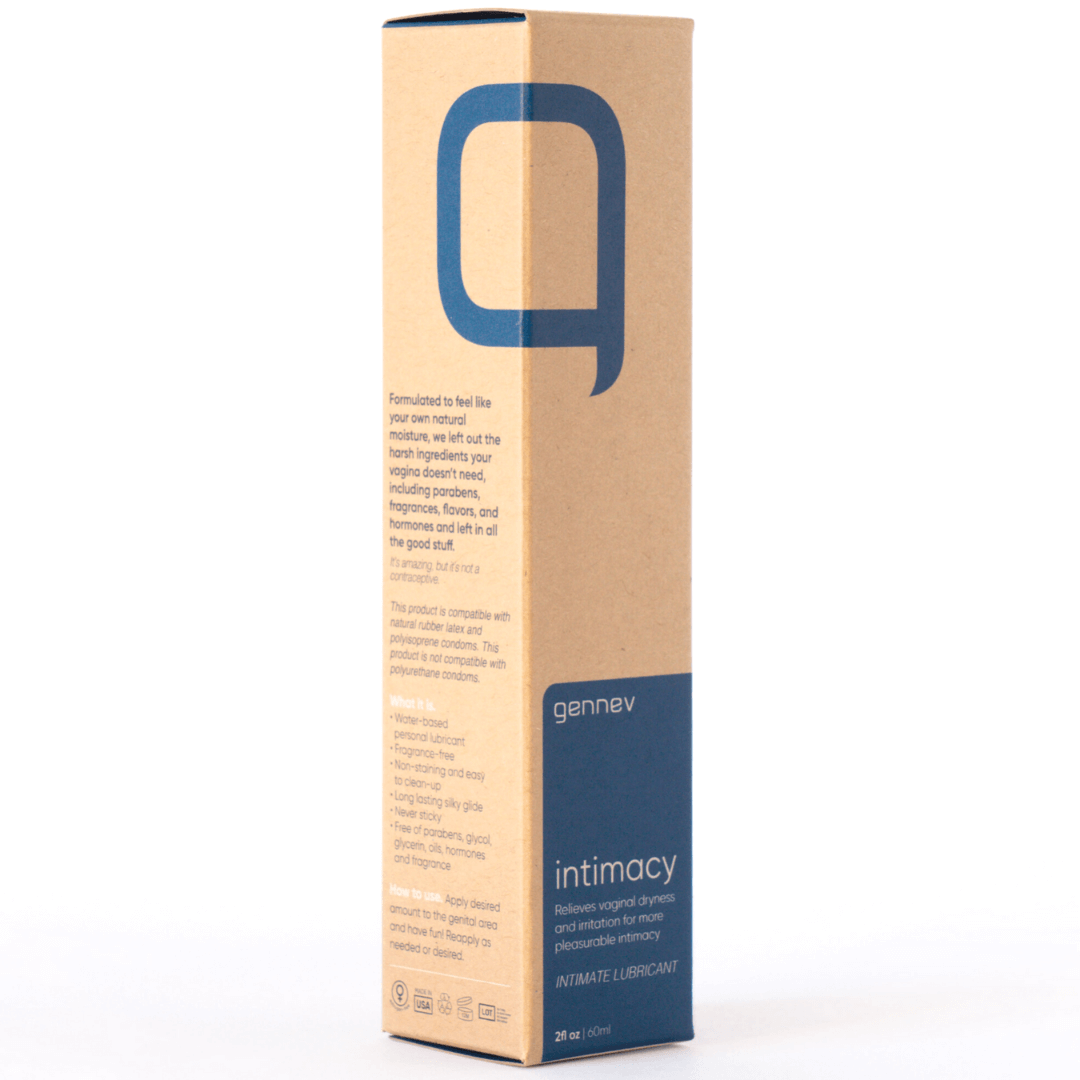
1. Lubricants and moisturizers – For many women, the right system of lubricants and moisturizers is a great, simple, effective solution for the problem of vaginal dryness. There are many lubricants for menopausal dryness, so check the label to ensure your lubricant is free of parabens which can cause irritation; lubes that offer numbing, warming, fragrance or flavor may also contain substances that users can have reactions to. The Gennev line of personal care products is free of irritants and pH-balanced to maintain your body’s natural chemistry, since you’re asking. Our line of products includes:
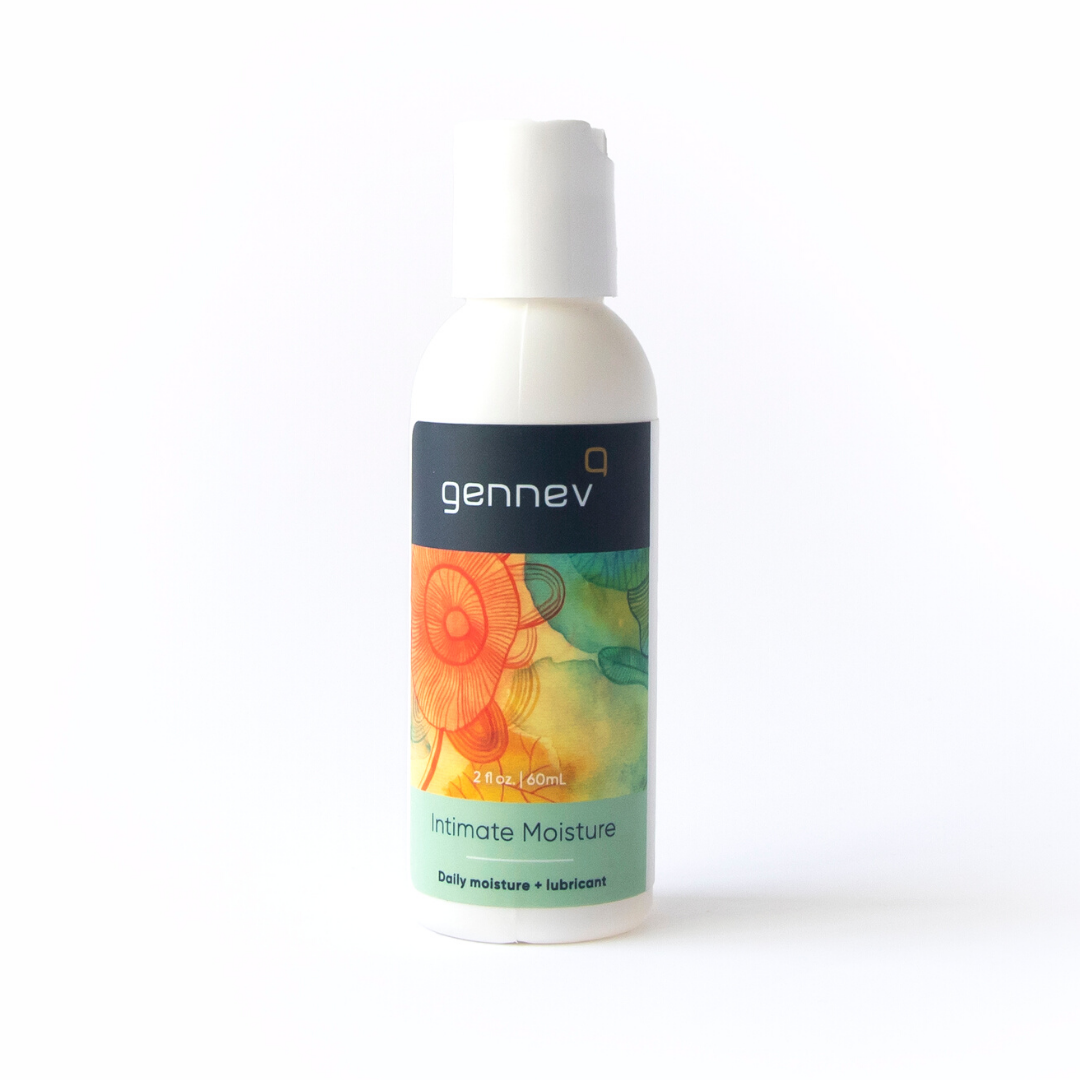
Gennev Comfort for vaginal dryness
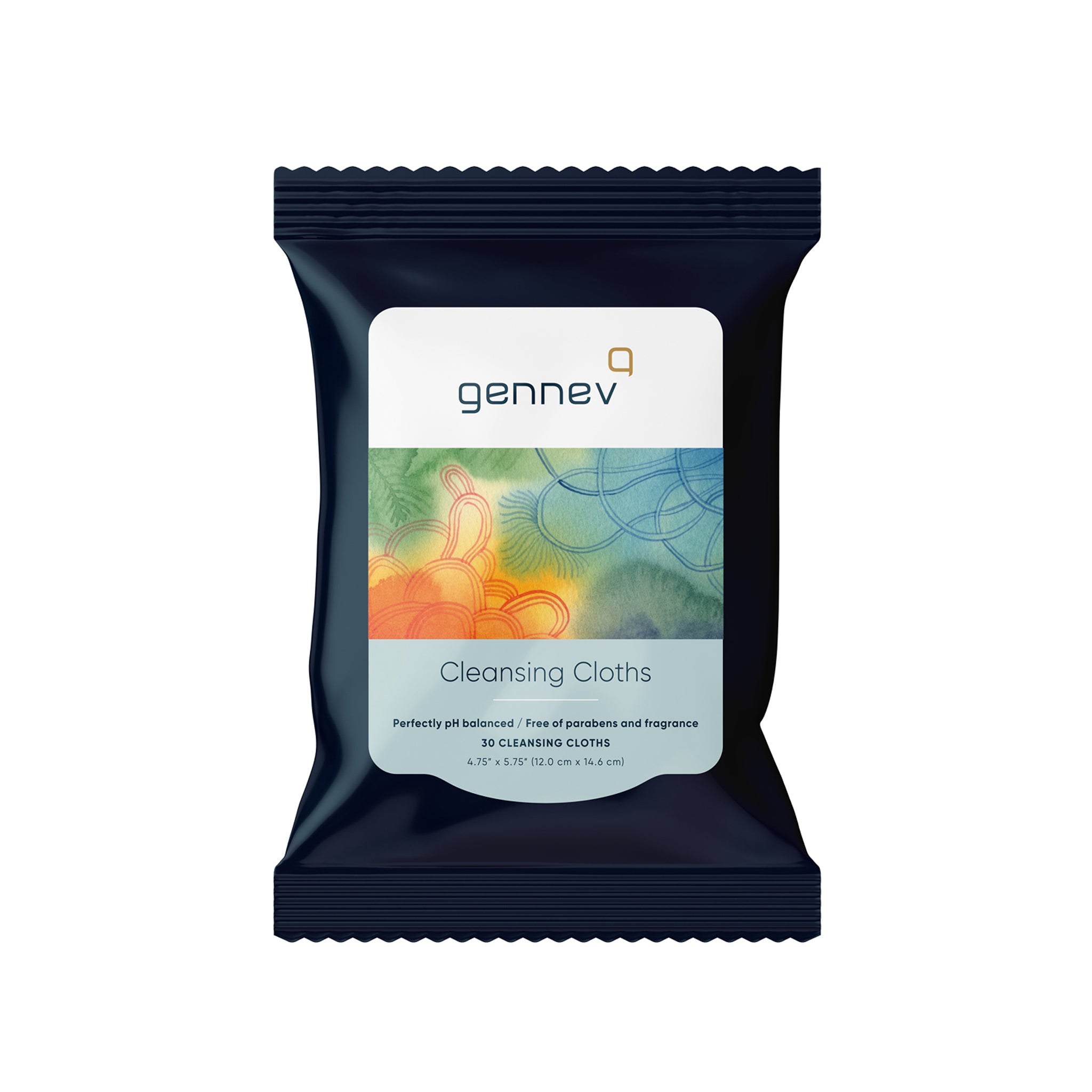
Cleansing Cloths, which are feminine vagina wipes for comfort on the go.
- It’s important to find the best lubricant for menopause dryness for
- you
- , regardless of what that may be.
2. Lifestyle changes – Some women find relief by adding regular exercise, reducing alcohol and nicotine intake, avoiding caffeine, and eating a healthy diet. Douches, some soaps and lotions not intended for sensitive areas can increase irritation, so choose your cleanser carefully and don’t douche at all.
3. Alternative remedies – Compounds in soy and soy products can mimic estrogen and help some women reduce vaginal dryness, so consider adding tofu and soy milk to your diet. And because we know a lot of folks are mystified about what to do with tofu, here’s some help with that as well.
4. Hormone therapy – Designed to replace your body’s natural estrogen, hormone solutions are localized treatments such as vaginal estrogen inserts, skin patches that release estrogen over time, and oral medications. These may not be suitable for every woman, so be sure to work with a doctor to determine if one of these treatments is right for you. To continue the fight against dryness, also try some lubricants for women.
If you would like to try a prescription of HRT for vaginal dryness, a Gennev menopause-certified gynecologist can give you a trusted opinion, determine if medication is right for you, and they can provide prescription support. Book an appointment with a doctor here.
Now, about that “1 in 3″ stat”¦
Did you have any idea vaginal dryness was such a common concern? Maybe not, because reproductive and sexual health issues are still such taboo topics that often women don’t discuss these problems with each other”¦or with their doctors. And we want your help to change that.
The women of Gennev toss around terms like “vaginal dryness” and “personal lubricant” the way other people discuss sports scores”and we want the world to be right there with us. We think women can only benefit from making vaginal health issues as open a topic of conversation as any other topic that impacts our health and quality of life.
So consider this an invitation to join the discussion at whatever level and in whatever way you’re comfortable. Check out our posts on Twitter, Facebook and Instagram, and tweet or comment back with your thoughts. Join Midlife & Menopause Solutions, our closed, women-only Facebook group. Keep yourself in the know by subscribing to our podcasts, blog, and newsletter.
Looking for more information about vaginal dryness? Ask one of our doctors! Book a Telemedicine appointment with one of our GYN providers.
*As with any medical issue, please consult with your doctor to rule out more serious causes.
Quick question: who suffers from urinary incontinence? If you said “seniors and women who have had lots of babies,” you’re not wrong. But your answer is a little incomplete.
In fact, one of the fastest-growing populations with this issue is fit, younger women. Female athletes and women who exercise regularly are complaining of leakage, regardless of age and whether they’ve had babies or not. And it’s not just limited to incontinence when running, it’s cross trainers, gymnasts, everyday women who hit the gym after work and on weekends.
Tips for incontinence and exercise
So what’s going on down there? I went to two physical therapists to get some incontinence and exercise answers: Meagan Peeters-Gebler PT, DPT, CSCS, CMTPT, and Brianna Droessler-Aschliman PT, DPT, CMTPT (see their complete bios below). Both are experts in women’s health as well as accomplished athletes themselves.
Here are five things they told me to help prevent or reverse urinary incontinence:
Incontinence tip 1: Don’t over-train your pelvic floor
According to Meagan and Brianna, one big reason for the uptick in leakage is the way we exercise. In order to control urination, our pelvic floor (the muscles and tissues that hold the bladder, uterus, bowel, and vagina in place) needs to be able to contract and relax. But many modern exercise routines involve clenching the pelvic floor and abdominals and holding them tight (think crunches), and holding too tightly and for too long can spell trouble.
“We have this mentality that more is better,” Meagan says, “and that gripping and never letting go makes muscles stronger. Women need to learn how to do exercises properly to first engage the pelvic floor and abdominal muscles and then to relax them. An overactive pelvic floor can cause problems just like a weak one can.”
Incontinence tip 2: Let it go, let it go, let it go
Your posture can also result in an overactive pelvic floor, Brianna says. While many of us retain stress and tension in our shoulders, many women hold tension in their pelvic floor, keeping the abdominals tight. According to Brianna, “All the anxiety in our society can contribute to incontinence when we keep the pelvic floor too tight. Just like we need to let our shoulders drop, we need to learn how to relax those lower muscles and let the tension flow out.”
Incontinence tip 3: Pap pain or a little dribble? Get ye to a doctor
One way to know if you’ve overachieved on the pelvic-floor-tightness front is to be aware of any pain or leakage. If you experience pain during a pap test or pelvic exam, that’s a problem, says Bri. There should be no pain for younger women, not during the exam, not even when the speculum is being inserted in the vagina. If it hurts, that’s not OK and could be a sign of future pelvic floor problems.
Additionally, pre-perimenopausal women who haven’t had kids should have no leakage. Zero, according to Meagan. If once a month a sneeze causes a little nether-mist, that’s a problem. It shouldn’t happen at all to women in this category.
If either of these happen to you, no matter what your age or risk factors, it’s time to talk to a doctor. “Start the conversation with your doctor now,” Meagan advises; “Ask for a referral to a pelvic floor specialist. Getting the right treatment early on can mean avoiding all sorts of difficulties a few years down the road.”
Incontinence tip 4: Exercise right
In addition to easing up on the crunches or other all-abs-all-the-time exercises, other athletes can reduce their risk by exercising the right way. If you’re a runner or do other high-impact exercise, increase your cadence (number of foot strikes per minute) to reduce bounce, says Bri. Don’t go as high or as low with each stride; shorten your stride so there’s less impact, and lean forward so your bladder is supported by your pelvic bones. If you’re a little heavier and hoping to run to lose weight, try to get some of the extra weight off first, to lessen impact. While extra weight is also a risk factor for pelvic floor issues, the damage done by running can be even greater, Bri says.
Incontinence tip 5: Even if you don’t have to go yet, go now
Not to the bathroom, to the doc. In a perfect world, Brianna and Meagan told me, women would go to a physical therapist (PT) for assessment and training before any issues arise. As Meagan said, “It makes an enormous difference when women are proactive about their pelvic health. Consult with a physical therapist who specializes in this area and stick with them. Go before you get pregnant, keep going during the pregnancy, and for sure get help with recovery after the delivery. Even if you don’t plan on having kids, you’re not guaranteed a trouble-free future. PTs can help you drastically reduce or even eliminate the risks.”
Learn more about physical therapy and incontinence issues or find a provider near you at the Orthopedic Spine Therapy website and Four Pines Physical Therapy.
Suffering from incontinence when you are running? A menopause-certified provider can be helpful. Book 30 minutes for your personal consultation with a menopause expert.
Meagan is a physical therapist, strength and conditioning specialist and Ironman finisher who works and plays in Appleton, WI. In addition to treating in the better known PT realm of orthopedics, she also works extensively in the mysterious world of pelvic health (incontinence, pelvic pain, pain with intercourse). Her passion is educating women about their amazing bodies, and she finds great joy empowering self-improvement with conservative strategies. She especially enjoys treating female and endurance-sport athletes. When not in the clinic she can be found swimming, biking and running. She has even mastered the art of peeing on a bicycle—on purpose.
Brianna is a 2015 graduate who found her passion in pelvic health after an internship during PT school. At this time, she has been working closely with her co-worker/mentor to expand her skill set in the pelvic health realm. She is very passionate about this particular population because of its unique challenges. She spends time educating patients, and providing them with a comfortable and safe setting. At this time, she primarily treats female patients with incontinence, dyspareunia, and abdominal and pelvic pain. She enjoys spending time with her husband, training for various events, traveling, and being with family.
The largest organ in the human body isn’t actually in the human body as it’s on the outside. To be even more accurate, it is the outside.
It’s our skin. And it does more than keep the rain out and our insides in.
Our skin is a pretty good barrier against much of the outside world, but it isn’t perfect. Sun damage or melasma happens. And the products we use on our skin may be doing us more harm than good.
Why is menopause skin different?
As we age and lose estrogen, skin gets drier, thinner, loses moisture and elasticity. This makes skin more prone to damage, dark spots, and wrinkles.
Unfortunately, the beauty industry, with its focus on younger women, doesn’t really handle aging skin well. There is no shortage of options on store and salon shelves, but many products not only provide temporary relief at best, they may actually be introducing harmful substances, at worst.
Are you causing harm to your hormones?
Chemicals such as phthalates and parabens are found in many common household products, including cosmetics. These are suspected “endocrine-disrupters,” meaning they may have unnatural influence on our hormones. At a time when hormones are already pretty “disrupted” thanks to perimenopause and menopause, additional commotion from the outside is as unwanted as it may be dangerous.
Menopause skin care solutions
We talked with skin-care expert Kari Gran, co-founder of the company that bears her name, about how to protect all skin, but particularly aging skin.
“Sunscreen” came up regularly, often, and frequently at volume: Kari Gran is a true believer in the power of protecting our skin so it’s healthier, longer. Much of our skin’s aging, Kari says, can be attributed to accumulated sun damage. But many of us fail to understand how sun damages our skin.
The rays that burn our skin aren’t the same as the ones that age us over time. While UVB rays damage the DNA in skin cells directly, causing sun burn and most skin cancers, the weaker UVA rays are the ones that cause photoaging. These rays can penetrate to the collagen in the deeper dermal layer, damaging not only collagen (which we already have less of as we age) but also causing the tiny blood vessels in the skin to bleed, which can make those thin purple lines that are visible just under the skin.
You need sunscreen that blocks both types of rays, and, says Kari, you need it every day. Whle UVB rays may be less present and harmful on cloudy days, UVA rays are still present, still penetrating, still doing damage.
In addition to the right sunscreen, we need to use products that truly protect and nourish but that contain only helpful (and not harmful) ingredients.
While no OTC product can replace the properties of estrogen, some are more attuned to the need to protect and nourish better than others.
Kari Gran and Lisa Strain started the Kari Gran company based, as it often is for women, on a need that no one was meeting.
Kari herself was diagnosed with an autoimmune disorder in her late twenties. That diagnosis, after years of not feeling well, led her to consider the impact on her insides of the products she used on her outside: creams, lotions, soaps, makeup, etc.
We know what we put on our skin can affect us systemically “ it’s the way nicotine patches work, after all. So we need to be thoughtful about the products we use on our skin, especially as we get older.
Kari, who describes herself as a “diehard beauty junkie,” made healthy alternatives in her kitchen to give to friends as gifts. Lisa pushed her to turn her amazing formulations into a business, and there’s been no looking back.
Guaranteed free from endocrine-disrupting parabens and other harmful ingredients, the rich, lush, cleansing, hydrating, restorative serums, soaps, oils and more are protective and nourishing.
Learn more about skincare for menopausal skin and Kari Gran “ the company and the woman it’s named for “ in this podcast with Gennev CEO Jill Angelo.
What is your skincare regimen, if you have one? Does it work for you, or are you considering switching it up? We’d love to hear what you’ve learned in our Gennev Community forums!
At Gennev HQ, we joke that Burning Mouth or burnt tongue syndrome makes us think of Burning Man.
It’s not funny though: if you’ve ever gulped too-hot coffee or bitten into a pizza fresh out of the oven, you know the serious pain of a burnt tongue.
And for some of us, this sensation happens without any known cause or injury.
If you feel like you’ve scalded your mouth and just can’t remember when or where, it may not be midlife brain fog: there really might be something going on, even if you (or your doctor) can’t pinpoint the source.
It’s called Burning Mouth Syndrome (BMS) and, for some reason, people in perimenopause are more likely to experience this symptom
What is Burning Mouth Syndrome?
BMS is, in medical terms, a “chronic orofacial pain disorder.”
BMS symptoms include feelings of burning (hot, tingling, and painful), other paresthesia or tingling all over the body (abnormal sensations of the skin, like prickling, tickling, chills, or numbness), and pain inside the mouth without an obvious lesion or injury.
Most sufferers feel pain on the front part of the tongue, but the roof of the mouth, palate, gums, lips, and other tissues may also be affected.
People with BMS may also experience dry mouth, sensitivity to certain foods, and strange tastes.
While some infections, medications, diseases, nutritional deficiencies, dental work, or psychological conditions are known to cause these symptoms (called secondary BMS), primary BMS is idiopathic: there isn’t a discernible cause. A third type may stem from an allergy to certain preservatives.
For sufferers with primary BMS, pain typically gets worse over the course of a day; people may feel fine when they wake up, and the discomfort peaks in the evening. With secondary BMS, the pain remains consistent.
We don’t know why primary BMS happens, but research suggests that it’s possibly due to nerve fibers malfunctioning, potentially those in the back of the head or in the front of the tongue.
Overall, Europeans are more likely to experience BMS than Asian or American residents (7% prevalence vs. 2-3% and 0.7%, respectively).
Anyone can get BMS, but because a disproportionate percentage of sufferers are perimenopausal women of all races and backgrounds, experts suspect that hormonal changes are be involved. Depending on who you ask, anywhere from 10% to 40% of menopausal women may experience BMS, though different diagnostic criteria are not well-defined.
This hormonal tie-in does make sense: like your genitals, the mucous membranes in your mouth have sex hormone receptors, and we know that decreases in estrogen around menopause and dry mouth can lead to both decreased saliva production and the periodontal issues associated with dry mouth.
Other potential causes or links to BMS include oral parafunctions (like clenching your jaw or grinding your teeth), an allergy to dental materials, diabetes, vitamin B, folic acid, or iron deficiencies, gastrointestinal diseases, psychiatric and neurological disorders, or pharmaceutical side effects.
In up to a third of cases, multiple causes are suspected.
While BMS caused by hormonal changes isn’t dangerous, it can lead to people not eating or not eating well. Alternatively, for those who find that eating or drinking temporarily reduces the pain of BMS, the condition can lead to overdoing it and consuming more than is healthy.
Great. So what can I do about my BMS?
Like many benign conditions, BMS won’t kill you, but it can make your life miserable. The discomfort can disrupt your sleep, make it difficult to eat, and lead to anxiety and menopause depression.
The bad news is that treating BMS is mostly managing symptoms. The good news is that you have options.
See your doctor and your dentist! They’ll want to rule out all other potential causes, like some anti-depressants (dry mouth), Alzheimer’s, Parkinsons, or hypothyroidism (change in taste), lichen planus (sores) or a yeast infection (redness). Experts recommend examination of teeth, mouth, temporomandibular joint, and dentures (if applicable), as well as a full blood count, tests for folic acid, iron, B vitamins, sex hormones, and blood sugar and swabs for oral bacteria.
Fight fire with fire. Believe it or not, spicy foods can actually help BMS: capsaicin (the compound that makes hot peppers hot) can disable the pain-signaling chemicals in nerve cells. You can buy capsaicin oil over the counter or you can put a few drops of Tabasco sauce in a teaspoon of water and swish this around in your mouth. Too good to be true? Menopause Goddess Lynette Sheppard swears by capsaicin.
Quit smoking. When we said “fight fire with fire,” smoking is NOT what we had in mind. BMD can be triggered by tobacco, so cutting down on cigarettes, cigars, and even chewing tobacco could help reduce the incidence and/or severity of BMD symptoms.
Avoid carbonation. A cool drink may sound terrific, and maybe it will help, but choose non-carbonated liquids or plain ice water, as carbonation does worsen BMS in some people.
Manage stress. The relationship between stress and BMS and other chronic disorders is a little bit of a chicken-and-egg situation. Does your BMS cause stress, or does stress in menopause cause BMS? Regardless, stress is bad for your health. Yoga, meditation, exercise, psychotherapy, and cognitive-behavioral therapy have been shown to lessen BMS discomfort.
Try alpha-lipoic acid (ALA). Your body naturally produces this antioxidant, and it’s also found in foods like tomatoes, potatoes, and spinach. ALA promotes the production of nerve growth factor and is typically used to treat diabetic neuropathy and other nerve issues “ potentially including BMS. While studies suggest improvement in BMS symptoms compared to placebo, more research is still needed.
Hormone replacement therapy. We’ve written many times before about our stance on hormone replacement therapy HRT has many pros and cons.. If this is something that works for you and your doctor, hormone replacement therapy can help BMS.
Struggling with BMS? A Gennev menopause-certified gynecologist can give you a trusted opinion, if medication is right for you, and they can provide prescription support. Book an appointment with a doctor here.
BMS is no picnic, but you have support and choices in how you manage it. Talk with one of our menopause-specialist doctors about your options for controlling your menopause symptoms via Gennev’s telemedicine service.
Do you suspect you may have primary or secondary BMS? We’d love to hear about your experience in our Gennev Community forums.
Sleep aid, pain reliever, anxiety soother as if CBD’s reputation proves true, it could be a great boon for women in menopause.
So, does CBD’s reputation prove true?
We wanted to understand where the research stood on CBD as its potential benefits as well any concerns, its promise as well as its limitations. So we contacted Jenny Wilkerson PhD, Assistant Professor of Pharmacodynamics at the University of Florida and co-author of the article “CBD: Rising star or popular fad?” for The Conversation, and we asked her a few questions.
Can you explain the differences between CBD/THC/hemp/marijuana, in terms of your research?
Dr. Jenny: Marijuana and hemp are different strains of the plant Cannabis sativa. Marijuana can also come from the plant Cannabis indica. However, hemp is fully legal to possess and grow in the United States, while marijuana is the strain that is in different stages of state legalization/ decriminalization but is still fully illegal federally.
These strains of Cannabis sativa (often referred to as just Cannabis) are essentially the same, but they have some subtle differences. The main difference is the amount of Delta-9-Tetrahydrocannabinol or THC each plant contains.
THC is the compound that exists in all strains of Cannabis that gets people high. While marijuana can contain upwards of 10-40% THC, hemp contains 0.3% or less.
Cannabidiol, or CBD, is also found in all strains of Cannabis but does not get people high. In the laboratory, both THC and CBD have shown promise to produce therapeutic effects, including relief from some aspects of pain.
Your current research focuses on the pain-relief possibilities of CBD. Why is this research of interest, especially now?
Dr. Jenny: The United States is in the midst of an opioid abuse and misuse epidemic. This statistic is a bit old, with data collected from 2000-2013, but approximately 80% of all new heroin users get their start from misusing prescription opioids.
This has brought into sharp focus the science behind opioid use for pain. Although many patients are prescribed opioids for chronic pain, the evidence is resoundingly clear that opioids are not very effective for long-term, chronic pain control.
Learn more about menopause and your body
by taking Gennev’s free Menopause Assessment.
This factor, coupled with the desire not to repeat history with developing analgesics, or pain-relieving drugs, that have such a strong abuse potential as opioids, has led to an urgent need to develop non-addictive therapeutics for chronic pain.
In addition to reports that CBD does not get people high, laboratory studies which are routinely used to screen drugs for their abuse liability show that CBD does not possess a strong abuse potential. In fact, some studies have shown that CBD may be a good treatment for drug addiction, including opioid addiction.
We’re very interested in your research on how CBD acts on receptors in the body that help regulate sleep, mood, anxiety, and pain, as all of these are common issues for women in perimenopause and menopause.
Dr. Jenny: We know a lot about the serotonin receptor, one of the receptors in the body that seems to produce most of the functional effects of CBD. This is where a lot of the hype over CBD stems from as the thought that it might be the next “cure all’ for several hard-to-manage issues that so many people deal with.
However, we do not know enough about exactly how CBD works with the serotonin receptor. Because different physiological outcomes (i.e., regulation of sleep, mood, anxiety, and pain) are regulated through different actions at the serotonin receptor, we don’t know enough to make strong predictions of exactly how well CBD will produce a therapeutic effect in these outcomes.
To complicate matters, most scientific studies, up until recently, have predominately used male subjects for research. This is changing, due to new National Institutes of Health rules. However, If women are used, they are generally not in perimenopause or menopause because it has been well documented that the associated hormonal changes can alter how some drugs work. So, until we know how CBD will work specifically in perimenopausal and menopausal women, it is hard to draw direct conclusions from what is seen in men.
Although there are plenty of possibilities that CBD may produce at least a subset of these therapeutic effects, we don’t yet have solid evidence of which ones. Indeed, it would be wonderful if it turns out that CBD really works for more of these outcomes, rather than fewer.
Why isn’t CBD being regularly prescribed?
Dr. Jenny: CBD is currently only prescribed as the drug Epidiolex, for the treatment of intractable pediatric epilepsy.
In order for a physician to be able to prescribe a drug, it has to fulfill several important criteria. One of these initial criteria is that it has to be proven safe. Epidiolex did this, and so this is why pharmaceutical-grade or very pure CBD is generally regarded as “safe.’
However, another main criteria that has to be met by potential drugs is that it has to be proven to work as well, or better than the current drugs on the market. This is very important and has to be done in what is known as a “double-blind, placebo-controlled’ study.
We know that the placebo effect is very real, and that when people even have the idea that they will get relief from pain, they report feeling less pain. This occurs even when people get a treatment where there is nothing present that would biologically cause pain relief. So, the patient can’t know if they get the drug or placebo, and the person giving them the treatment can’t know either, because we know this can alter perceptions as well.
Because CBD has only been rigorously tested in this manner for seizure control in intractable pediatric epilepsy patients, we don’t know if it will stand up to this test for regulating pain, sleep, mood and anxiety.
Another concern I have about casual use of CBD is that although pharmaceutical grade CBD was deemed safe by itself in the Epidiolex clinical trials, they found that it can interact with other drugs, such as the drug valoproate which may be prescribed for seizure activity, migraines, and bipolar disorder.
Thus, it is likely that CBD may interact with other drugs as well. This could mean taking CBD with certain drugs could diminish or enhance the effects of prescriptions, leading to problems controlling particular medical conditions that were once well-managed, or increased side effects of the other medications.
For this reason, it is incredibly important to talk to your doctor or pharmacist about potential drug interactions with other drugs before taking/trying CBD.
CBD is already out there and in use. Is that a concern for you?
Dr. Jenny: This is a bit of a concern for me. Only Epidiolex is approved for a medical condition and undergoes Food and Drug Administration (FDA) regulation. All other forms of CBD aren’t regulated, so there is no real way to know what you are spending your money on.
There have been numerous consumer reports that show that the actual amount of CBD that is in the over-the-counter products is significantly less than what is reported on the label. Also, some of these over-the-counter products contain enough THC to show up on drug tests.
Therefore, using the CBD that’s out there for a serious medical condition is going to be tough, because you don’t really know how much or even exactly what you are getting. If you don’t see an effect with CBD, it could be that you aren’t getting the correct dose, or it could be that CBD isn’t going to work. If using CBD from the shelf doesn’t work, it might be difficult to know when to cut your losses and put your time, effort, and money towards other avenues.
Because of those reasons, even in pro-medical CBD/ marijuana states, most physicians are very hesitant to prescribe CBD. Additionally, in the future, if CBD is developed as a therapeutic for a given condition, if someone has already tried an over-the-counter CBD product that didn’t work, they might be less likely to use CBD where it could work.
If I want to purchase CBD to test for myself, what should I look for? Is there a provider/organization you trust?
Dr. Jenny: I cannot recommend the purchase of over-the-counter CBD, for the above reasons. I recommend that if you want to try CBD, be smart and informed. Look up reports from third-party groups like consumer reports, to get an idea of what you might actually be purchasing with your hard-earned money, keeping in mind that these reports can change from one batch to another.
Is there any research being conducted right now that you’re excited or concerned about?
Dr. Jenny: As a chronic pain and drug abuse scientist, I am very interested in on-going research into the potential of CBD to produce pain relief and reduce the over-reliance of prescribing opioids for chronic pain, as well as a treatment for opioid abuse and addiction.
More about Dr. Jenny Wilkerson: Jenny Wilkerson joined the University of Florida College of Pharmacy in November 2017 as a research assistant professor in the Department of Pharmacodynamics. Prior to joining the University of Florida, she was a postdoctoral fellow at Virginia Commonwealth University in the Department of Pharmacology and Toxicology where she received the competitive Ruth L. Kirschstein F32 Individual National Research Service Award from the National Institute on Drug Abuse. She received her Ph.D. from the University of New Mexico in the Department of Neuroscience.
Have you considered or tried CBD for menopause symptom relief? Was it helpful for you? We’d love to hear more about your experience, so please join us in our community forums, find us on Facebook, or join our closed Facebook group, Midlife & Menopause Solutions.
The day was going great, things were rolling, stuff was getting done… until you got some unexpected negative feedback from your boss.
Instead of taking a few calming breaths and giving yourself some space to reread the email (and discover she didn’t insult your work after all), you just see red. And seethe. Then you try to get back to work, pressing down the feeling so you don’t blow up in the office. Perhaps you further numb your anger over the situation a little later by inhaling a handful of cookies in the breakroom. You don’t remember doing it. But you’re very aware that your fuse to anger is shorter than it’s ever been before.
Let’s face it: our coping strategies for anger in menopause determine our ability to bounce back from unexpected emotional ups and downs.
It’s easy to let rage consume you. Once you start riding that anger wave, it’s hard to disembark until you’ve reached the beach. Luckily, we’ve got a few tips that’ll help you cut the ripcord before you faceplant in the water.
Why do I seem to be angry all the time?
Increased irritability and anger are common symptoms in perimenopausal, menopausal and post-menopausal women. Yet the reasons for these symptoms can vary greatly from woman to woman.
Just some of the reasons behind unexpected rage include:
- Unbalanced or fluctuating hormones
- Loss of sleep
- Changes in exercise, nutrition and hormones
- Dealing with chronic pain or discomfort
It’s also worth noting that not everyone experiences these changes or feels unexpected anger during menopause. So don’t “expect” anger issues just yet. But if you are experiencing these issues, rest assured that this is a common and manageable symptom.
Unreasonable? Or appropriate?
Have you ever bottled up your feelings for fear others will label you “too emotional”? Many women feel scrutinized and judged for showing too much emotion. We start believing every emotion is unreasonable when really, we deserve to feel our feelings. We even deserve to express them, which can be the real challenge.
Menopausal women in marriages feelings are often cast aside and labeled “hormonal” “ even when they’re completely appropriate to the situation at hand. Our partners, family and friends might write us off as being irrational even when our emotions have nothing to do with hormones. And actually, hormonal changes may not create strong emotions so much as they allow strong emotions to bubble up to the surface. So the emotion is appropriate; now you just need to be sure your response is as well. .
Did a thoughtless driver cut you off in traffic and you are ready to rear-end them? Did someone leave a mini-sip of milk in the fridge at home and you want to decimate the next person unfortunate enough to cross your path? Is your partner’s cereal-eating (namely crunching, slurping, and spoon-scraping, not to mention only leaving a sip’s worth of milk behind) sparking you to feel… murder-y?
Before you unleash your reaction, can you take a breath and ask yourself, is this feeling right-sized for the situation? Or, is this an inappropriate feeling for the circumstance?
Manage hormones through diet and exercise
Diet and exercise play a huge role in our mental health. In fact, there’s a direct link between the body and the mind: doctors believe your gut health is closely related to your emotional health — and we already know that exercise can help get those endorphins (hormones that help boost your mood and relax your mind) moving.
So, move! Not only is physical activity a great way to channel your negative emotions and provide a creative outlet for your stress, but it can increase your happiness hormone levels throughout the day, too.
When it comes to food, everyone is different. Some people can apparently eat nothing but sweets and potato chips all day long and never feel any adverse effects (though, we do demand to know who these people are!). The rest of us might find that we feel better and more in control when our diet supports our physical and emotional health.
So, if you’re feeling a little extra edgy throughout your day, you might want to look at your diet.
Some of the common hormonal disruptors you need to stop consuming. Reducing sugar in menopause, alcohol and caffeine. If you have an intolerance or allergy to other foods, excluding them from your diet can also help ease tensions and give you more control over your mood. To start, we recommend you:
- Be careful of your caffeine intake — especially first thing in the morning
- Avoid consuming more than the recommended 25 grams of sugar per day
- Limit your alcohol consumption (one serving per day for women)
- Monitor how soy and dairy affect your mood (possible disruptors in some women)
- Avoid dehydration in menopause by drinking plenty of water each day. It will also help flush out the toxins in your system
Develop a meditation/gratitude/yoga practice
One of the most effective ways to curb your stress is by attacking it before it attacks you. Developing a meditation practice can help you sideline anger or mood swings in menopause.
Mindful meditation allows you to notice your feelings (the good, the bad, and the ugly), accept them, and move on. Instead of shoving them aside or obsessing about them, you can observe them, acknowledge them, and let them go. And it won’t take as much time as you may think it will.
Find an outlet for your stress
Is it a little cliche to take a boxing class to find a creative outlet for your stress? Who cares?! If it works for you, go ahead and give it a shot.
Sometimes we just need an outlet for our feelings “ whether they’re positive or negative. We can get so caught up in our lives that we forget to take time to really process our emotions. It’s easy to write off feelings of frustration, anger, and self-doubt as “hormonal,” but will that serve us and our relationships? Likely, no.
Having a plan for dealing with adversity can make our reactions more appropriate. Stepping on your daughter’s LEGOs for the umpteenth time really is frustrating! But your hormones can make something like stubbing your toe or stepping on a toy feel 10 times worse. And that can influence how we react, whether we shout at the LEGO-leaver or rub our foot, throw the offending toy into the toy bin, and move on.
Creative outlets simply allow you to process those feelings in a safe space, and in a safe way. Even if you don’t feel like you’re creatively inclined, you can still channel those emotions into art or physical fitness. Some of our favorite ways to do this include:
- Set a timer for five minutes and write in a journal until the timer dings (or, keep going after time is up if you’re so inclined)
- Blast some music and dance out your problems; we recommend making a playlist full of anthems that you can sing along to and channel your rage
- Cuddle with a furry friend — nothing helps to process your emotions like a support animal
- Go for a run, walk, or bike ride
- Take a spin class
- Get a massage (yes, a massage therapist can help work out those tense muscles)
- Check out our Rage Checklist for coping with anger in the moment.
The important thing to remember is that there is no “one-size-fits-all” solution for handling unexpected anger and rage. It’s important to listen to your body and do what works for you in the long run.
Care to share what’s tipping you over your anger-edge lately… and what is working for you in dealing with it? Consider Gennev’s Community Forums as another outlet where women gather and share real experiences about navigating through perimenopause and menopause. Join us.
February is Heart Health Month, which makes sense, since the holiday of hearts is smack in the middle of it. However, despite all the information that’s out there, heart disease remains the #1 killer of men and women in the US.
Dr. Sarah Speck of POTENTRx – Heart disease is the #1 killer of men and women in the US
The good news is, as much as 80 percent of your risk of heart disease may be within your control, says Dr. Sarah Speck, cardiologist, internist, and co-founder of POTENTRx, a medical fitness company. Exercise, stress-management, avoiding tobacco exposure: all of these can go a long way to protecting your heart health.
“Preventing illness is the best approach to managing health
and maintaining vitality at whatever stage of life.”
as Dr. Sarah Speck
Dr. Speck partners with her patients to identify health risks and put together a plan to help them be proactive in maximizing their health. She is an educator in illness prevention, disease-reversal and disease-management techniques, teaching patients and the public about lifestyle choices that protect their hearts and health. (Read the full transcription below.)
What about that other 20 percent?
Dr. Speck’s focus on a heart-healthy lifestyle came about in part due to her own experience. When she started to experience the signs of menopause, she decided not to go on Hormone Replacement Therapy (HRT) to ease the symptoms, because the Women’s Health Initiative study seemed to indicate there was a higher risk of heart disease from HRT.
However, after a string of sleepless nights started to impact her ability to make the best medical decisions for her patients, she decided to go on the patch.
She did this for a decade. When the time came to go off HRT, Dr. Speck was astonished to see her LDL (bad) cholesterol numbers shoot through the roof. Despite a very healthy lifestyle, she had inherited her mother’s high cholesterol as and without the protective benefits of estrogen, her “inheritance” had kicked in full force.
This served to reinforce Dr. Speck’s decision to promote preventative, proactive care for her patients. Even those with genetic risks can see huge benefits to their health by making the right lifestyle choices.
What will you do to be heart healthy?
In honor of Heart Health Month, team Gennev wants to issue a challenge to our community: pick one thing you’ll start doing today to increase your wellness and reduce your risk of heart disease.
At the end of February, find us on Facebook. Let us know what you’ve been doing and how it’s working for you. Get inspired, be inspirational as we can’t wait to hear what you come up with!
Need ideas? Be sure to listen to the podcast above, and you’ll get some great ones.
Next up on the Gennev podcast: we talk with author and motivational speaker Juju Hook. We reviewed her book on “rebranding” midlife as Hotflashes, Carpools, and Dirty Martinis as and enjoyed it so much we had to invite her to speak with us. Her fresh, feisty, irreverent look at the myths and stereotypes of midlife are really good for your heart too, if in a different way”¦.
Have you dealt with heart disease, are you managing it now, are you worried about your risks due to genetic or lifestyle factors? We’d love for you to share with us. Please share in the comments below, on Gennev’s Facebook page, or in Midlife & Menopause Solutions, our closed Facebook group.
Transcription:
Jill: February is Heart Health Month, and heart disease is the number one killer of women, I understand. Can you tell us a little bit more about that statistic, because I think that’s really shocking?
Dr. Speck: Well, it’s an unfortunate statistic, but in fact more women die of heart disease every year than men do. By the time we reach menopause, it’s an equal opportunity disease for men and women. But unfortunately, by the age of 45, one in nine women will have some form of heart disease as opposed to one in five men. By the age of 65, one in three women will have heart disease as opposed to one in two men. So, we have a real opportunity, if we can turn that around, in early menopause to impact our risk of developing heart disease later in life.
Jill: Why is that statistic; why are women more prone to this than men? It sounds like women catch up to be an equal opportunity player, sadly. I’d rather we were equal opportunity in lots of other ways, but why do women catch up, and why is it killing women as a number one killer?
Dr. Speck: Well, I think, I take your first question: the fact that we lose our natural estrogens, we lose elasticity in our skin, our hair changes, our eyes change, and our blood vessels change. And our blood vessels “¦ the further away we get from our natural menopause, the more difficult, the more brittle, if you will, our blood vessels become. And more vulnerable to developing cholesterol-related plaque. So, that’s really why we catch up. Even taking synthetic estrogens don’t really restore the health of our blood vessels that we had pre-menopause.
Jill: That’s fascinating. So, taking synthetic estrogen, how about the bio-identical? Is there any form of estrogen in HRT or any hormone-related therapy that can reverse that damage to our blood vessels?
Dr. Speck: We’ve not been able to identify a hormone replacement therapy as either bio-identical or whether it’s patch or whether it’s oral therapy as that actually reverses or restores the flexibility. So, what we really want to do is to concentrate on those risk factors that we know can create more inflammation than just losing our natural estrogens. And those are high blood pressure, diabetes, having high cholesterol, being obese, being exposed to tobacco products. Those are the big five, if you will. For men and for women. But the women become much more vulnerable to those after their menopause.
As to your second question, I think the reason women may die more of heart disease is because we don’t recognize that we are necessarily at risk. So, if you have any of those big risk factors, you may have atherosclerosis. Even if you are just having nausea. Even if you are just having unusual shortness of breath. Even if you are just unusually tired. It may be that your arteries are clogged, and your heart isn’t able to function as well as it used to. And so, those individuals that have those risk factors, need to seek attention from their providers.
Jill: So, I was about to say the word “fascinating,” because I think it is. When I think about heart disease versus a heart attack, I know what a heart attack is, but heart disease as a disease, what is that? How do you know when you’ve now got it? And then obviously it’s something you manage, but is it like other diseases where there are symptoms, you do things to control it but it never really goes away?
Dr. Speck: Good question. There are several aspects of the heart obviously; there’s the muscle, the valves, there are the electrical fibers and there are the blood vessels that supply the heart. So, any of those can become diseased, and there are congenital reasons for people to have heart disease that they are born with. But what we wanted to talk about today, I think, are the diseases of the blood vessels that are more or less acquired. Those individuals that have diseases of blood vessels, again, that can be very insidious. It can happen over decades before it actually declares symptoms. So, that’s why we want to pay so much attention to those risk factors. Because really what causes heart disease that causes heart attacks or those that cause strokes also, is that there is inflammation on the inside lining of the blood vessel. And when there’s inflammation on the inside lining of the blood vessel, it looks very much like the skin of someone who is having a bad outbreak of psoriasis or eczema; it’s cracked, it’s weepy, it’s red, it’s angry. And as the blood goes flowing by, the particles of bad cholesterol, the lousy cholesterol, the LDL cholesterol, literally drop through the cracks and start to form plaque in that little layer between the lining of the blood vessel and the muscle layer. That can happen decades before anyone develops any symptoms.
Jill: The symptoms that you mentioned earlier: feeling tired, shortness of breath; they’re kind of everyday symptoms. What are the top symptoms you encourage women to look for? And at what point should they take those symptoms seriously enough to come in and get checked?
Dr. Speck: Well, women may have symptoms that are unique to them and somewhat different than men. The reason women have symptoms of heart disease is the same, and that is the heart muscle is not getting enough oxygen to be able to pump the blood forward effectively to the rest of the body. So, like any pump when it doesn’t pump well, it creates a back pressure. Often at times, the first place it creates that back pressure is in the lungs, so you start to feel short of breath. So, if on your routine walk you’re feeling like, “wow, I don’t know why I can’t get through this today.” And you have high blood pressure, or you have diabetes, or you’re overweight, or you have high cholesterol, or you have a family history of heart disease, that’s something to pay attention to. Certainly, if you walk up James Street from the ferry dock, and you’re gasping for breath and there’s an elephant sitting on your chest, whether you are a man or a woman, you need to seek medical attention. More or less immediately.
Jill: It seems pretty straightforward, but do you see in the majority of your patients, people waiting far too long? What are trends you see in terms of that level of awareness of people coming to you to say, “I think I need to get checked.” Or do they wait far too long? Where do people line up?
Dr. Speck: In the immediate throes of having a heart attack, women traditionally wait an hour longer than men do to call 911. Because they think, “Oh, it’s just indigestion,” or “I don’t want to upset anybody, I don’t really want to wake my husband, I don’t really want to call my daughter, particularly if I’m living alone.” So, they may not be getting the life-saving treatments that are offered, fast enough to delay the consequences of having a serious heart attack. But in the more preventive sense, I think again women need to be aware that heart disease is the biggest killer. And just like we get our annual mammograms, we need to know our numbers annually. What’s your blood pressure? We all know what our weight is, what’s your waist measurement? If your waist measurement is greater than 35 inches, you are at significantly increased risk of heart disease and diabetes, and you need to take care of that. If your blood pressure is greater than 130/80 now, according to the American Heart Association standards, that needs to be addressed. It doesn’t necessarily need medication, but it needs to be addressed and it needs to be followed. If your blood sugar is greater than 100, certainly if it’s greater than 110 or 125, you need to be addressing diabetes or pre-diabetes. If you’re smoking, or if you’re exposed to tobacco, stop.
Jill: Very simple.
Dr. Speck: But the other thing that is unique to women, that I think is now coming forward, is if you’ve had gestational diabetes, high blood sugar during pregnancy, if you’ve had high blood pressure during pregnancy as even if you don’t have a family history of heart disease asat age 50, you are more likely to develop high blood pressure or diabetes than someone who hasn’t had that during their pregnancy. So, you’re that one who is carrying that information, you’re the one that needs to be taking care of that for yourself.
The other thing I think is really important is that we all start to think about building our own health portfolio, just as carefully as we do building our own financial portfolio. We find a provider we can work with, we find somebody we can trust, to put investment in that health portfolio, we take care of what we need to, and we go forward building it together.
Jill: I think that’s a fascinating way to think about it because even you just listed out a number of numbers that you should know and be aware of, which as you called them out, I’m certainly not aware of mine, and it shows how important it is for a person, a woman or a man, to be tracking their own numbers.
Dr. Speck: That is very correct. The sooner you jump on it the more opportunity you have to not develop serious disease in the future. The other thing is we now have a variety of techniques that can detect early atherosclerosis or early plaque development. One is called Carotid IMT Scanning. Basically, it is just an ultrasound of the carotid artery that looks for early development of plaque. That’s paid for by your insurance after you’ve had a stroke, but that means you had a plaque build-up that’s 80, 85, 90 percent. I’m talking about detecting something that’s 10 or 15 percent. Well, at 10 or 15 percent you are not going to have any symptoms, but if you’ve got it, you can stop it by paying attention to the risk factors that may contribute to it over time. While it’s not covered by insurance, it’s usually an out-of-pocket expense somewhere between $100 and $200. Those kinds of things are readily available in the medical community. So, even if your insurance company doesn’t pay for it, doesn’t mean it’s not worthwhile.
Jill: Now here at Speck Health, you are big on prevention and you’re starting to go there in our conversation. Tell me about POTENTRx as it’s a program you have here as and how you’re really advocating for prevention with your patients.
Dr. Speck: So, we pronounce it POTENTRx, Your Prescription for Your Full Potential. It grew out of my experience as the Medical Director for Cardiac Rehabilitation Services at Swedish Medical Center for the last two decades. Again, after you’ve had a heart attack, after you’ve had bypass surgery, your insurance company will pay for you to learn about proper nutrition and how to exercise, to prevent your second event. That seemed a little backwards to me.
Jill: That you have to have an event first before”¦
Dr. Speck: Exactly. There are all kinds of guidelines from the American Heart Association, the American College of Cardiology, the American Medical Association, telling people that exercise and nutrition will prevent disease. But again, unfortunately, our medical system doesn’t pay for that under the insurance system. So, I partnered with Dr Dan Tripps, who’s a PhD exercise physiologist and psychologist, and he and I looked at what people were getting in cardiac rehab and said, “I think we could do this beforehand.” Help people who are concerned about disease, or have early risk factors, or have early disease, prevent them from developing more severe and more debilitating illness.
So, what we do is basically take the same science that does assessments for elite athletes, where these people know exactly what their body’s burning, exactly what their body’s using, exactly what nutrition so they can get that extra 100th second across the finish line. And we bring it to the world of mere mortals, because we are all on the same physical performance curve. And what we do is precisely measure an individual’s body, how they use carbohydrates, how they use fats, how their muscles work, and we design a nutrition and exercise prescription for them that will help them lower their blood sugar, lower their body weight, improve their heart’s performance, lower their cholesterol, whatever their goal is, and then we assist them through that.
Jill: Fantastic. So, you are like a quote-unquote personal trainer but much more in depth?
Dr. Speck: We like to talk of ourselves as a “medical fitness company.” Again, I think personal trainers are very valuable, but I think they don’t have that medical knowledge as to how a person’s body truly performs to reach their medical goals as opposed to getting down the slopes a little faster.
Jill: So then, approaching the medical goals, how do you price this? Just to go there? Because I’m assuming it’s not covered under insurance. But if I were to think of the mental model, a lot of us spend a lot of money on classes or a personal trainer, or a health club membership.
Dr. Speck: So, the assessment services range anywhere from $200 to $700. And then depending on what kind of ongoing coaching you would like, that can be done over the web, through email, or through fitness apps; again, it depends on what the client is trying to achieve.
Jill: I love the whole notion that you have taken the recipe that elite athletes use and brought it down to”¦ I shouldn’t say “down,” brought it over to those that are aging and want to manage their personal health in this area.
Dr. Speck: We’re all on a continuum of performance. We’re fit, we’re athletic, but that fit and athletic can become injured, and that’s where we’re injured and impaired when trying to deal with health issues. And we are just trying to move you toward more healthy and more fit.
Jill: So, going back to the topic of women versus men, are the indicators or symptoms that you are having a heart attack the same across both, or do women have to watch for different things? Not just isolated to heart attack, but heart disease? Are the symptoms the same across both sexes?
Dr. Speck: Again, if you’re having chest pain while you’re walking up a hill, whether you are a man or a woman, that should indicate this could potentially be heart disease. If you are knowing you have high blood pressure, if you are knowing you have high blood sugar, if you know you have high cholesterol, you have a family history of heart disease, and you developed chest pain because your daughter came home and told you she was getting divorced as that’s a symptom woman have more often than men do. Those kinds of emotions produce very real biochemical change that can alter the way your heart’s blood vessels react to that change and can produce a symptom of chest pain. Undue shortness of breath: again, what I mean by “undue” is if suddenly you are pushing a cart around a grocery store and you’re [imitating gasping for breath], then that’s unusual. And that needs to be investigated. Heart disease is something that is progressive. So, if you have a symptom one week and the next week you have it three times, again, that’s something to listen to and not dismiss. Not “oh that was just indigestion” or “oh I was just kind of tired that day” or “my asthma was acting up.”
Jill: What would you recommend to women who are on the other side of menopause or even going through it? Obviously the impacts of lower estrogen in the body have taken effect, what would you recommend for just lifestyle and prevention? It’s probably quite apparent in terms of no smoking, diet, exercise etc., but I think it’s good to just remind and reiterate.
Dr. Speck: If we think of this as a disease of inflammation, and you think your blood vessels are on fire, inside; and what you want to do is calm the fire. So, what we know does that is regular exercise. If you move the muscles between your waist and your knees, which are big muscles, as all women know, for thirty minutes every day, that reduces inflammation in your blood vessels. It may not cause you to lose weight. It may not make you more fit, but it reduces inflammation inside your blood vessels. And it doesn’t even have to be all at once. Ten minutes three times a day is just as good as thirty minutes all at once. So, that’s where those Fitbit counters come in, those step counters are helpful to get people to move more. That’s number one.
Number two is eating a double cheeseburger is like putting a Brillo pad inside your blood vessels. So, what you want to do is eat more sensibly. Eat more responsibly. Eat more plant-based foods. The American Heart Association recommends 5/5: five servings of fruit everyday and five servings of vegetables. A serving is a half a cup. So if you have an apple, you’ve had two servings of fruit. If you have a salad, throw in some Craisins, throw in some nuts. It’s not too hard to get there if you pay attention. Those things are pretty easy and accessible to most of us.
I think the other thing is to try and embrace joy every day. Find a way to manage your stress so your stress doesn’t manage you. If you can do just those three things, you’ll create an environment where you can start to look at your own health portfolio more seriously and more proactively.
Jill: That’s fantastic. Are there any innovations in this space that are coming, that you are really excited about?
Dr. Speck: There are several, actually. First of all, I’m really excited about the fact that people in the medical community now realize that heart disease can be prevented. So, even though our insurance system is lacking in terms of actually paying for prevention, your provider is going to ask you what your blood pressure is. Your provider is going to be checking for these things and embracing your efforts to improve them over time and early. I think that level of awareness is just going to continue to grow.
I think that cardiac genomics, the whole genomic revolution, is not only going to revolutionize cancer but also the treatment for heart disease. We have now commercially identified four or five genes that you can just get a simple blood test to see whether or not you are carriers of those. It doesn’t mean you are going to get heart disease, but it means you’ve had them since you were born. And so they have been interacting with whatever else you have been doing to try and cause heart disease. So, once you identify whether or not you are a carrier of those, you can be even more proactive in reducing the things you know you can control. Because even with people who have a family history of heart disease, 80 percent of getting heart disease is still under our control. That’s phenomenal!
Jill: In a world where we don’t get to control a whole lot, that’s pretty fantastic. This has been a pleasure. Oh my gosh, you know, we hear so much about heart disease and yet we never really understand what it is and that it is so preventable. So, thank you.
Dr. Speck: Thank you very much for having me and good luck to you and to your health portfolio.
Jill: Thank you so much.
“I’ve been floating every single day since I moved to Seattle for treatment for my breast cancer.”
as Deborah Schindele
Floating: Imagine feeling so buoyant it’s as if the world has become frictionless. Floating in absolute silence and darkness, in water that holds us up but is otherwise unnoticeable as carving out a rare slice of time uninterrupted by cell phones, traffic, the demands of our work or families, just deep peace and rest.
For a whole lot of us, our need for tranquility might be enough to get us in the floating pool or pod.
For nurse practitioner Deborah Schindele, floating may be a literal lifesaver.
Floating, cancer treatment and self-care
Deborah was already a dedicated floater before her breast cancer diagnosis, but after hearing what she was facing, she immediately signed up for an “unlimited float” program at LifeFloat in Seattle.
“I told them, “hey, I’m going through this challenging experience, and I honestly think this is going to help save my life. My dream is to float every single day. How can I do that?’ And they had a program that made it possible.”
“It gets me out of the house and gives me the opportunity to reconnect with myself in a very deep way, every single day. I can deeply, deeply relax and have a wonderful, comfortable and comforting experience,” says Deborah. “Stress reduction is essential to health and well-being, and I think part of the reason I got cancer is because I’ve been under crazy amounts of stress for years. Floating has been one of the best things I’ve ever done for myself and my health to really decrease my stress level.”
Floating also helped Deborah with the depression and anxiety that come with cancer diagnosis and treatment. Normally so high-energy she’s been dubbed the “Energizer Bunny,” Deborah’s fatigue from cancer and chemo meant not being able to live her life as she was used to, and that added to the depression.
Time in the tank, she says, helps alleviate the negative psychological effects as well as the physical. “For me, floating became one of those pieces of self-care, and it was so effective, it become non-negotiable for me. People ask me if I have pain in my body from the chemo, and I can say, “No, I have no pain as I feel fine!’ I give float experiences as gifts because it’s so positive. I wish everybody could do it; I think the world would be a better place.”
So, what is “floating” exactly?
According to James Kilgallon, Wellness Expert at LifeFloat, flotation therapy (formerly “sensory deprivation”) is an opportunity for your mind and body to connect, making you more aware as and more in control as of your body’s responses to stimuli.
Floaters enter a pod or float room that has been designed to “isolate the body and mind from external stimulation by controlling gravity, temperature, sight, and sound,” James says. The very high concentration of Epsom salt in the water allows you to float without having to spend any energy or even think about it. This means your body and muscles can relax fully because you’re not fighting gravity as the salty water is doing that work for you.
The temperature of the water and the air around you are maintained at the same temperature as your body, so you lose sensation and awareness of your body in space.
The rooms are sound- and light-proof, removing distracting sensory data and giving your brain a chance to rest as well as your body. Sound and lights are controlled by you, so if you get uncomfortable, you can turn on either or both until you’re ready again.
What are the health benefits of floating?
Even if you’re generally healthy, there are a number of benefits to floating, James says. And for women managing midlife and menopause symptoms, some of the benefits can be game-changers.
- Greater mind/body awareness. Floating is an opportunity to pay close attention to how thoughts resonate in the body. Free from other distractions, you can feel how negative thoughts cause a rush of adrenaline and cortisol and how mindful breathing and self-talk can soothe your sympathetic nervous system. Ultimately, according to James, you can learn to better control this mind/body conversation.
- Body slips into “rest and digest” stage. Your brain moves from a state of alertness to one of meditation. Not only can this help decrease stress hormones, blood pressure, and anxiety, and improve digestion and immunity, it also moves your brain to its more creative state.
- Pain relief. Midlife is a pain. Literally. Joints are stiffer, muscles tighter. Some say that in floating, your body absorbs magnesium sulfate which relieves aches and pains, meaning grandma may have been right about soaking in Epsom salts. Floating may also help your spine to realign from the normal wear and tear of everyday stress, poor posture, and gravity.
- Reduced blood pressure, stress hormones. In menopause, the cortisol-dampening effect of estrogen can be lost, allowing stress hormones to increase. Floating can help alleviate that issue: As stress floats away, blood pressure lowers, giving floaters the opportunity to face life’s stresses with a more positive attitude and fewer stress hormones rushing out at every challenge. And the stress relief can last hours or days, according to floaters.
- Better sleep. Many floaters report an increased ability to fall and stay asleep, often for several days following a float. Woot! Count me in!
Whatever you’re going through as menopause, illness, or just a stressful phase of life as you can fight it “¦ or you can float through it. OK, floating may not solve everything, but it can radically improve your attitude by improving sleep, pain, emotional stability, and creativity, and that can make getting through the rough patches a whole lot easier.
If you give floating a try at LifeFloat or a float provider near you, we’d love to hear about it. Tell us about your experience in the comments below, on the Gennev Facebook page, or in Midlife & Menopause Solutions, our closed Facebook group.
Join us on the Today Show with Maria Shriver!
Gennev, women’s menopause clinic, is going to be on the Today Show!
On December 10, Gennev co-founder and CEO Jill Angelo is going to take a seat next to Maria Shriver and talk about hot flashes and wonky periods and why every woman deserves a healthy menopause journey.
Menopause isn’t a new topic for Today. They’ve recently talked about “What every woman should know“
and had our favorite neuroscientist, Dr. Lisa Mosconi, on the show to talk about the link between menopause and Alzheimer’s disease.
What’s Jill going to talk about on Today?
You. You are the modern menopausal woman, and no generation before has been like you.
In our surveys, in our online communities, and in discussions, you’ve told us some important messages that Jill will be passing on:
You want access. You want accessible, affordable care from qualified medical professionals who understand menopause, the complete range of treatments available, and how women can stay healthy well beyond the menopause transition.
You want information. Jill will talk about the thousands of you who have taken our Menopause Assessment because women today want to know where they are on the journey, how to manage the symptoms they’re experiencing, and what may lie ahead.
You want to make menopause normal. It is normal and natural, but try and start a conversation about menopause around the water cooler, right? Research, solutions, understanding as to have these, we have to be talking about menopause openly and frankly.
Ninety-four percent of you in our survey asked for help to make menopause normal, and what better way to do that than talk about our experiences on the Today Show?
We hope you’ll join Jill on the Today Show December 10. Let’s get this conversation going, because modern women have #NoTimeToPause.
Chief Medical Officer, OB/GYN Dr. Rebecca Dunsmoor-Su
explains how Gennev is helping women take control of their health in menopause
Want to know more about menopause? Sign up for our email newsletter to get expert advice, specials, and more!
The winter holiday season can quickly twist into a tangle of emotions, logistics, dates, delights, and indulgences. This forthcoming season of gathering and giving comes with a long list of additional chores for an already-busy life for a woman in midlife and perimenopause.
Before your stress-levels shift up to the next gear, take a big breath, and scan for ideas that will help you take all the season has to offer in stride. Why? Stress can exacerbate and intensify the most inconvenient and least-fun of the current menopause symptoms you’ve been experiencing in your regular life. A few ideas to get your “scan started”:
How will I remember to… drink water during the busy times… or at least get more uncaffeinated, non-caloric liquids in my body?
How can I get my best… sleep? I’m going to want to experience that during the holidays too.
Lately, it’s been difficult to… find time for lunch (or whatever meal or task that feels good to accomplish). What would make getting this done easier?
Let’s jump in for more ideas and get you set up, rather than stressed out.
A quick debrief: how did last year shake out?
- What, if anything, happened last winter that spiked your overwhelm or anxiety?
- Did anything happen specifically that sparked a feeling of sadness? Loneliness? Depression? Joy? Belonging? Calm? Contentedness? Peace?
- Did anything happen last year that blew your mind (in a good way)?
- What, if anything, from last year, would you like to repeat and enjoy again this year?
Checking in so you can make a plan
- Can you identify the top 3 things that may inspire overwhelm, anxiety, or loneliness this year? (family, finances, life changes, too much temptation?)
- How are you feeling about shopping? For food, gifts, or decorations?
- If people are coming to your place, what about cleaning, menu planning, and food prep?
What are the top 5 things (yes, small things) that could give you more energy, focus, peace, and presence?
- A new calming ritual, prayer, or practice?
- More water? We all get a little more dehydrated (and our skin gets drier too) in the winter, especially so if menopause is in play.
- A stretch outside? A little fresh air and a new perspective can really help reinvigorate and refocus during a busy time.
- A check-in or call with a good friend or loved one?
What subjects are lately igniting your system to insta-rage?
The more specific you can be, the better you can make a plan to minimize or avoid your triggers.
- The chores and tasks in cleaning the house (or lack of help from others in the house)?
- Attempting to accommodate a host of food sensitivities single-handedly?
- Clutter around the house?
- The sound of people chewing food, slurping soup, or chugging drinks? Yes, this is definitely a thing: it’s called Misphonia.
It doesn’t matter what it is”¦ but what is it? And hey, irrational is okay. Awareness of what triggers you to anger can only help you to make a good plan for the holiday at hand.
Making your plan
Once identified, stay with it, and ask, “What would help?” or, “What would be easier?”
How about, “What would be more fun, or more natural, and still accomplish what I’m going for?”
Here are a few options to help minimize the frantic feels and manage your stress for the long season of good cheer.
Instead of doing it all…
- If the thought of buying, writing, addressing, and sending out holiday greetings already makes you feel overworked, overtaxed, and pretty much over it, consider postponing your notes “til some later time in the new year. Spring greetings? Summer kickoffs? Heck, no one will be completely offended if you press pause on this project this year, will they?
- Get pickier. How about this season you only do your favorites, and your family’s favorites? Consider placing a max on the number of outings or celebrations you’ll do in a week or weekend. This may help alleviate the stress that comes with overindulging, overbooking, which can also lead to overbuying, and maybe a few other “overs.”
- The year of taking breaks. This could be your year of swiping several 5-10 minute breaks throughout the coming weeks to just “be.” A little push-back for self-care may be just the thing. (Consider using 30-seconds to take an initial menopause assessment.)
In place of buying it all”¦
- Is there something fun to make as a token gift that won’t break the bank? Perhaps you’ve been meaning to attempt to make homemade limoncello? How about handcrafted caramels? Is there someone (or two) you’d love to spend more time with, who may be up for a kitchen adventure with you?
- Assemble and wrap it up. Invite a few people over for an evening of assembling and wrapping. Have them bring their papers, ribbons, and you share your tape. If you share all of the resources, you’ll have variety, ideas, and fun all in one night. You might be surprised at how much fun this can be, plus, you’ll have a shared gift of time and experience with a few folks you enjoy.
- Stock your car or bag with a few smart, portable snacks and a water bottle or two. Just in case. You’ll feed your future self a few nutrient-packed and trusted things, while you indulge in a few seasonal delights. Having a few choices makes for a better chance of balance, nutrition-wise. Plus, a blood-sugar crash can make for a few unnecessary purchases (been there, done that).
Rather than being it all”¦
Have you traditionally been the “point person” for a holiday? Or, the hostess? Who can you loop in, in the group of loved ones, to lend more help? How about a co-host? Collaboration can be fun, though it may come with a bit of release of control”¦ and pressure”¦ and responsibility. #justsayin.
What’s this time of year all about, again?
Remember what you’re doing all this for”¦ and reassess.
Where can you lower the bar of expectations, take a breath, and have the best winter holiday season ever? The one that is best for you, your body, your mental and emotional frame of mind, and the ones you hold most dear.
Heightened stress and more frequent or intense menopause symptoms aren’t going to help you spread any kind of good cheer this year. Make a plan for less stress with an informed approach, a few boundaries, and a smart intention for fun and enjoyment for all, including yourself.
We’d love to hear what this brings up for you, as well as the brilliant ideas and strategies you and your loved ones will enjoy in the coming weeks. Consider joining and sharing with all of us in the Gennev community forums.