“I want to go home!”
“Dad, we are home.”
“I want to go home. I want to go home.”
Being the caregiver for a parent or relative with Alzheimer’s disease (AD) is an emotional rollercoaster with more downs than ups.
There’s the sadness that comes with watching the smart and funny person you grew up idolizing struggle to make a sandwich. There’s the frustration of never getting a break and knowing it’s only going to get worse. There’s the guilt of wanting to just put them into a home and take a vacation.
And there’s the fear that your children will one day need to provide the same service for you.
For many women, a parent’s AD diagnosis coincides with the onset of menopause, adding another layer of stress and concern to an already emotional situation.
And menopause itself can be a risk for the disease (more on that below in the Alzheimer’s-estrogen connection).
What is Alzheimer’s disease?
If you have a loved one among the 5.8 million Americans living with Alzheimer’s disease, you know that the disease is devastating for both patient and family. By 2050, the number of people with AD is expected to more than double.
AD is a progressive, degenerative brain disease that affects memory, thinking, and the ability to perform basic tasks. Over time, plaques, protein build-up, and inflammation in the AD patient’s brain destroy the way the signals (called neurotransmitters) move across neurons. Neurons are the cells responsible for memories, thoughts, and emotions.
There are two forms of AD: early-onset, where symptoms first appear in patients’ 30s to 60s, and the far more common late-onset variety, with symptoms first manifesting in people in their 60s and older.
AD has three stages. In the early (mild) stage, patients display some memory challenges. They may forget something that they just read, misplace an important document, or struggle to remember someone’s name, but more or less can function independently.
In the moderate AD stage, the longest of the three, patients begin to forget more and more significant events in their lives; how to do everyday tasks, where they went to high school, where they are, or what day it is. And, for the most part, can still carry on conversations. Their personality and behavior change: they grow moody, suspicious, and easily confused, and may act in unexpected ways. They often wander and become lost.
In the final stage of AD, patients need around-the-clock care as they lose all understanding of their surroundings, ability to communicate, and, eventually, control over physical functions like walking, sitting, or swallowing, ultimately leading to death.
While the terms “Alzheimer’s” and “dementia” are often used synonymously (and AD is the most common form of dementia), dementia covers any irreversible decline in memory or cognitive function. Dementia is diagnosed after a patient demonstrates two or more areas of cognitive impairment, including disorientation, disorganization, language decline, and memory loss.
(While we’re on the topic, “senile” is often used pejoratively to describe cognitive decline but is not a medical diagnosis.)
Historically there has been no way to diagnose AD as a patient’s specific form of dementia, beyond a post-mortem autopsy, but amyloid PET scans now offer promise in this area.
The Alzheimer’s and estrogen connection
Age is the primary risk factor for Alzheimer’s, but women develop the disease at twice the rate of men, and it’s not because we live longer (even though we do). Black women have an even higher incidence: twice the rate of white women.
Neuroscientist Dr. Lisa Mosconi (on our advisory board) wanted to know why.
Dr. Mosconi is the director of the Weill Cornell Women’s Brain Initiative (WBI) and has devoted her career to studying AD after watching women in her family suffer from the disease.
By scanning women’s brains, she’s found a possible connection between the onset of Alzheimer’s and the onset of menopause. Our own CEO Jill Angelo participated in the study.
Estrogen protects the body against aging and seems to protect the brain against the plaques that lead to Alzheimer’s.
Dr. Mosconi’s brain scans show Alzheimer’s-related changes in women’s brains may happen between ages 40 and 65: earlier than in men, before symptoms become apparent, and right around the start of menopause.
As Dr. Mosconi told us in a 2018 interview, “In straight talk: menopause causes metabolic changes in the brain that seem to increase the risk of Alzheimer’s disease.”
So, if you feel like your brain is changing as you go through menopause, it’s not all in your head: it really is.
But don’t panic: plaques in your brain don’t mean you will definitely get AD, but it does mean that there is something there that may cause it.
How do I reduce my risk?
Early-onset AD is genetic, but only 1% of AD cases are directly linked to genes. Late-onset AD is caused by some combination of genes, environment, lifestyle, and medical factors. In fact, one out of every three cases of AD could be prevented by addressing non-genetic factors.
While not an exhaustive list, the following are some of the biggest ways to reduce your risk.
- Use it or lose it. Research shows that social contact and mental stimulation keep your brain fit. Grab coffee regularly with your girlfriends, do sudoku puzzles, take a continuing education class, brush up on your Spanish, or read books”whatever you can do to exercise your brain.
- Exercise your body, too. Studies show that regular physical activity is linked to a smaller likelihood of mental decline, as it promotes healthy circulation and production of chemicals that keep the brain healthy.
- They don’t call it “brain food” for nothing: a healthy diet can lower your risk of AD, especially once you hit your 40s. Dr. Mosconi recommends eating plenty of fresh vegetables and fruit, fish, unrefined oils, healthy sources of glucose, and foods that mimic or support estrogen in your body, like sesame seeds, flax seeds, beans, apricots, strawberries, yams, carrots, kale, celery, and soy products. Avoid trans-fats, processed foods, and anything deep-fried, and limit your consumption of animal products; these all cause inflammation in the body and brain. Consuming too much copper and too little zinc may also contribute to heightened AD risk.
- Hydrate! Your brain is 80% water and actually shrinks when you’re dehydrated. Drink plenty of water; tap water is best since it contains the minerals and electrolytes your brain needs to keep your brain running its best. We know many either do not want to (or cannot) drink water directly from the tap, or just prefer filtered water or seltzer. When drinking filtered or seltzer, consider supplementation for those missing elements.
- Mitigate medical factors. Heart and metabolic conditions, such as high blood pressure, stroke, heart disease, obesity, and diabetes, are linked to cognitive decline.
- Quit smoking. Or whatever form of tobacco you use. Cigarette smoking can lead to early menopause, which means less time with estrogen’s protective benefits.
- Know your risk. While there is no cure or way to stall the progression of AD, medication and therapy may alleviate some of the symptoms, especially if the diagnosis comes early.
- Minimize stress. Stress is linked to an increased risk of AD.
What about Hormone Replacement Therapy (HRT)?
Estrogen replacement therapy may help protect against AD, but also may be linked to reproductive cancers. Dr. Mosconi concludes that more research needs to be done into the source of the hormones, the correct dosage, and breast and ovarian cancer risk factors for each individual entering menopause. Read: our stance on HRT.
If stress is an Alzheimer’s risk, what is caregiving doing to my menopausal brain?
Taking care of a loved one with a life-altering disease is stressful, no way around it. Add hot flashes, fluctuating hormones, and a changing body to the mix and”¦ yowza.
Make caregiving easier on yourself. It’s never going to be easy, but there is hope. Learn how to prepare your body for the physical requirements of caring for another person with limited control of their own movements. Figure out how the person you are caring for can help you. They may not be able to go to the supermarket, but can they order groceries online?
Read: Helping caregivers take care of themselves.
Create a welcoming environment for your loved one when they move into your home. The more comfortable they feel, the better you will feel. Read: Preparing your home for a parent with dementia.
Practice self-care. You need to take care of yourself as well as your loved one. Talk to your doctor or a counselor, find a community of women in similar situations. Don’t be afraid to ask for help. In the words of Twin Peaks’ Agent Dale Cooper, “Every day, once a day, give yourself a present:” do one small thing for yourself the first thing in the morning. Read: Self-care for caregivers in menopause.
Burnout is real, but you’re not in this alone. We’d love to hear more about how you and your family are managing, so please feel free to join and share with the Gennev community.
I think we can safely say that 2020 has been an above-average year for just about everyone “ in terms of stress, anyway.
For women dealing with perimenopause and menopause symptoms on top of everything else, the stress can seem unmanageable. And because 2020 has been harder on women, it’s no surprise many women are looking for relief from stress.
One relatively new avenue for many is CBD, the non-hallucinogenic compound found in hemp. While research is still underway, many women have found CBD helps relieve stress and joint pain and promote sleep.
Interview with Aimée Shunney, ND about CBD
In this conversation, Gennev Director of Health Coaching Stasi Kasianchuk talks with naturopathic doctor Aimée Shunney about the potential of CBD and how to choose a CBD supplement that’s high-quality, safe, and contains what it claims on the label.
Take a listen, then check out Gennev’s high-quality CBD supplements, tincture, and Sleep System.
Have you tried CBD for sleep, or are you considering it? What was the result, or what concerns do you have? We’d love to hear your thoughts, so please share in the Gennev Community forums!
While it may not be menopause-related, viruses are certainly a women’s health issue! And with all the concern around the coronavirus outbreak, we wanted to be sure we addressed it with you.
Unless you’ve been in a very deep cave or lengthy Netflix binge, you’ve likely heard about the coronavirus. There’s been a lot of very scary coverage of the illness, but is it really worth so much intense focus and concern?
We talked with our Chief Medical Officer Dr. Rebecca Dunsmoor-Su, who, in addition to being an OB/GYN, is also an epidemiologist (epidemiology is the study of diseases in given populations). Here’s what she told us.
What is the coronavirus?
Says Dr. Dunsmoor-Su: The coronavirus is basically just a cold virus. There are lots of coronaviruses, actually; “corona” just describes the shape and format of the virus. We’ve known about multiple coronaviruses for a long time; the most recent version is known as 2019-nCoV.
The concern, according to Dr. Dunsmoor-Su, comes with the viruses that jump from animal to human. When we haven’t seen one before, she says, it raises some concerns because we haven’t had a chance to study it and we don’t know much about it.
“We saw the same panic with the SARS and MERS viruses, when they made the jump from animals to humans. These are all just coronaviruses. And the panic around SARS and MERS turned out to be largely unwarranted. There wasn’t the global pandemic some of the more sensational news outlets were speculating about, and it’s very likely this coronavirus will be the same.”
We asked her where the virus came from. In terms of this one, she tells us, “It probably jumped from animal to human in China, where there’s more active, public trading of live animals than we generally see in the west. We’re not sure yet what animal the virus came from. It’s been speculated that the origin may be bats or pangolins, but we don’t know that for sure.”
Don’t live with fear about physical symptoms: talk to one of Gennev’s telemedicine doctors and get back your peace of mind.
Should we be concerned about coronavirus?
According to Dr. Dunsmoor-Su: No. This coronavirus is highly infectious because it spreads easily. However, it is what is called a “droplet precautions” illness because it can only spread via droplets of spit or mucus from infected people coughing and sneezing. Droplets from the cough land on a surface which you then touch, picking up the virus, and infect yourself by touching your face or eating before you wash your hands. It’s not aerosolized, so you likely can’t be infected from someone breathing on you.
So”¦.as long as you wash your hands frequently and don’t touch your eyes, nose, or mouth, you can likely avoid getting sick.
Not only is it largely preventable with ordinary precautions, there’s not much opportunity to be exposed, outside a specific region in China. The coronavirus hasn’t been seen much in the US as 3 cases initially, and as of February 11, that number has grown to 13.
But a lot of people are sick
True. But most of them have very mild cases. As of February 11, in China, the numbers are 42,700+ cases and just over 1000 deaths. According to Dr. Dunsmoor-Su, those deaths are largely among people who are elderly, medically fragile, immunocompromised patients. For most people, this is a cold that comes with runny nose, maybe a fever, a cough, etc. The reason some die is because the virus turns into a viral pneumonia in medically fragile people, and viral pneumonia is very hard to treat.
What should I do to protect myself?
First, don’t panic. And don’t let sensational headlines urge you into taking unreasonable measures.
For example, don’t take Tamiflu as that won’t help you avoid contracting the illness.
In truth, says Dr. Dunsmoor-Su, the likelihood of coronavirus becoming a widespread pandemic in the US is very small; it’s being monitored, we know when people come in from that region of China, so we can track them. Also the regions where it is an epidemic are being isolated to keep the virus from spreading.
However, for those who are at risk, if you believe you have been exposed, go see your doctor. There is a test that can detect coronavirus, so ask to be tested for it.
If you have it, the procedure now is to provide supportive care as monitoring symptoms, Tylenol for fevers, keeping an eye on you for breathing issues. If you do have respiratory distress, then go to the doctor and get admitted to the hospital for treatment.
What about a mask, we asked: Is wearing a mask a good idea? You can wear a mask, says Dr. Dunsmoor-Su, but frankly washing your hands is more important. If you touch a doorknob that has the virus on it, then touch your eyes, the mask won’t do you any good. Basically, the mask is a good reminder not to touch your mouth or nose without first washing your hands.
How long can the virus survive on a doorknob? We don’t really know, Dr. Dunsmoor-Su tells us. Most viruses don’t survive long outside a body as maybe just an hour or two. But we don’t know yet for this particular virus. So best practices are to wash or sanitize your hands often and don’t touch your face.
Who is most vulnerable?
Are some folks more prone? Not really. Anyone can catch it, but some just get sicker, says Dr. Dunsmoor-Su. Pregnant women are considered medically fragile because their immune system is suppressed. Children are always medically fragile because their immune systems aren’t as robust as they haven’t been exposed to as many contagions, so they haven’t built up an immune “bank.” Anyone on chemotherapy or biologic immunosuppressant drugs for, say, colitis or arthritis/joint pains, can be at greater risk, as can the elderly.
Reduce your risk of all kinds of problems by eating a healthy diet. Our Menopause Health Coaches can help!
Should I go live on an island?
That depends on the reason. Vacation, sure! To escape the coronavirus? Probably a bit extreme.
Yes, the coronavirus sounds very scary, and there’s a lot of hype around it, but honestly, it’s flu season, which is a much deadlier disease: flu has killed 12,000 people so far this year, Dr. Dunsmoor-Su says, so get your flu shot. If you’re medically fragile or have a weak immune system, you’re much more likely to get it, and you’re much more likely to get sick from it. Flu is airborne, so it can be easier to spread and catch because you can breathe it in.
According to Dr. Dunsmoor-Su, the flu shot doesn’t protect against all strains, but it does protect against the most worrisome strains that are circulating. It might not stop you getting sick, but it will minimize the illness, so you’re likely to have a much easier time of it. So, especially if you’re medically fragile, get your flu shot! And of course, take all the usual precautions of washing your hands, not touching your face, etc. as which, bonus, will help protect you against the coronavirus as well.
Your takeaway re: the coronavirus “ Don’t panic
Panic is not warranted at this point. If you’re going to China, take lots of hand sanitizer, and don’t touch your mouth, nose, or eyes (wear a mask, if that helps you remember).
Yes, the number of the infected continues to rise, but the percentage of those who actually die from the disease is going down. Why the change? Because more people are going to the doctor or hospital with symptoms, and more people are getting tested. It’s likely more people were sick with the coronavirus but assumed they had a normal cold and recovered just fine. Only the worst cases were being seen when the outbreak began.
If you’re sick with a “cold,” here’s how to protect others
If you have a legitimate reason to believe you’ve been exposed to the coronavirus, go to a doctor to get tested. (The Centers for Disease Control request you call your doctor first, to let them know of your exposure and that you’re coming in.)
- If you have upper respiratory problems, go to a doctor.
- If your symptoms are clearly not life-threatening, stay home.
- Cough into your elbow, sleeve, handkerchief, something, so you don’t cough onto things and leave droplets.
- Wash your hands regularly and sanitize when you can’t wash, especially before eating.
- Don’t touch your face (particularly the mucus membranes in your mouth, nose, and eyes).
- If you’re not feeling better within 3 as 5 days, talk with a doc.
Staying informed about the coronavirus is a good idea. But fear and panic really aren’t warranted, even for those who might be considered “medically fragile.” Take good precautions, eat well, get plenty of sleep, drink plenty of water, get your flu shot, and be well!
If you think chatting with others might help you be more at ease about the coronavirus, join the Gennev community forums!
Guest blog from Anne M
What it means to go into menopause early
Going into menopause early means you need to love yourself more and get the medical attention you need, now.
Thirty is the new 20, 40 is the new 30″¦. until it’s not. My 40th birthday was to be the beginning of fertility treatments and the excitement of planning to be a single mom after years of dating that had proven fruitless. Forty had another surprise in store for me, however, with the abrupt stop of my menses.
There was nothing in my family history that would have predicted this. My mom and aunts had gone into menopause in their late 40s, early 50s, “like normal.” Having started at age 11 and never once missed a month since, I naively, secretly, and happily thought I might have been pregnant from a relationship that had ended the month before when my period stopped.
The next month I had a very light period, however, so I scratched that idea but thought I should see my ob-gyn when the month after that was extremely light (spotty almost) as well.
Hard to forget that day. The ob-gyn came in, did an exam, ran a menopause test, and left. And then came back in. I can still see her face as she told me, somewhat glibly, that I was in menopause. I asked”dumbfounded and shocked””so, wait, you mean I can’t have babies?” No. “Well, what about having eggs harvested?” “Nope. Too late.” And she left.
Nope, too late
I numbly got dressed, walked out and didn’t go to an ob-gyn doctor again for five years. Denial and rebellion ensued.
My period pretty much stopped immediately, and the menopause hot flashes and urinary tract infections (UTIs) began. The mental head games weren’t fun either, as I dated and battled with how I would tell my boyfriends (another post, another day).
Odd things happened as well”my handwriting that had often been praised as beautiful started to become incoherent. I went to a psychiatrist about my mental fog and he gave me Prozac. Never made the connection. Of course it would have helped had I told him. He never suspected, given my “youth.”
Fast forward to 45. I decided it was time to accept my fate and went to an ob-gyn. While I had been “playing” with some herbal remedies, I still was apprehensive. The doctor I saw was lovely. He recommended hormone therapy as a trial for three months to see if it improved my symptoms and scheduled a bone density test for me that afternoon. I left feeling better, optimistic, and had my test.
At 10 the next morning the nurse called and said the doctor wanted to see me back immediately. I was petrified, thinking maybe I had cancer, an STD, anything. The doctor told me that my bone density was extremely low and that my hormone replacement was no longer a trial but permanent and very necessary for me to maintain supple bones as I grew older. I had the bone mass density of a 63-year-old, at 45.
My five-year, self-imposed menopause denial and consequent medical hiatus was a mistake, and it cost me my health in many regards.
Lessons learned from early onset menopause
You cannot control when your body goes into perimenopause or full-on menopause. What you can do is get educated, re-examine the best time for you to have your own biological children if this is important to you, and understand your body and what you can do to best take care of yourself before, during and after.
- Realize that not everyone goes through a perimenopause stage. I didn’t. My period was normal the month before it stopped, and no other symptoms were present (that I was aware of) up until the day it stopped.
- Continue to have regular checkups. Your doctors, health practitioners, holistic shamans are your friends and ready to help.
- Ask questions. While I had been having regular checkups throughout my 30s, I treated them like I did when I was 18. Get educated about perimenopause.
- Consider your timeframe for children and plan accordingly”perhaps earlier than you may otherwise have. Even my married friends with kids had trouble conceiving in their 40s. The Hollywood lies we had believed in the 90s weren’t really accurate.
- Realize that there are some good things”I was the envy of many friends on numerous trips with no cramps or soiled sheets, and many boyfriends were actually pleasantly surprised to not have to deal with a four-day hiatus in our sex lives. Many boyfriends didn’t want children, and therefore my menopause was a non-issue for them.
- Your body has brought you far and deserves to be taken care of”by you. By the time you reach menopause. you have both been through a lot. Perhaps you had kids, or not, or maybe not as many as you desired. Either way, your body is the vehicle that hosts your beautiful soul, and it needs to be taken care of as you age. Not getting the medical attention you need is not the answer.
Feeling alone in your menopause journey? Work with a Menopause Health Coach. Learn more.
Inflammation, food allergies, and food reactivity are on the rise, making optimal health harder to achieve. We wanted to know why there are so many issues with foods these days, and what people can do to feel better.
Jill sat down with holistic health coach Amanda Giralmo of WellthieLife to talk about food, chronic inflammation, and how we can make better food choices to support our health. Here’s what she learned:
1:11
Discovering our life’s true path often starts with fixing a problem within ourselves. For Amanda Giralmo, founder of Wellthie Life, bringing herself back to health and wholeness after a difficult divorce helped her uncover her passion for leading others to their best selves. She tells us how she found the strength to take that journey.
3:24
Did she feel she needed permission to take that journey, considering it meant taking time off and focusing on herself? We asked her how she came to that very necessary decision.
4:39
The experience brought her to where she is now, helping others as a certified holistic health coach focused on lowering inflammation. So, we asked her, what is inflammation, what causes it, and why is it so bad for us when it becomes “chronic”? Amanda explains the importance of the gut microbiome and how long-term inflammation damages the good bacteria we depend on for optimal health. (Ever heard the expression “leaky gut”?) What are the long-term consequences of inflammation?
9:22
Chronic inflammation caused by eating the wrong foods can be constant, if you consider how often we eat. Fifty million people as at least as suffer an autoimmune disease in the US. Knowing the right foods to eat for our bodies can help us avoid that fate, Amanda says.
10:26
So what are the symptoms? So many people have chronic inflammation due to eating foods they’re sensitive to, so clearly we’re not all as in-tune with our bodies as we should be. How can we know we need to change?
11:49
How does this condition start? Amanda tells us that formation of a healthy gut goes all the way back to how we’re born and our very first food. She also tells us what we do as adults that can cause inflammation besides eating the wrong foods.
14:25
As Amanda knows from her own personal story, stress is a major cause of inflammation. She talks about how stress affects us and what happens when we’re not able to “rest and digest.”
15:25
OK, so we’re chronically inflamed. If that inflammation isn’t reduced or eliminated, what can happen? The consequences can be pretty dire, Amanda warns us. Hear why you want to reduce that inflammation, like, yesterday.
16:17
What’s the difference between a food allergy and a reactivity or sensitivity? Both are signs of chronic inflammation, Amanda tells us, but allergies may be easier to detect. Because sensitivities can be slow and sneaky, we tend to just live with the discomfort for years. Amanda gives us the simple diagnostic.
17:34
Does aging have anything to do with inflammation? Yes, says Amanda, particularly in women, the lack of reproductive hormones makes chronic inflammation more apparent in women in midlife. She tells us the thinking around the intersection between inflammation and menopause.
18:34
Amanda has developed a three-phase program to help her clients eliminate harmful foods from their diet. Through the program, clients heal their bodies by identifying what causes the reactivity and learning to avoid or manage those triggers as with Amanda providing resources, guidance, and support throughout.
20:57
The program takes time to work through: Amanda gives us an idea of how long it typically takes to begin healing the chronic inflammation. And you don’t get to cheat, she warns us: eating a trigger food will set your body back to start.
21:55
It’s not an easy process, but the results can be well worth the effort. Amanda shares with us a client’s experience of losing weight, regaining energy, and generally feeling like embracing life again.
24:40
The role of “coach” gets interesting when the goals are so intensely personal. Amanda tells us about keep clients honest and their need to confess and apologize when they cheat or backslide. “I’m just here to play support and accountability,” Amanda says, “It’s all about what they need to do for themselves.”
25:09
If you need Amanda, how do you find her? The quickest way is by going to her website: wellthielife.com. (It’s a great place to find a whole lot of information, incidentally.) The initial, 50-minute consultation with Amanda is complimentary. It’s important to find a coach who’s a good “fit,” Amanda tells us, so choose your coach carefully.
Many thanks to Amanda for sharing her expertise with us. Also, be sure to check out her Guided Meditation for Beginners, a six-minute start to a better day. You can find her meditation in the sidebar of gennev.com.
Want to learn more about how to eat for optimal health? Check out our podcasts with nutritionist and Food Peace advocate Julie Duffy Dillon: Making Peace with Food and Accepting Your Midlife Body. And don’t miss Michelle Cartmel’s blog on How to Shop the Bulk Aisle to access all the nutrition and remedies for women in midlife and menopause.
If you’ve done a “detox” or otherwise taken on chronic inflammation, we’d love to know what you did and how it worked for you. Tell us about your experience in the comments below, on the Gennev Facebook page, or in Midlife & Menopause Solutions, our closed Facebook group.
There are no words that capture the weight of 2020. But what I can share after hearing from countless women throughout the year is: You. Are. Amazing!
- 1 million women consumed Gennev podcasts, webinars and articles to learn about symptoms, be supported, and get inspired.
- 100,000 of you completed the Menopause Assessment to learn about your place in the journey.
- 80,000 women joined our community to get informed, work with our menopause team of doctors and dietitians, and use products like Vitality, Magnesium and Sleep CBD to find relief for hot flashes, fatigue, sleeplessness, joint pain, and dryness.
Most of all, you did something. You took charge versus your menopause taking charge of you.
And then there is this from one of our HealthFix members, who shared it with her Gennev health coach this week…
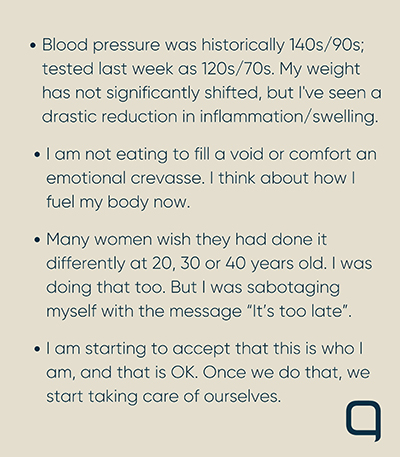
Menopause is hard, but living is in the journey.
When women commit to caring for themselves, and seeking help, they become a force that no one can hold back.
I know because I’m one of them. Like you, many members of our team are in peri/post menopause and we’re building Gennev for you from the vantage point of menopausal women”¦and we love it!
We challenge you to take care of you in the new year as however big or small that may be as you’ve got this, and we’ve got you.
Happy New Year!
Jill
Best of 2020 in Menopause
These are the 5 most read/listened to resources of the year. Enjoy!
10 Important Vitamins for Menopause Relief
Some basics of nutrition really don’t change: veggies are great, you need fat, and eating the rainbow is still a good idea. We updated our list of nutrients that are good for women in perimenopause and menopause, but the basics remain the same.
Thriving Through Menopocalypse With Amanda Thebe (podcast)
Amanda Thebe was a lifelong athlete and fitness enthusiast, but when she hit perimenopause at 43, things went … awry. Fatigue set in, and she found her previously boundless reserves of energy were drying up. And, like so many of us, she didn’t realize right away that the issues she was having were hormonal.
Supplement Savvy With Dr Wendy Ellis
We’re all looking for ways to optimize our health and especially our immunity “ things we tend to take for granted when we’re feeling good and there isn’t a pandemic going on.
Gut Health, Immunity, COVID-19, And Menopause (podcast)
One of the most unknown and underrated ways to strengthen your immune response is gut health. Science is only beginning to understand the importance of a healthy gut, including what all the gut does (a lot) and how best to protect and feed it.
Joint Pain and Menopause: Please Pass The Blueberries
Aching fingers, tight hips, sore knees “¦ joint pain is one of the most common symptoms of menopause. If you’re feeling a bit stiff and sore, especiall
To keep hormonal health as balanced and symptom-free as possible, functional nutritionist Nicole Negron starts with the HPA (hypothalamic, pituitary, adrenal) Axis.
This axis is what regulates our stress response system, says Nicole; so if you’re lying in bed at night, unable to sleep because of bills, worries about kids or aging parents, etc., your HPA is responding to that stress.
Your brain (hypothalamus) sends stress signals to the pituitary, which in term triggers the adrenal gland to produce and release more cortisol into the bloodstream.
Cortisol, says Nicole, triggers an inflammatory immune response via inflammatory cytokines. These travel back up and talk to the brain, setting the cycle off again. And inflammation equals heat.
So what can trigger the inflammatory response that can lead to hot flashes?
Stress. This is probably the biggest trigger, Nicole says. Stress starts in the brain, firing off the cycle; it’s also the point where there’s the best opportunity for intervention, because our stressors are often things we have control over.
Controlling triggers in your life
We need to keep the body calm and satiated, Nicole says; this is how we start managing the signals that can set off the hot flash cycle.
Work. Are you where you want to be and doing what you want to be doing? Are you fulfilling your life’s passions and purpose? If not, can you change or find a way to redirect your current job to be closer to your goals?
Family. If you have aging parents or younger kids who need care, are you asking for help when you need it? Says Nicole, many women, including her clients, are wonderful at everything except two critical skills: asking for help, and saying no. Learn to do both of these to make life so much simpler and less stressful.
Partner. Are things good with your spouse or partner, if you have one? Are all your many loads as financial, physical, emotional as being divided equally, or are you taking on more than your share? Can you have a conversation or get therapy to make this relationship a source of strength and not more stress?
Before you turn to a medical intervention, be sure you’re maximizing what Nicole calls the “in-house remedies.” You know what stresses you out; it’s time to do the work to reduce those stressors in favor of reducing hot flashes and supporting long-term good health.
Nutrition and hot flashes, the “no’s”
“People hate me for saying this,” Nicole says, laughing, “but you have to get rid of alcohol, all sugars, and caffeine.”
“It’s about survival. Women wake up in the morning, they don’t have much energy even though they’ve been “resting’ for the last several hours. They’re short on time, they’re stressed. But if we’re talking about calming the HPA Axis, you can’t start your day with coffee. One, it’s dehydrating, and two, it’s activating your stress response. Wine is the same, so no wine at night! Alcohol, sugar, and definitely caffeine all can increase the frequency, duration, and intensity of hot flashes.”
Nutrition and hot flashes, the “yes”
Really the question should be, what buffers the stress response? Micronutrients are great, especially if you also have a thyroid condition to consider, says Nicole. Leafy greens are great; cooked if you have difficult digesting or absorbing the nutrients, raw if not. A digestive enzyme might also make the goodness more bio-available.
Selenium is great for supporting your system, so eat a couple of Brazil nuts every day. Many women report feeling better with an increase in foods containing vitamins D and E and Zinc, or adding ashwaganda to their diet.
Phytonutrients: if you have lower estrogen, estrogenic foods can be helpful. Soy foods like tofu, edamame; flax seeds, sweet potatoes as these may have a positive effect.
What else can we do to reduce hot flashes?
Gentle yoga before bed is great for those with night sweats, Nicole says. Think about breathing from the diaphragm, which soothes and calms. Qigong, a type of tai chi, done an hour or so before bed can be very calming to the central nervous system, making it easier to sleep deeply.
Turn off screens, reduce activity and do things that relax the body and mind. No answering emails, no watching TV that hypes up adrenaline. In the two hours before bed, you need to ready your mind and body for rest, so activity, food, and drink all need to support that goal.
If you follow a religious or spiritual practice, that can be very calming. Touch is very nourishing and healthy as well, particularly as we age, so getting a foot or shoulder massage from a loving partner as you discuss your day (the good, calm parts of your day, anyway) may actually reduce night sweats. For those who aren’t partnered, schedule regular massages. Your insurance might even cover it. Finally, as long as you’re not drained all day, every day, an orgasm before bed is great, says Nicole. “And you don’t need anyone else for that.”
Hot flashes can be disruptive to such a level that women even consider leaving their jobs or drastically reduce their social lives to avoid embarrassment. At Gennev we believe there should be no embarrassment around the body’s natural functions, but we understand society hasn’t quite caught up with this notion yet. We also believe women don’t need to suffer in silence as there are remedies that help. You may just have to keep experimenting with different options until you find the solution or combination of solutions that work for you.
Just please, always keep in touch with your doctor about any new lifestyle change, supplement, medication, or practice that could potentially interact with medications or conditions.
If lifestyle and/or nutritional choices have helped you with hot flashes, we’d love to hear what worked for you. Share in the comments below, join the conversation in our community forums, fill us in on Facebook or in Midlife & Menopause Solutions, our closed Facebook group.
Unfortunately, given that menopause affects women and people in gender transition, it’s been largely ignored by mainstream medicine. That’s why we recommend you work with a menopause specialist. So doctors receive little to no training specific to the issues of menopause and post-menopause health. This is improving, but the effects of better training are only beginning to be felt and may not have trickled out to your area yet.
In fact, a Gennev menopause-certified gynecologist can give you a trusted opinion, determine if medication is right for you, and they can provide prescription support. Book an appointment with a doctor here.
Do I really need a menopause doctor specialist?
Yes. Just as you need a specialized doctor for pregnancy and childbirth, you really need a specialized doctor for menopause.
The body changes that come with this time in a person’s life are profound and systemic “ because we have estrogen receptors virtually everywhere in our bodies, when that estrogen dips, flows, and recedes, the impacts are felt everywhere.
So, it’s possible your doctor may not know a lot about menopause. According to the CT Mirror, “One recent survey of obstetrics/gynecology residents found that fewer than one in five polled reported receiving any formal training in the topic.” And those are OB/GYN residents! Now imagine how much training your GP has probably had.
This lack of expertise, coupled with the still-pervasive misinformation from the Women’s Health Initiative on the safety of Hormone Replacement Therapy for hot flashes and other menopause symptoms, means many women just aren’t getting the treatment they need and deserve. Doctors who specialize in menopause are still a bit like unicorns, so you may need to search a bit to find one.
What is a menopause specialist?
While the designation “menopause specialist” isn’t recognized by the American Board of Medical Specialties, there are ways to tell if your doctor has a good understanding of menopause care. We encourage anyone needing medical help with menopause symptoms to interview doctors; anyone can call themselves a “menopause doctor specialist” “ be sure yours really is one.
NAMS, or the North American Menopause Society, is the largest non-profit organization devoted specifically to the health of women in midlife and beyond. Their membership is made up of experts in the field, in medicine, nursing, sociology, psychology, nutrition, epidemiology, and so on.
NAMS offers a training and certification that is generally considered to be excellent and reliable, so if your doctor is an NCMP (NAMS Certified Menopause Practitioner), you can rest assured they have had quality training. If your doctor is not an NCMP, that doesn’t mean they aren’t qualified to deal with menopause issues; you may just want to conduct a bit of your own research.
Questions for your ob/gyn or physician:
- Are you certified by the North American Menopause Society?
- What percentage of your practice is with women in midlife and menopause?
- What is your position on hormone replacement and why?
- What lifestyle changes do you recommend, if any, and why?
- How do you treat those in menopause and perimenopause differently than premenopausal patients?
- What kinds of problems and outcomes have you seen for women dealing with menopause issues?
- On average, how much time do you spend with these patients during a visit?
- What society recommendations do you follow when providing menopause care? (The North American Menopause Society or NAMS is a good answer. ACOG or the American College of Obstetricians and Gynecologists is another.)
- Are you willing to earn an NCMP designation? Why or why not?
Finally, listen to your gut. When dealing with such personal, sensitive issues, you want a doctor you feel comfortable with. You may need to be very open about your sex life, your intimate areas, and things we’ve been culturally conditioned to be embarrassed about (periods, hot flashes, aging, libido). Docs, and particularly OB/GYNs, are ready to talk frankly “ you need to be too.
How do I find doctors who treat menopause near me?
If you are looking for doctors who treat menopause near you, sadly, there probably isn’t one physically close to you. The number of OB/GYNs in most industrial nations is declining. We’re already facing a shortage in the US, and we’re losing more to retirement than we’re gaining from medical schools.
And since menopause management doctors are already thin on the ground, those in need of menopause treatment are already finding it difficult to locate the care they need. Searching on “menopause specialist near me” isn’t likely to find you much.
Fortunately, there are resources.
Menopause care via telemedicine
If there isn’t a menopause-focused doctor in your area, you’re not out of luck. The rapid growth of telemedicine during COVID has made it possible for women to access great menopause care, anywhere their internet connection reaches. Gennev offers [telemedicine access ](https://gennev.com/plans)to menopause specialists. Our team of gynecologists serve patients in all 50 states, so you are assured to find a licensed, experience and often-times NAMs-certified practitioner at the click of a button. You can learn more about Gennev’s team of menopause specialists here .
Technology is filling the gap for many women.
For many of us, prior to COVID, the idea of seeing a doctor virtually was nearly unimaginable. How can they diagnose us via a camera?
It’s very possible, says our own Chief Medical Officer, NCMP and gynecologist Dr. Rebecca Dunsmoor-Su. In fact, she says, most menopause care is based around a conversation between patient and practitioner, and this may actually be better via telemedicine.
“When it’s a telemedicine appointment, I generally have lots of information before we even start talking. That means I have the basics and can jump right into the problem/solution part of the conversation,” says Dr. Dunsmoor-Su. “Often women don’t know what’s going on with them, so by asking questions, I can help them figure out where they are in their journey and what menopause treatment options they have. At Gennev, we’re open to any treatment that shows promise and is medically proven to be safe. All women are different and every menopause journey is unique, so we want to be sure women have access to every possible option.”
And because Gennev has a wide network of menopause focused doctors, if a patient needs to be seen in person, Gennev’s telemedicine doctors can make referrals and help women prepare for their appointments.
COVID revealed a need for more telemedicine access, and Gennev took advantage of modified requirements to bring more states on board and staff them with doctors who specialize in menopause. “Prior to COVID, each state had different requirements for a doctor to practice in their state via telemedcine,” says Gennev CEO Jill Angelo. “COVID proved that some states were lagging behind due to unnecessary barriers. Thanks to a reduction in barriers, we’re now able to provide a truly qualified menopause practitioner in every state in the US.”
Find a menopause specialist
A great way is using the “Find a Menopause Practitioner” feature on the NAMS website. All the doctors listed are NAMS members, and those certified by NAMS are designated as such.
Another tool? Each other. If you’re looking for a great doc, ask your friends; if you have one, share!
So, don’t wait until menopause symptoms make your life difficult. If you’re a woman, it’s never too soon or too late to get informed.
If you’re premenopausal, a doctor or menopause-trained health coach can help you understand how to take care of yourself now to feel great and avoid problems in the future. If you’re in perimenopause or if you’re post-menopausal, get the help you need to relieve symptoms and protect your bones, brain, heart, soul, and body for the many years of vibrant life yet to come.
Twelve period-less months, symptoms aplenty, and now”¦ now”¦ a future opens up both with and without new possibilities.
Menopause is here.
Every woman’s life, including her menopause experience, is deeply personal and dynamic. Once the dozen cycle-free months have passed, and a woman enters menopause, her genetic reproduction journey has come to an end.
For some women, entering menopause may feel like freedom, transformation, even amid the unexpected torrent of hormonal changes, emotions, and physical changes.
For other women, menopause may evoke feelings of sadness. Feelings of loss and grief can be part of the menopausal change and can feel overwhelming, even surreal, and painful. Intensity and frequency of feelings may vary, person-to-person, even day-to-day.
It’s definitely possible throughout the course of continuing hormonal change that a woman can feel all of these feelings and more as she enters more deeply into this rich part of life.
In light of Infertility Awareness Week, especially during this unprecedented time of COVID-19, let’s take a look at this important topic together.
A complex life transition
We checked in with Lora Shahine, MD, FACOG (Fellow of the American College of Obstetricians and Gynecologists) with Pacific NW Fertility for her thoughts and insights about menopause and infertility.
“Menopause is a complex life transition for women with or without a history of infertility. It’s a combination of hormonal shifts, body changes, and emotional changes as often combined with a stage in life full of career, family, and external demands.”
“Menopause means the end of the ability to conceive a genetic child and for many women as this can feel like grief as whether a woman has completed her family building journey or not,” shared Dr. Shahine.
“This loss can be especially painful for women with a history of infertility. Even if their fertility journey is in the distant past or they have completed their family, Menopause can be a trigger to the emotional toll infertility took in the past. Infertility has been compared to trauma and recovery compared to post-traumatic stress disorder (PTSD).”
Feelings of loss without infertility challenges
Some women may feel a sense of loss at menopause even if they didn’t have a strong desire to have or raise children. Others may feel a sense of bittersweet sadness or sorrow at menopause though they’ve had all the children they had their hearts set on. It may feel surprising, baffling, or even confusing. It is the nature of change, and sometimes change evokes unexpected feelings and emotions.
One woman, Barbara, described her experience for us,
“When I turned 49 my menstrual cycle came to a halt. Month after month she did not appear. As the year of not having my period was coming closer and I was preparing to step over the threshold into menopause, I started to feel a deep sense of loss and grief. What I realized was I did not take the time during that year to say goodbye, thank her for being in my life, and to bless her.”
“The day before the year was complete, my period came again. I was gifted another year to be with her and to be present to the process of saying goodbye. It was a rich year, which I am so grateful for. And when the final hour to let her go came, I felt complete and ready to move into what was waiting for me.”
Dr. Shahine encouraged, “Menopause does not have to trigger a negative response as it can help women reflect on their life so far as family, reproduction, and more. Recognizing that this transition can be emotional (positive or negative) is important. Menopause is a transition no matter who it happens to and making space for the emotions, being aware of the emotions that can arise are important.”
Important to note: Risk for depression in menopause
Whether or not depression has been part of her life experience prior to perimenopause or menopause, the risk of depression definitely increases with this transformation. According to Harvard Health Publishing (for Harvard Medical School):
“A woman’s risk of depression doubles or even quadruples during the menopausal transition.”
Note: This doesn’t mean it’s a guarantee that a woman will develop depression during menopause, only that the risk increases.
Still, if infertility has been a painful part of a woman’s life experience, an increased risk for depression during menopause may be helpful to know going in.
More support, including primary care Telemedicine: Learn more now.
What if all this is happening now? In the middle of the COVID19 pandemic?
Feeling the feelings of grief and/or depression, navigating changing menopause symptoms, and staying diligent about safety precautions during the coronavirus pandemic is a lot to process. That almost feels like an understatement. A few gentle suggestions to look at:
- Easier with support: Getting practical, emotional, medical support from a menopause expert is easier to access than ever with telemedicine. Our online clinic for women at Gennev offers myriad options, from 1×1 support to podcasts, webinars, and forums. Knowing you’re not alone can offer tremendous relief.
- Easy does it: A forceful, driving pace may not serve your body, mind, or spirit. Consider reflecting on priorities, journaling, talking with your partner and trusted, supportive friends. From work to family to self-care, consider your pace in doing “all the things.”
- Self-care: We’ve written many times how self-care can stave off or diminish menopause symptoms. During this COVID crisis, self-care is proving more important than ever. Nutrition, exercise, drinking water“¦ these are a few of the self-care topics to consider. There are more options for sure, but these are daily self-care tasks to review and continually improve when you feel willing and able.
For partners, family, and friends of women who are struggling
Our relationships and support systems are critical at this time, both with those in a shared household and outside it.
Shahine notes, “Friends can support women going through menopause by being aware of the emotional piece to this transition, being kind, and encouraging self-care.”
Good insights for all of us, yes?
If you’re experiencing menopause, feelings of grief or loss, or simply want to connect with other women who are curious about the same things right now, join the community at the Gennev Community Forums.
Turns out, spinach and kale and the like aren’t the only greens that are good for you. Today we’re talking about the health value of the other type of “leafy greens” as actual leaves.
Like, the kind that grow on trees.
Turns out, spending time in nature is healthy. Really healthy. Healthy enough that some doctors are actually prescribing it for patients with attention deficit disorder and anxiety along with many physical health concerns.
“Exposure to non-threatening natural stimuli,” says Aaron Reuben in an article for Outside magazine, “”¦lowers blood pressure, reduces stress-hormone levels, promotes physical healing, bolsters immune-system function, raises self-esteem, improves mood, curtails the need for painkillers, and reduces inflammation.” So as long as there are no bears, a little time in nature can do real good.
Why is nature good for me?
The world we inhabit most of the time depletes us with its bombardment of sights, sounds, and threats as anything from a near-miss in traffic to a hostile email ramping up our cortisol, triggering the “fight, flight, or freeze” response.
Nature is restorative, telling the parasympathetic nervous system to hit the “rest and digest” button and enjoy the wind in the trees, the sounds of birdsong, the quiet, the smells, the lack of urgency.
Being outside usually prompts us to do healthy activity, like walking, hiking, biking, gardening, swimming, etc., which is great, obviously. But you don’t have to exercise to benefit. Spending 20 minutes in nature as even sitting in a city park will do as can improve well-being.
Does it really work?
Well enough that insurance companies and health-care providers are beginning to get in the game, with Kaiser Permanente helping to fund park access and upgrades, Humana instituting a program rewards people for spending time outside, and a licensee of Blue Cross Blue Shield offering incentives to clinics willing to write “park prescriptions.”
In 2017, Washington DC pediatrician Dr. Robert Zarr founded Park Rx America, a program that allows health care providers to register as a prescriber of outdoor activity. Non-health care folks can use it to find parks near to them. To date, 220 health care professionals have joined, writing 285 prescriptions.
Menopause and Mother Nature
Women in menopause are often fairly unhappy with Mother Nature, and with good reason. But along with the challenges, nature has given us some substantial gifts.
Time in nature can help relieve some of the worst menopause symptoms.
Anxiety and depression affect many women in perimenopause and menopause, and while lacing up your boots and heading out in the weather may not sound great, nature can provide a significant boost to your mood.
Fatigue is another issue many women fight with in midlife and menopause. It’s likely that fatigue is as much a brain function as a body one, and fighting mental fatigue is one of the things nature does best.
Weight management. Exercise may not be the magic cure for the extra pounds that often come with the menopause transition, but being active can help you manage your weight.
Stress. Nature is an amazing stress reliever. Not only do we get away from stressful triggers, a long walk can actually discourage ruminating on stressful things. We can return to the challenges of life with fresh perspective, possibly greater creativity and problem-solving skills. The stress-reduction power of nature may even extend your life.
Poor sleep. Turns out, spending time in nature may actually help you sleep longer, whether it’s from the increased exercise that often comes from being outside, or the soothing nature of nature itself.
Get lost … in nature
Most of us would acknowledge we feel better after spending time outdoors. Green zones (parks) and blue zones (beaches) can refuel dwindling resources, improve mood, calm us like little else. Unfortunately, not everyone has easy access to natural spaces, and efforts are being made by groups like the National Park Service to make it easier.
National Park Week is April 20 as 28, and park fees are waived on Saturday, April 20, so make a plan to spend some time among the leafy greens.
Freshen up after that awesome nature walk with Gennev Cleansing Cloths. Gentle enough for everyday use.
National Park Rx Day is Sunday, April 28, so find out if there’s a participating park in your area or consider hosting your own. These programs offer great opportunities to learn about parks in your area, hear about the plants and animals you may not be aware of, take tours, do exercises, and more.
It may seem like such a simple thing, but ask yourself: how often do you make the effort to get outside and into a green space, even if it’s only 20 minutes? Is there a park near you where you could walk, eat your lunch on sunny days, take the dog? It could be the magic 20 minutes that make the rest of the day so much easier.
Have you received a “park prescription”? Do you make the effort to spend time in nature, or is it not available to you? Give us a minute and tell us how you feel when you take a walk in the woods. We want to hear about it, so join our community forums, or join the conversations on our Facebook page or in Midlife & Menopause Solutions, our closed Facebook group.
Sudden hot flashes, poor sleep, wonky irregular periods that lead to no periods, OK, we’re prepared for all of that. But sore feet? No one told us sore feet might be a result of menopause.
If you have sore feet, it may not be entirely due to reduced estrogen, but menopause can certainly play a role. Let’s talk about why your feet hurt and what you can do about it.
What causes foot pain in perimenopause and menopause?
Menopause, with its decline in estrogen, can cause more than pain in your lower back in menopause“and by that we mean your feet as well.
Collagen loss is part of the problem. Less estrogen affects collagen production: “Collagen is basically the building block of our musculoskeletal system – bones, muscles, ligaments, tendons and skin. Less collagen synthesis means less elasticity of tendons and skin, constriction of blood vessels, decreased healing, increased risk of developing a soft tissue injury and joint pain.”
Osteopenia and osteoporosis may also play a role. A loss of estrogen after menopause may lead to lower bone density in the feet and consequently a higher risk of stress fractures in the foot.
Plantar fasciitis (heel pain that is worst in the morning) is also common among women in midlife as loss of estrogen affects the elasticity of the thick band of tissue that connects the heel bone to the toes.
Other changes not directly due to estrogen loss can also factor into foot pain: changes in posture due to other injuries or pregnancies, weight gain, compensation for muscle loss or poor balance can affect how we walk or stand and result in pain. Estrogen protects our soft tissues; the loss of it makes soft tissue more vulnerable to injury, inflammation, and pain.
Be aware that gout can happen to women in perimenopause and menopause. Gout pain is very different and usually sudden and severe, so if the pain comes on quickly, talk with a doctor. Gout can also get worse if left untreated, so don’t wait to get help. Plantar fasciitis and collagen loss are generally slow and increase in severity over time.
Fixes for foot pain in menopause
Low estrogen, osteoporosis, pregnancy posture as is there any way to fix those things? There are, and we strongly suggest talking with a doc or physical therapist about all of these, for your general well-being as well as for your feet.
Here are some things you can do:
- Get more collagen. Your body makes collagen your whole life, but as we age, that production slows, particularly for women in perimenopause and menopause. Fortunately, you can replace some by eating right. Our menopause specialists suggest eating a combination of protein-rich foods and foods that contain vitamin C, zinc, and copper “ your body creates collagen by combining amino acids, so you can help the process along by making sure all the ingredients are present. If bone broth isn’t your thing, there are menopause supplements available.
- Manage weight. Reducing weight reduces the impact on your feet, but additionally, since many women gain weight quickly in perimenopause and menopause, that gain can cause women to modify their posture and gait, which can also lead to foot problems.
- Get out of high heels. Or at the very least, be sure your heels are modified with inserts, foot beds or other cushions. Try to limit the standing and walking you do in heels by bringing along flats or athletic shoes for when you’re up and about.
- Stretch, tape, and ice your feet. Once you have a diagnosis of what’s actually happening in your feet, some gentle stretches, kinesiology tape, and ice can help manage pain. If you have plantar fasciitis, chances are your feet hurt most in the morning. Some gentle stretches of calf and foot muscles, starting slowly to give your muscles time to warm up are a good idea.
- Lace your shoes properly. It sounds ridiculously simple, but for some women, simply lacing shoes differently to avoid pain points is really effective. Shoes come pre-laced from the shop, but like pretty much everything else, our feet are quite unique to us. Harvard Health gives examples for better lacing.
- Supplements may help. Before opting for surgery or cortisone injections, you might try switching up your diet. Calcium, magnesium vitamins, and vitamin C could be helpful, among other nutritional supplements. CBD supplements for women have also been reported to relieve similar symptoms, and could be worth a shot.
- Medical interventions. These can include wearing a boot to sleep in that keeps your foot in the proper position, steroid shots to reduce pain, shock-wave therapy to stimulate blood flow, a Tenex procedure to remove scar tissue, and generally as a last resort, surgery.
- Don’t go barefoot. Supportive shoes that cushion the foot and support your arches will help with foot pain, and there are slippers, sandals, and house shoes now being made with arch support, just for this purpose.
- Choose soft surfaces. If you’re a runner or a walker, consider opting for softer surfaces. If you’re a road runner, find a trail to get your miles in (just be careful of falling and/or twisting an ankle). It’s a great way to mix up your training, spend some time in nature, and maybe give your feet a bit of a break.
If you’re an active woman in menopause, don’t let foot pain stop you from staying active, especially as doing less won’t necessarily make your feet hurt less, but it can have a lot of other negative affects on your body and psyche.
If your feet hurt more than usual, it’s best to speak with your physician, and get a referral to a podiatrist or physical therapist who can help you identify what’s going on and get your feet back under you.
A healthy diet—lots of veggies and fruit, lean protein, legumes and beans, healthy fats and carbs—is one of the best ways to manage your hormones and minimize menopausal symptoms. But sometimes you need a little more, like safe, well-tested supplements, to keep your body strong and well. Additionally, your nutrient needs may change as you age, requiring more of some things (protein and calcium) and less of others (iron and folic acid).
Here’s a rundown of 10 key nutrients you want to make sure that you’re getting during menopause from your diet, vitamins, and supplements. When you’re eating right and taking appropriate supplements, you’ll feel more like you’re thriving—instead of battling—through this transition stage of life.
NOTE: You should discuss any changes to your diet with your doctor, particularly if you’re taking medications which may interact. Be sure your doctor has the full list of supplements and medications you’re taking. Even the “natural” stuff can be ineffective, or even dangerous, if mixed with the wrong medications.
1. Magnesium
For many women in our Menopause Solutions Facebook group, magnesium (particularly magnesium glycinate) has been a game changer. We do know many adult women don’t get enough of this mineral.
Why you need it: It’s involved in a wide variety of processes in the body: everything from muscle and nerve function to blood sugar and blood pressure regulation, bone formation, and energy metabolism.
How it can help during menopause: Magnesium is important for improving heart health, reducing blood pressure, decreasing risk of diabetes, combatting osteoporosis, and, particularly if you take magnesium citrate, easing constipation—all issues that increase with menopause. Magnesium glycinate specifically may also help with calming anxiety, easing joint pain, improving sleep and hot flashes as well as cold flashes.
Recommended daily intake: 320 mg
Good food sources: Spinach, pumpkin seeds, black beans, tuna, soy milk, brown rice, nuts like almonds and cashews, avocado, edamame, nonfat yogurt, bananas.
Caution: Excessive doses of magnesium could lead to diarrhea, nausea, and cramping. To be on the safe side, keep your intake to no more than 350 mg.
2. Vitamin A
Your body can get vitamin A in two forms. The retinol form comes directly from animal and dairy products. The carotenoid form, beta carotene from veggie and fruit sources, is converted into vitamin A in your body.
Why you need it: Supports your immune system, vision, and skin health.
How it can help during menopause: While vitamin A does not have any benefits proven to specifically target menopause symptoms, its role in supporting vision, immunity and thyroid function may play an even greater role during menopause at a time when hormone changes add an additional stress to the body.
Recommended daily intake: 700 mcg
Good food sources: Beef and lamb liver, butter, cheese and some oily fish. The body can also produce vitamin A from the beta carotene in veggie and fruit sources such as sweet potato, winter squash, kale, carrots and sweet red peppers and mango, cantaloupe, and grapefruit. Vitamin A is fat-soluble, meaning the body absorbs it better if it’s eaten with a little fat, preferably the healthy, plant-based kind (olive oil, fatty fish, nuts and seeds, avocados).
Caution: Taking too much vitamin A can result in dizziness, nausea, vomiting, headache, or blurry vision, and over time could increase your risk of bone fractures. Really high doses can also increase risk of lung cancer in susceptible individuals. Also, talk to your doctor if you’re taking any blood thinning or retinol medications.
3. Vitamins B6 and B12
These are two of a group of eight B vitamins.
Why you need them: B6 is necessary for optimal metabolism, immune function, and supporting the body’s ability to manage inflammation. B12 is needed for the formation of red blood cells and is key for increasing energy, protecting your heart and brain, supporting good gut health, and helping your nervous system and eyes work properly.
How it can help during menopause: Vitamin B6 may help ward off menopausal depression and increase energy by boosting serotonin. B vitamins may also help with insomnia and possibly even reduce hot flashes. They are also important for cognitive functions.
Recommended daily intake: For B6, 1.3 mg for women age 50 and younger and 1.5 mg for those 51 and older. For B12, 2.4 mcg for all adults.
Good food sources: For B6, salmon, chickpeas, tuna, chicken, fortified tofu, pork, sweet potatoes, bananas, potatoes, avocado, pistachios. For B12, shellfish, tuna, fortified cereals, beef, fortified soy milk, fortified tofu, low-fat milk, cheese, eggs.
Caution: Too much vitamin B6 can cause nerve damage, so make sure you don’t exceed 100 mg a day.
4. Vitamin K
Eat a salad a day, that’s all we’re saying. This vitamin found often in leafy greens has been nicknamed “vitamin Kale.”
Why you need it: Helps with proper blood clotting, blood vessel health, and plays a role in supporting bone health.
How it can help during menopause: It’s important for bone density, which declines as you get older, increasing your risk for fractures. Eating one serving of leafy greens (a good source of vitamin K) a day may cut your risk of a hip fracture in half, according to the Harvard Nurses’ Health Study, one of the largest and longest running investigations into women’s health issues. A more recent study suggests it may also help with heavy period bleeding.
Recommended daily intake: 90 mcg
Good food sources: Leafy greens (kale, chard, lettuce, spinach), cruciferous veggies (broccoli, Brussels sprouts, cabbage), asparagus, okra, green beans, and soybean and canola oils. Vitamin K is fat-soluble, meaning the body absorbs it better if it’s eaten with a little fat, preferably the healthy, plant-based kind (olive and canola oil, fatty fish, nuts and seeds, avocados). Studies also show that vitamin K is even more effective when eaten with vitamin D.
Caution: Vitamin K is fat-soluble so adding some fat like oil to the vitamin K-rich foods you’re eating will increase absorption. If you are taking anticoagulants, they may affect your vitamin K status, so talk with your doctor.
5. Vitamin C
For decades, vitamin C has been touted as a remedy for the common cold. While research shows it won’t stop you from catching a cold, it may shorten its duration and severity if you regularly take supplements.
Why you need it: Heals wounds, maintains bones and cartilage, helps with the absorption of iron. It’s an antioxidant that protects against aging-related conditions and diseases.
How it can help during menopause: Vitamin C is important for maintaining bone density, which protects you against fractures later in life. It may also help ease hot flashes, and its antioxidant effect may help ward off heart disease, which is more common after menopause.
Recommended daily intake: 75 mg
Good food sources: Guava, kiwi, red peppers, citrus fruits, strawberries, tomatoes, broccoli, kale, papaya.
Caution: Too much vitamin C can cause diarrhea, nausea, and stomach cramps. Don’t take more than 2,000 mg a day.
6. Calcium
Calcium loss accelerates as estrogen declines, so this important mineral becomes even more vital as you enter perimenopause.
Why you need it: Keeps bones strong, maintains proper functioning of muscles and the nervous system.
How it can help during menopause: Calcium is essential to slow bone loss. As you age, your bones become porous (a condition known as osteoporosis) and can weaken, making fractures more likely.
Recommended daily intake: 1,000 mg for women age 50 and younger and 1,200 mg for those 51 and older.
Good food sources: Milk, yogurt, cheese, tofu, calcium-fortified orange juice, spinach, black-eyed peas, sardines, salmon, trout.
Caution: Too much calcium in supplement form may cause gastrointestinal symptoms and increased risk of cardiovascular disease. High intakes may also affect the absorption of other vitamins. Calcium from supplemental forms is best absorbed in smaller doses of 500mg or less. Aim to get the majority of your calcium from food and supplement where needed. If you’re 51 or older, limit your intake to no more than 2,000 mg total per day.
7. Vitamin D
It’s nicknamed the “sunshine vitamin” because your body can make vitamin D from sunlight, the UVB rays in particular. But even if you get outdoors a lot, you may not be getting enough. Sunscreen, pollution, clothing, and age reduce your body’s ability to produce vitamin D from the sun.
Why you need it: Helps the body absorb calcium, a building block for strong bones; important for proper functioning of muscles; supports heart health, neurological function, blood sugar regulation and immunity.
How it can help during menopause: It’s necessary for keeping bones strong and to stave off osteoporosis, thinning of the bones which can predispose you to fractures. It may also help to support brain function, decrease cognitive decline and fight off menopause depression.
Recommended daily intake: 600 IUs
Good food sources: Fatty fish like salmon, tuna, and trout; cremini and portobello mushrooms that have been exposed to sunlight; fortified foods like milk, tofu, yogurt, orange juice, and cereals, pork, eggs. Vitamin D is fat-soluble, meaning the body absorbs it better if it’s eaten with a little fat, preferably the healthy, plant-based kind (olive and canola oil, fatty fish, nuts and seeds, avocados).
Caution: It can be difficult to get enough vitamin D from food and sun alone. If you’re not getting enough, look for a supplement containing vitamin D3. Avoid exceeding 4,000 IUs a day.
8. Omega 3s
Many women don’t get enough Omega 3s, yet every cell in your body needs them – especially the eyes and brain. Omega 3s are also important for muscle activity, immune function, digestion and fertility.
Why you need it: Important for heart and brain health, involved in the function of the immune and endocrine (hormones) system, and helping the body manage inflammation.
How it can help during menopause: Risk of heart disease increases after menopause. Omega 3s may help keep triglyceride levels in check. They may also help with psychological issues, depression, and hot flashes.
Recommended daily intake: The National Institutes of Health recommends women consume 1100mg of omega-3s and men to consume 1600mg. Consuming fish twice per week, supplementing, or a combination of the two can help to reach these levels.
Good food sources: Fatty fish like salmon, flaxseed, chia seeds, walnuts, firm tofu, beans, canola oil, avocado.
Caution: Omega-3s can thin the blood, so if you’re on blood thinners, talk with your doctor before adding a supplement.
9. Probiotics
Your gut is a garden. Really! You have trillions of microorganisms hanging around inside your body, doing useful stuff like helping you digest, supporting mental health, and allowing you to use your food to support physiological function.
Why you need it: Life is hard on these critters: antibiotics, poor diet, illness, and stress can kill them off by the millions, leaving you susceptible to harmful bacteria and the diseases that come with them. Probiotics are live beneficial microbes that re-colonize the flora in your body.
How it can help during menopause: Probiotics can help with digestive issues many women confront around this time (bloating, gas, constipation), and they also support vaginal health by contributing to the optimal bacteria of the gut.
Recommended daily intake: There is no recommended amount. Look for probiotic supplements with at least 10 billion CFUs and at least five different bacteria strains.
Good food sources: Yogurt, kefir, kombucha, sauerkraut, pickles, miso, tempeh, kimchi, sourdough bread and some cheeses.
Caution: Read the label of supplements to ensure that you store any probiotic properly; some may need to be refrigerated.
We can help you understand the supplements for menopause that are right for you
Partner with a Gennev Menopause Specialist to help you determine what supplements may be right for you to maximize your health and manage your menopause symptoms.
The information on the Gennev site is never meant to replace the care of a qualified medical professional. Hormonal shifts throughout menopause can prompt a lot of changes in your body, and simply assuming something is “just menopause” can leave you vulnerable to other possible conditions. Always consult with your physician or schedule an appointment with one of Gennev’s telemedicine doctors before beginning any new treatment or therapy.