It’s week four of Global Menopause Awareness Month, and we’re continuing our journey through the phases of the menopause transition with Gennev’s Menopause Types.
As we learn more from resources like our Menopause Assessment, we’re discovering there are consistencies in what many women experience. That’s how Gennev was able to develop the five Menopause Types. And women are loving having a tool that helps them understand their bodies better and be more prepared for what may be coming next.
What is Type 4?
Type 4s, that light you see actually IS the end of the tunnel, though at times you might still feel like you’re getting hit by the train. Now several years past your last period, you’re almost ready to throw away that last box of tampons under the bathroom sink, right?
As you move through the Type 4 phase, it’s time to really focus on maintaining your good health for the many happy years ahead. While your body has in many ways adapted to the lack of estrogen, there are long-term effects that require attention.
Type 4s, here are your pain points
By now, hopefully your hot flashes are either gone or clearly going. Your metabolism has likely settled into a new normal, and your weight has, more or less (no pun intended), stabilized. Anxiety, depression, irritability, rage “ those are retreating, and isn’t life more glorious because of it?
It’s good the truly acute symptoms are retreating, so now you can focus on the long-term effects estrogen withdrawal has on sexuality, bones, brain, and heart.
Vaginal symptoms
For many women, vaginal symptoms of dryness and thin, vulnerable tissue can persist for their rest of their lives. Vaginal atrophy can make it hard to want or enjoy intimacy.
Gennev’s solutions: A really good daily moisturizer and intimate lubricant can help tissues stay moister and more pliable. For women wanting to re-engage in sex who find penetration too painful, a series of vaginal dilators or sexual toys can be a huge help.
We also suggest an open dialogue with your intimate partner. Sexual problems can be very damaging to a relationship. Sexless marriage during menopause is common. So, honest conversation, perhaps with professional help, is critical.
Cardiovascular issues
While men do have more heart concerns than women prior to menopause, about 10 years post-menopause, a woman’s risk of heart disease is equal to a man’s. And because we don’t always recognize the symptoms of a heart attack in a woman, her chance of dying of it is greater.
Heart disease remains the #1 killer of women, but it doesn’t have to be. A healthy lifestyle, plus medical intervention when needed, can go a long way to managing and preventing heart disease.
Gennev’s solution: Good nutrition is vital. There are places on earth marked as “blue zones” where people live longer, healthier lives, and centenarians aren’t unusual! Most of those places eat a Mediterranean-style diet, with its emphasis on leafy greens, healthy fats, and lean proteins. Gennev’s Health Coaches are all registered dietitian nutritionists; sign up to get more information on how to eat the way spry 100-year-olds eat!
Exercise, hydration, and social time are also very important. Get your heart rate up just thirty minutes, five days a week. Drink plenty of water. And spend time with friends and family. That’s tough now, with COVID, but studies show those who maintain social relationships as they age just live longer.
Finally, consider a pet. They do the heart and body good “ taking the dog for walks, even just petting and talking to a comfy kitty can reduce stress and increase oxytocin (the “love hormone”).
Brain health
If you looked at that subhead a couple of times and thought, “Who’s Brian?” don’t panic! Brain fog is still common in Type 4, but you should be coming to the end of it soon.
All kidding aside, women do account for two out of every three diagnoses for Alzheimer’s disease, and as Dr. Lisa Mosconi and her team at Weill Cornell Alzheimer’s Prevention Clinic discovered, there does appear to be a connection between menopause, estrogen withdrawal, and development of dementia-related brain plaque.
Gennev’s solution: So how do we protect our brains? Nutrition! As Dr. Mosconi told us in our podcasts with her, nutrition is key: make sure you’re getting plenty of omega 3s (fatty fish”Dr. Mosconi particularly favors caviar), as well as fresh vegetables and fruits, healthy, unrefined oils, good glucose (not just sugar), and plenty of water. Hydration is key, says Dr. Mosconi, as 80 percent of the brain is water! Steeply reduce processed and deep-fried foods, minimize animal products, and stay well away from trans-saturated fats.
If you’re not sure you’re getting enough of any of the good nutrients (and O3s can be particularly challenging if you don’t eat fish), check out Gennev’s Vitality supplement to fill in any gaps you may have in your nutrition.
Bone health
Osteoporosis is extremely common and very dangerous. For one thing, most people don’t know they have bone loss until they experience their first fracture. And since complications from hip fractures kill more post-menopausal women than breast cancer, it’s a real concern.
Gennev’s solution: Obviously, nutrition is huge (again as are you seeing a theme here?) and fortunately, the same things that are good for your brain and heart are also good (or at least not damaging) to your bones: leafy greens, lean proteins, choosing whole foods over processed. Make sure you head to our store to grab vitamin D and Omega 3s and calcium.
Weight-bearing exercise is good for bones, so walking, running, dancing, anything that pits you against gravity is good. And while biking and swimming are great cardio exercises, they don’t help your bones, so try to get some of both. Watch your posture as well! Your body is meant to “stack” so the weight is on your skeleton (which is good for you) and not pulling muscles this way and that (which hurts).
Yes, the years after that final hot flash fades still have challenges, but being proactive and maintaining healthy lifestyle habits can go a very long way. Make an appointment to talk with one of our doctors, and get on the path to thriving through menopause and beyond!.
Some of the best years of your life are ahead of you as enjoy!
Are you a Type 4, or is there a special Type 4 woman in your life? Come join the conversation about All Things Menopause in our Community forums!
The new year has arrived. And whether you consider yourself a “healthy” person or not, January represents an opportunity for new behaviors…or reestablishing old best practices.
Let’s kick off the year with the best of intentions…and actually do them! The team and I at Gennev are doing the same: smarter snacking, revitalize life fitness, dry January…and most of all, booking necessary health & wellness appointments.
Here is the 2021 healthy woman’s checklist…
To your health!
Jill
1. Create a budget
Consider what your health and wellness budget is for 2021. Are you budgeting for self-care? Do you have FSA/HSA coverage through your employer?
If you have FSA/HSA coverage, check to see what it covers in terms of health provider services and products. With a letter of medical necessity from Gennev providers, you can get coverage for appointments, supplements and lubricants on most plans. Here’s a resource for what qualifies for FSA coverage.
2. Book medical appointments
Are you in the practice of annual exams? If not, start now. Book with your physician or with a Gennev doctor.
Have you scheduled your mammogram? If you’re over 45, consider a colonoscopy if you have risk factors in your family. Whatever you do, don’t put the essentials off; talk to a women’s health specialist today.
3. Plan for necessary lifestyle change
Whether you’re in perimenopause or post-menopause, lifestyle behavior change is a must for managing weight, hot flashes, anxiety, sleep, fatigue and joint pain. We know it’s hard, so build a plan for achievable and sustainable change…even if that means baby steps.
Gennev registered dietitians/health coaches work with women of varying levels of discipline, so don’t overthink it, just start doing something. Book an appointment to build a plan for 2021. We believe this will be your best-spent $45 dollars of the year. We want you to thrive!
4. Check your supplement intake
Are you taking the right supplements for your age or stage of menopause? As women, it’s good for us to annually check-in on the supplements we’re consuming “ whether we have the right combination and whether we’re taking them at the right time of day.
If you’re not 100% confident of your routine, start by watching Gennev Director of Health Coaching Stasi Kasianchuk, RDN interview Dr Wendy Ellis about Supplement Savvy. Or – skip to speaking directly with Stasi and her team by booking an appointment with a dietitian (specify that you want a supplement audit).
5. Get the Menopause Guide
We built the Guide to Menopause from the collective expertise of our team of 25 OB/GYNs, naturopathic doctors, registered dietitians and health coaches. It’s a 60-page collection of evidence-based medical, lifestyle and herbal recommendations for every symptom of peri and post menopause. And it’s free. You can’t go wrong.
Type 5s, you are women of mystery!
For the past four weeks, we’ve been defining some of the key stages of the perimenopause-to-menopause journey, helping women locate themselves on the path and take steps to take control of their health. Last week, we took on Type 4.
This week is all about our Type 5s, or as we like to call them, our “Women of Mystery”!
Different factors can make it difficult to pinpoint where you are in your menopause journey. Perhaps you take hormonal birth control pills or have a hormonal IUD. Or you’ve had a hysterectomy that removed your uterus but left one or both ovaries (meaning you’ll go through a menopause hormonally but you’ll have no bleeding signals). An ablation to stop heavy period flows or medications for certain hormonal cancers can also confuse the picture.
What is Type 5?
Type 5 is a general category for women who don’t follow the typical path through perimenopause to menopause. Hormonal birth control may mask many of the symptoms of perimenopause, and since the bleeding that comes during the “sugar-pill” week isn’t a true period, even that doesn’t tell us anything.
Younger women who have certain cancers like breast cancer may even go through menopause twice: once from medicines that suppress estrogen, then again later, as their bodies go through the natural decline of hormones.
If you’re a Type 5, that doesn’t mean something is “wrong” with you. It just means your place in your menopause journey may not be identifiable.
Can I find out my place in menopause?
In some circumstances, you can learn your place in the journey. If you’re on birth control pills, taking a few months off will bring back the bleeding signal (but use some other, non-hormonal birth control!). You can have the IUD removed for the same reason. It may take several months to get a good picture of what your cycle does naturally.
For others, pinpointing their place may not be possible. Stopping medications that help prevent breast cancer recurrence is not a good idea. And for those with ablations or hysterectomy, you may have to depend on other signals, like symptoms.
Some may suggest you get a hormone test to determine your place “ we really don’t recommend that, as results will be skewed by any hormones or hormone-blockers you’re taking. And for those not taking medications, hormone tests still only give a picture of a moment, not an overall view.
Type 5 pain points
Because you’re all over the board, your symptoms are likely to be as well. Or you may not be having significant symptoms because hormones in the Pill or IUD are helping to keep you level.
So it makes sense for you to deal with the symptoms you have and not really concern yourself too much with where you are in the journey. And of course, it always makes sense to do what you need to do to get and stay healthy for the post-menopausal years ahead.
Gennev’s suggestion for you is to start with a consult with one of our menopause-specialist OB/GYNs. A detailed discussion with a doctor who understands menopause and menopause care will shed some light on where you are and why you’re there. Because your situation is unique, a one-to-one conversation about your particular history, health risks, and current experience is necessary. You’ll also get a clearer understanding of your options moving forward.
Depending on your reason for landing in Type 5, you may have different nutritional needs than other women of your same age. If you’ve had cancer, the right nutrition can help you recover more quickly from treatment and even help fight recurrence. Exercise can help you maintain bone and muscle when medications promote bone loss and fatigue “ coaches can help you find activity that you can safely enjoy and keep you accountable to doing it.
Sleep interruption and anxiety are common in midlife, and women who have other health concerns frequently just don’t get the rest they need. Our AM/PM pack are great for promoting better nights so you can have stronger days.
Consider taking a nutritional supplement like our Vitality multi-vitamin pack. Good nutrition is best, but lives are busy and full, and gaps in our healthy eating happen. Vitality can fill in the holes to help you build and maintain a strong immune response.
Yes, Type 5 is its own set of challenges, but like all the other types, Gennev has got your back. Talk with one of our doctors, and get on the path to thriving through menopause and beyond!
Are you a Type 5, or do you have a Type 5 woman in your life? Come join us on the Gennev Community forums, where women share all kinds of useful information and support each other through the challenges!
Is there a connection between estrogen and breast cancer? Maybe, but it may not be what you think. Gennev CEO Jill Angelo talks with Dr. Avrum Bluming, Dr. Joanne Weidhaas, and Gennev Chief Medical Officer Dr. Rebecca Dunsmoor-Su on hormones, cancer risk, and the WHI study that changed everything.
Among them, these three doctors have decades of clinical experience, knowledge, and research, much of it focused on women and breast cancer. What their research has uncovered about estrogen, Hormone Replacement Therapy pros and cons, and breast cancer risk may surprise you.
HRT benefits and risks
In 2002, the results from the WHI (Women’s Health Initiative) study were released, and demand for HRT dried up nearly overnight. According to the results, the study clearly showed an increased risk of breast cancer for women on estrogen replacement.
In the 18 years since, research has shown that the WHI study and results were deeply flawed, misleading, and in many cases, just plain wrong. But so deep is the fear of breast cancer, women are still reluctant to try a therapy that is the best we have to deal with hot flashes and vaginal dryness.
Additionally, it appears estrogen may actually have a protective effect against breast cancer for some women, we know it is effective against osteoporosis, and it may help women avoid heart disease and Alzheimer’s disease.
Slowly, women and doctors are beginning to have the conversation again.
We strongly encourage every woman to listen to this podcast, then make an appointment with a menopause-specialist OB/GYN near you to discuss the risks and benefits of HRT for her.
TRANSCRIPT TO FOLLOW
Are you taking, considering, or scared of HRT? Come talk about it with other women and with Gennev health care professionals in our online Gennev Community forums!
As vaginal tissue and pH change, more frequent UTIs can become a real problem for many women in perimenopause and menopause.
Many women in perimenopause and menopause find themselves repeatedly at the doctor, getting yet another prescription for yet another antibiotic. The problem is solved for maybe a couple of months, then *boom* “ the UTI is back.
Why? They’re doing everything right: staying hydrated, urinating after intercourse, trying new birth control methods, etc. etc. etc., and yet the stinging and cramping while voiding comes back time and again.
Listen to our podcast to learn more about why it happens and about an innovative new product from Uqora to help women of any age ward off the dreaded UTI.
If you prefer to watch the discussion, you can find it on YouTube. Be sure to subscribe to the Gennev channel, so you never miss a video!
TRANSCRIPT COMING SOON
It may feel like your heart is fluttering, racing, even skipping a beat”and it’s not because someone sexy walked by. Heart palpitations and irregular heartbeats called arrhythmia can be symptoms of perimenopause or menopause, but they aren’t talked about much so when they strike it can be terrifying.
According to research in the Journal of Women’s Health, nearly 50 percent of women, ages 42 to 62, who were in the study, reported heart palpitations during a two-week period. Some women experience them along with a hot flash, but many get them separately when they’re sleeping, when they’re sitting on the couch or in their car, or when they’re up and moving.
What causes heart palpitations in menopause?
As with most things menopausal, estrogen is believed to play a role in heart palpitations. Before menopause, estrogen may have heart-protective qualities including keeping arteries flexible. When levels decline that protection declines, too, and reduced blood flow can cause arrhythmia (abnormal heart rhythm). Lower levels of estrogen can also lead to an overstimulation of the heart. More commonly the palpitations are a normal rhythm, just fast, and are associated with mild anxiety, a hot flash, or just all by themselves.
Unfortunately, little is known about menopause-related heart irregularities, but research like the Menopause StrategiesasFinding Lasting Answers for Symptoms and Health (MsFLASH) multi-center study is beginning to offer some clues.
How to slow the palpitations
Early research shows that stress, insomnia, and depression may be contributing factors. So, making changes to reduce stress, sleep better, and treat depression may help. Here are some more steps to take at home.
Get a baseline. Find out what your normal pulse rate during exercise and at rest. This will help you calculate how much faster your heart is beating during palpitations. Menopause heart palpitations may increase heart rate by eight to 16 beats per minute; a larger increase may indicate a more serious issue.
The easiest way to check your heart rate is with a fitness tracker like a FitBit or Apple watch or a chest strap monitor like Polar. Sometimes an episode can feel worse than it really is and seeing that your heart rate isn’t as elevated as it feels can be reassuring. It is also helpful information to share with your doctor.
Limit caffeine. It’s stimulant that may contribute to heart palpitations. Remember, coffee isn’t the only source of caffeine. Non-herbal teas, including green tea, contain the stimulant. Even decaf teas have a little caffeine. Chocolate, energy drinks, and soda are other sources.
Read drug labels. Over-the-counter medications, such as antihistamines, decongestants, allergy remedies, and diet pills, often contain ingredients that are stimulants, which may affect your heart. If you’re taking any of these or any prescription meds and experiencing irregular heartbeats, check with your doctor to find out if they may be related.
Pay attention. When your heart starts to race or skip, take note (write it down so you don’t forget) if you feel lightheaded, out of breath, or have pain. What were you doing when it happened”exercising, on medications, working, or sleeping? This is valuable information to help your doctor narrow down possible causes. It will also help you to recognize any warning signs that need immediate attention (see below).
Stop smoking. There are dozens of reasons to quit and here’s another one. Smoking increases your risk of experiencing heart arrythmias. If you’re having trouble quitting, a health coach might help.
Reset your heartbeat. Most episodes last a few seconds or minutes, but it often feels longer. When your heart is a flutter, here are three strategies to get it back in rhythm more quickly.
- Breathe slowly in through your nose and out through your mouth. Count the seconds to focus your mind.
- Splash icy cold water on your face. This can stimulate the vagus nerve, which connects your brain to your heart and regulates heart rhythms.
- Cough forcefully stimulate the vagus nerve.
There are other techniques like the valsalva maneuver, but you should talk to your doctor first to find out if they are appropriate for you and how to properly perform them.
When to get help for heart palpitations
Heart palpitations can have many causes beyond menopause, such as thyroid imbalances, anemia, diabetes, some infections, low blood pressure, and heart problems. While these flutters are usually not serious, when it comes to heart issues, you don’t want to mess around. Heart disease is the leading cause of death in women, and your risk increases after menopause. So, it’s wise to talk to your doctor about this symptom when you start to notice it.
You should also familiarize yourself with symptoms of a heart attack. Heart palpitations aren’t one of the common symptoms, but heart attacks often present themselves differently in women than men. Many women don’t always experience the classic symptoms and delay treatment so it’s important to be proactive when it comes to one of your biggest health risks.
How we can help you manage heart palpitations
- Meet with a Gennev Doctor – our menopause specialists can help you understand heart palpitations and their impact on your overall health and wellness
The information on the Gennev site is never meant to replace the care of a qualified medical professional. Hormonal shifts throughout menopause can prompt a lot of changes in your body, and simply assuming something is “just menopause” can leave you vulnerable to other possible causes. Always consult with your physician or schedule an appointment with one of Gennev’s telemedicine doctors before beginning any new treatment or therapy.
Continuing our conversation with Dr. Erika La Vella, in this month’s Microbiome Series, we’re asking the doc about how food affects our microbiome for good or ill, how we can eat to protect beneficial gut flora, and substances that may impact our gut.
The gut microbiome is sometimes referred to as “the second brain.” Why? Because what happens in the gut does NOT stay in the gut. As science explores gut flora, we’re discovering more and more how microbiome health impacts so many other systems and organs of the body.
That means taking care of the gut is pretty critical to feeling good and being healthy. And like every other organism, beneficial bacteria rely on the right food sources for optimal health.
So what do they eat? They eat what we eat, for better or worse. Fortunately, people like Dr. Erika La Vella have a good handle on what food our good gut bacteria thrive on, and she shared that information with us.
Hint: As our bodies change in perimenopause and menopause, so does our digestion and our gut. Even if you’ve been eating “gut healthy” for years, you may notice differences in how your body reacts to food. If that’s the case, it might be time to reevaluate your diet and if it’s truly suited “ still “ for optimal gut health.
TRANSCRIPT TO FOLLOW
It’s like your menstrual cycle is going out with a bang. For many women, their periods get more erratic and heavier before they stop entirely. During a time that is already stressful, concerns about leaking and excessive bleeding can negatively impact the quality of your life. You’re not alone.
Occasional heavy periods, called menorrhagia, are common in perimenopause. One study of more than 1,300 middle-aged women reported that 91 percent of them experienced at least one occurrence of heavy flow lasting three or more days during a three-year timeframe. Twenty five percent reported up to three episodes of heavy bleeding for 10 or more days during a six-month time period.
Heavy periods in perimenopause: What’s happening?
During a normal menstrual cycle, levels of follicle stimulating hormone (FSH) rise, causing eggs in the ovaries to mature. These egg follicles produce more estrogen, which stimulates the endometrium, the lining of the uterus, to thicken in preparation for a fertilized egg. When you ovulate, or release a mature egg, more progesterone is created which stops the lining growth. If the egg isn’t fertilized, the drop in progesterone signals your body to slough off the endometrium, and you get your period.
To understand how things change during perimenopause, some menopause doctors describe it like maintaining your lawn. The endometrium is the grass. Estrogen is the fertilizer, which causes the grass to grow. And progesterone is the lawnmower that cuts the grass. You sometimes over fertilize the lawn and get really good growth. Some months the lawnmower is broken (the egg is no good and fails to release despite all that estrogen) and the grass keeps growing, longer and longer until you get a chance to mow.
What exactly heavier means varies from woman to woman. Some notice a slight increase in flow or duration of their period; others are unwilling to leave their homes for fear of leaking. If you need to change your tampon or pad more often than you used to, then it’s heavier. You may also see blood clots, especially during the heaviest part of your cycle. As long as the clots are smaller than a quarter, no worries.
What to do about heavy periods
Heavy bleeding isn’t only annoying and inconvenient, it can have some negative effects on your health. Here are steps to take to minimize bleeding and its effects.
Up your fluid intake. Blood loss can result in a lower blood volume. Tell-tale signs are dizziness, heart pounding, or lightheadedness when you get up from lying or sitting. To prevent a drop in blood volume, bump up your fluid intake by four to six cups a day. If you notice any of these symptoms, include some salty fluids like tomato juice and broths.
Eat more iron-rich foods. Repeated heavy cycles could deplete your iron stores, resulting in anemia. Good sources of iron include fortified, whole-grain cereals, beef, shellfish, spinach and other dark leafy greens, dried fruits, and mushrooms. Since the iron in plant sources is harder to absorb, combining these foods with foods high in vitamin C (strawberries, peppers, oranges) increases absorption. You might also want to talk to your doctor about an iron supplement, but don’t supplement on your own since too much iron can be problematic.
Manage your weight. Fat tissue produces estrogen, which, as explained above, thickens the uterine lining, and the thicker lining results in a heavier period. If you’re carrying around some extra pounds, making some sensible diet and exercise changes could be a win-win.
Take NSAIDs. Nonsteroidal anti-inflammatories like ibuprofen (Advil, Motrin IB) or Aleve can help reduce blood loss.
Consider other options. There are medications that can reduce heavy bleeding in perimenopause, including some hormones (low-dose birth control pills, progestin-releasing IUDs), and tranexamic acid (a non-hormonal drug). In severe cases, you might want to consider endometrial ablation, a surgical destruction of the lining of the uterus that can slow or stop menstrual flow, or a hysterectomy. If polyps or fibroids are causing the heavy bleeding, they can be surgically removed. Talk to your doctor about the best options for you.
When to see a doctor about excess bleeding or abnormal menstrual periods
As always, you know your body best, and you should never hesitate to get professional help if you think you need it. If you experience any of the following, you should consult your doctor right away:
- Bleeding that soaks a maxi-pad or tampon in an hour and lasts for more than four hours
- Clots larger than a quarter
- Accompanying dizziness, breathlessness, or fatigue
- Bleeding that lasts more than two weeks
- Bleeding after menopause
- Bleeding after sex
- If you are having periods less than every three months and they are heavy
In addition, menorrhagia can have other causes that require different treatments, such as uterine fibroids, endometrial polyps, infections, thyroid problems, even cancer. Sometimes, medications that you’re taking may contribute. If you have concerns, talk to your doctor.
We can help you manage heavy periods
- Meet with a Gennev Doctor – our board-certified gynecologists can help you understand why you are having heavy, erratic periods and any impact on your overall health and wellness.
The information on the Gennev site is never meant to replace the care of a qualified medical professional. Hormonal shifts throughout menopause can prompt a lot of changes in your body, and simply assuming something is “just menopause” can leave you vulnerable to other possible causes. Always consult with your physician or schedule an appointment with one of Gennev’s telemedicine doctors before beginning any new treatment or therapy.
How many women experience painful sex at some point in their lives? The number could go as high as 75 percent. And for many women, the condition is chronic. Painful sex can damage our relationships, keep us from enjoying all those health benefits of sex, and generally make our lives a little less rich and joyful.
That’s why Gennev hosted the Painful Sex in Midlife webinar on June 21.
How To Avoid Painful Sex In Midlife Webinar
Our panel of health care professionals, counselors, and innovators in the sexual health space answered questions, offered solutions, provided counsel, and helped attendees understand their options.
If you weren’t able to attend, no problem! We recorded the full, hour-long conversation. You can find links to the resources they discussed below.
Meet the experts who just might help you get your happy, healthy sex life back”¦.
Our Painful Sex webinar panel
2017/2018 President of the North American Menopause Society (NAMS), Dr. Kingsberg’s expertise in sexual medicine, female sexual disorders, and menopause make her an invaluable resource for women, especially women in midlife. She is the Division Chief for OB/GYN Behavioral Medicine at UH Cleveland Medical Center, and Co-Director of the Sexual Medicine and Vulvovaginal Health Program at UH Cleveland Medical Center.
Rachel Gelman is a clinician, writer, and educator with a Doctorate in Physical Therapy from Samuel Merritt University. She specializes in treating pelvic floor dysfunction in men and women at the Pelvic Health and Rehabilitation Center in San Francisco where she serves as the Branch Director. She has advised journalists on such varied subjects as depressed vaginas, anal beads, and the squatty potty, and she even schooled Dan Savage on bladder control during intimacy.
CEO and co-founder of Lioness, Liz is bringing smart technology to the vibrator. Her unique device captures the strength and intensity of a woman’s orgasm, allowing the user to track her response and understand the factors that affect her sexual pleasure. The Lioness is great for women in midlife and in the menopause transition, as women can control the experience and gain insights into their response as their bodies change over time. Plus, you know, orgasms.
Founder and CEO of the recently developed Ohnut, Emily refers to herself as the “Director of Enthusiasm.” The Ohnut is a unique device that allows couples to control the depth of penetration, giving relief to women who experience pain during sex when their partner penetrates too deeply. One man describes it as “like a hug.” And who doesn’t like hugs?
With a Master’s in Psychology and national certification as a sex therapist, Jessa is the couples counselor you want on your team when navigating sexual health issues. She works extensively with individuals and couples and knows the toll sexual dysfunction can have on intimate relationships. If couples are avoiding sex because of physical or emotional pain or both, Jessa can help them communicate more openly, discover new options together, and find their way back to intimacy.
Resources
Jessa Zimmerman mentioned the book When Sex Hurts. Check out her website for information on couples sex counseling; listen to her podcast, and get updates on her soon-to-be-released book, “Sex without stress; a couple’s guide to overcoming disappointment, avoidance and pressure.”
Rachel Gelman mentioned the book Pelvic Pain Explained, which you can find on her organization’s website. Click here if you’re looking for a physical therapist who specializes in pelvic pain or the pelvic floor. Stay tuned to Gennev for an upcoming blog on what to do if you don’t have a pelvic PT to turn to.
Interested in Vital V yam cream?
If deep, penetrative sex is painful, you can order an Ohnut at Ohnut.co.
Curious about your sexual response? Check out the Lioness smart vibrator.
To order lubricants and moisturizers that are proven effective for many women with vaginal dryness, visit Gennev.
What did you think of the webinar? Is there a topic you’d like us to discuss in a future webinar? Please send any feedback to info@gennev.com. We’ll be doing more of these, so please help us make them as valuable as we can.
What’s your experience with painful sex? Did you find a solution, are you still searching, did you feel you had to give up on sex? Please share in our Gennev Community forums!
We know, not what you want to hear. While your period will likely be a no-show at times during perimenopause, cramps may still be making an appearance. And for some, the pain may intensify or last longer than normal. Phantom cramps are usually your uterus’ way of letting you know it is still building a lining and another period is somewhere on the horizon. Once you reach menopause that point when you haven’t had a period for 12 months, premenstrual (PMS) symptoms like cramps should be gone, too.
What’s happening when I have cramps but no period
While estrogen levels decrease during perimenopause, it’s not a nice, neat linear decline. There are times”and this is one of them”when estrogen levels surge. As your ovaries struggle to produce mature eggs, your body pumps out more follicle stimulating hormone (FSH), which results in more estrogen being created. More estrogen means the uterine lining becomes even thicker. (The cause of heavier bleeding and longer periods when they do show up.) It also results in higher levels of prostaglandins, hormones responsible for the uterine contractions that open the cervix, expel the built-up uterine lining, and cause painful cramping. While these hormones are on the rise, levels of progesterone, a hormone involved in triggering menstruation, are the first to decline. These erratic hormone patterns are believed to be the reason that some months you may not experience a period, but still have cramps and other PMS symptoms like bloating and sore breasts.
What to do to alleviate cramps
You don’t have to grit your teeth until you’re postmenopausal. Here are simple remedies that can help you feel better right now.
Take a walk. Mild to moderate cardio exercise, such as walking, cycling, jogging, or taking a Zumba class, boosts feel-good chemicals in the body that may block some of the pain signals. It also improves circulation, which can relax constricted blood vessels in the uterus that result from cramping.
Apply heat. Try a heating pad or warm bath. In an analysis of 23 studies, heat was found to be just as effective as analgesics. Heat may help by increasing blood flow to the abdomen and inhibiting pain signals.
Pop a pain reliever. Ibuprofen and naproxen are some of the best medicine for this type of pain and may reduce bleeding. These anti-inflammatories work by blocking the production of prostaglandins.
Stretch it out. Gentle exercise like stretching and yoga may help by lowering stress hormones which then lower prostaglandin levels. In a review of research studies, exercise was found to be more helpful in easing pain than over-the-counter medication.
Increase these nutrients. Fiber and omega 3s may ease cramps by helping to regulate hormones. Good sources of fiber include beans, berries, whole-grain cereals and pasta, chia seeds, artichokes, and Brussel sprouts. You should aim for about 25 grams of fiber a day. For omega 3s, eat more cold-water, fatty fish like salmon and tuna; flaxseeds, chia seeds, walnuts; and plant oils like soybean and canola. Other nutrients that may help include vitamins B and E, magnesium, and zinc.
When to get help for relief of cramps
If cramps are impacting your life, you should see your doctor for alternative treatments and to rule out other causes. Your doctor can prescribe low-dose birth control pills or a progesterone IUD like Mirena, which can reduce bleeding and pain.
If your pain is due to other culprits, such as uterine fibroids, polyps, gastrointestinal problems, or issues with your pelvic floor muscles, your doctor can determine an appropriate treatment plan. You should also see your doctor, if you have gone more than 12 months without a period and then you have bleeding.
Many women are concerned about ovarian cancer when they experience pelvic pain, but that pain is different. First, ovarian cancer is called the “silent killer,” because there isn’t much pain until the disease has progressed. Second, this pain is likely to be more constant and severe and is commonly associated with decreased appetite and severe abdominal bloating.
It’s always good to exercise caution. If you’re concerned about the pain you’re feeling, make an appointment with your doctor”they can help you find relief and peace of mind!
We can help you find relief for menopause symptoms
- Meet with a Menopause-certified Doctor to understand more about how hormone fluctuations can impact your regular cycle and to get the support you need to manage your menopause symptoms.
- Our nutrient-packed multi-vitamin supplement, Vitality supports mood, energy, stress response, immune health, joint pain, and inflammation
- Magnesium is our super-power supplement. It relieves joint pain, muscle cramps, Restless Leg Syndrome, headaches, depression, fatigue, anxiety and supports better sleep.
- Heart & Brain Premium Omega-3 for Women cares for your heart and brain, helps to relieve dry eyes and dry skin
The information on the Gennev site is never meant to replace the care of a qualified medical professional. Hormonal shifts throughout menopause can prompt a lot of changes in your body, and simply assuming something is “just menopause” can leave you vulnerable to other possible causes. Always consult with your physician or schedule an appointment with one of Gennev’s telemedicine doctors before beginning any new treatment or therapy.
Unfortunately, given that menopause affects women and people in gender transition, it’s been largely ignored by mainstream medicine. That’s why we recommend you work with a menopause specialist. So doctors receive little to no training specific to the issues of menopause and post-menopause health. This is improving, but the effects of better training are only beginning to be felt and may not have trickled out to your area yet.
In fact, a Gennev menopause-certified gynecologist can give you a trusted opinion, determine if medication is right for you, and they can provide prescription support. Book an appointment with a doctor here.
Do I really need a menopause doctor specialist?
Yes. Just as you need a specialized doctor for pregnancy and childbirth, you really need a specialized doctor for menopause.
The body changes that come with this time in a person’s life are profound and systemic “ because we have estrogen receptors virtually everywhere in our bodies, when that estrogen dips, flows, and recedes, the impacts are felt everywhere.
So, it’s possible your doctor may not know a lot about menopause. According to the CT Mirror, “One recent survey of obstetrics/gynecology residents found that fewer than one in five polled reported receiving any formal training in the topic.” And those are OB/GYN residents! Now imagine how much training your GP has probably had.
This lack of expertise, coupled with the still-pervasive misinformation from the Women’s Health Initiative on the safety of Hormone Replacement Therapy for hot flashes and other menopause symptoms, means many women just aren’t getting the treatment they need and deserve. Doctors who specialize in menopause are still a bit like unicorns, so you may need to search a bit to find one.
What is a menopause specialist?
While the designation “menopause specialist” isn’t recognized by the American Board of Medical Specialties, there are ways to tell if your doctor has a good understanding of menopause care. We encourage anyone needing medical help with menopause symptoms to interview doctors; anyone can call themselves a “menopause doctor specialist” “ be sure yours really is one.
NAMS, or the North American Menopause Society, is the largest non-profit organization devoted specifically to the health of women in midlife and beyond. Their membership is made up of experts in the field, in medicine, nursing, sociology, psychology, nutrition, epidemiology, and so on.
NAMS offers a training and certification that is generally considered to be excellent and reliable, so if your doctor is an NCMP (NAMS Certified Menopause Practitioner), you can rest assured they have had quality training. If your doctor is not an NCMP, that doesn’t mean they aren’t qualified to deal with menopause issues; you may just want to conduct a bit of your own research.
Questions for your ob/gyn or physician:
- Are you certified by the North American Menopause Society?
- What percentage of your practice is with women in midlife and menopause?
- What is your position on hormone replacement and why?
- What lifestyle changes do you recommend, if any, and why?
- How do you treat those in menopause and perimenopause differently than premenopausal patients?
- What kinds of problems and outcomes have you seen for women dealing with menopause issues?
- On average, how much time do you spend with these patients during a visit?
- What society recommendations do you follow when providing menopause care? (The North American Menopause Society or NAMS is a good answer. ACOG or the American College of Obstetricians and Gynecologists is another.)
- Are you willing to earn an NCMP designation? Why or why not?
Finally, listen to your gut. When dealing with such personal, sensitive issues, you want a doctor you feel comfortable with. You may need to be very open about your sex life, your intimate areas, and things we’ve been culturally conditioned to be embarrassed about (periods, hot flashes, aging, libido). Docs, and particularly OB/GYNs, are ready to talk frankly “ you need to be too.
How do I find doctors who treat menopause near me?
If you are looking for doctors who treat menopause near you, sadly, there probably isn’t one physically close to you. The number of OB/GYNs in most industrial nations is declining. We’re already facing a shortage in the US, and we’re losing more to retirement than we’re gaining from medical schools.
And since menopause management doctors are already thin on the ground, those in need of menopause treatment are already finding it difficult to locate the care they need. Searching on “menopause specialist near me” isn’t likely to find you much.
Fortunately, there are resources.
Menopause care via telemedicine
If there isn’t a menopause-focused doctor in your area, you’re not out of luck. The rapid growth of telemedicine during COVID has made it possible for women to access great menopause care, anywhere their internet connection reaches. Gennev offers [telemedicine access ](https://gennev.com/plans)to menopause specialists. Our team of gynecologists serve patients in all 50 states, so you are assured to find a licensed, experience and often-times NAMs-certified practitioner at the click of a button. You can learn more about Gennev’s team of menopause specialists here .
Technology is filling the gap for many women.
For many of us, prior to COVID, the idea of seeing a doctor virtually was nearly unimaginable. How can they diagnose us via a camera?
It’s very possible, says our own Chief Medical Officer, NCMP and gynecologist Dr. Rebecca Dunsmoor-Su. In fact, she says, most menopause care is based around a conversation between patient and practitioner, and this may actually be better via telemedicine.
“When it’s a telemedicine appointment, I generally have lots of information before we even start talking. That means I have the basics and can jump right into the problem/solution part of the conversation,” says Dr. Dunsmoor-Su. “Often women don’t know what’s going on with them, so by asking questions, I can help them figure out where they are in their journey and what menopause treatment options they have. At Gennev, we’re open to any treatment that shows promise and is medically proven to be safe. All women are different and every menopause journey is unique, so we want to be sure women have access to every possible option.”
And because Gennev has a wide network of menopause focused doctors, if a patient needs to be seen in person, Gennev’s telemedicine doctors can make referrals and help women prepare for their appointments.
COVID revealed a need for more telemedicine access, and Gennev took advantage of modified requirements to bring more states on board and staff them with doctors who specialize in menopause. “Prior to COVID, each state had different requirements for a doctor to practice in their state via telemedcine,” says Gennev CEO Jill Angelo. “COVID proved that some states were lagging behind due to unnecessary barriers. Thanks to a reduction in barriers, we’re now able to provide a truly qualified menopause practitioner in every state in the US.”
Find a menopause specialist
A great way is using the “Find a Menopause Practitioner” feature on the NAMS website. All the doctors listed are NAMS members, and those certified by NAMS are designated as such.
Another tool? Each other. If you’re looking for a great doc, ask your friends; if you have one, share!
So, don’t wait until menopause symptoms make your life difficult. If you’re a woman, it’s never too soon or too late to get informed.
If you’re premenopausal, a doctor or menopause-trained health coach can help you understand how to take care of yourself now to feel great and avoid problems in the future. If you’re in perimenopause or if you’re post-menopausal, get the help you need to relieve symptoms and protect your bones, brain, heart, soul, and body for the many years of vibrant life yet to come.
Premenstrual dysphoric disorder (PMDD) and menopause can be severe enough to disrupt work, daily life, and relationships. Emotional, bloated, quick to anger, insatiable appetite for sugar or carbs “¦ the signs of premenstrual syndrome or PMS are probably pretty familiar to most of us. 90 percent of us may deal with the monthly roller coaster of PMS, and most of us are able to ride it out with ibuprofen and some quality alone time.
However, around 5 percent of women have a much rougher time with a more aggressive form of PMS called premenstrual dysphoric disorder or PMDD.
What’s PMDD and what does it do to my body?
After ovulation, hormone levels decline. This week or two before the period are known as the “luteal” phase. This decline of hormones can trigger the physical and emotional symptoms that are the hallmark of PMS and PMDD.
During this phase, women may experience menopausal fatigue, irritability, sadness, anxiety, mood swings, poor concentration, sleep issues, and food cravings. Physical symptoms can include getting bloated, cramps, sore breasts or tenderness, hormonal acne, and headaches.
Usually the onset of menstruation signals the end of PMS or PMDD for now, and the cycle begins again.
How are PMS and PMDD different?
PMS and PMDD are very similar in the symptoms women can experience. What differentiates them is a matter of degree.
For most women, PMS is uncomfortable and unwelcome, but it’s manageable. Over-the-counter medications like Midol plus a hot water bottle and some patience are often enough to ride it out.
PMDD is characterized by the severity of symptoms and the disruption it causes in a woman’s life. Women suffering from PMDD are far more likely to need to miss work due to symptoms or to have difficulty in their relationships.
While the exact mechanism of PMDD isn’t really known, it’s thought that a small percentage of women are more sensitive to the hormonal changes going on in their bodies.
If you know someone with PMDD symptoms
Thank you for taking the time to seek out information. PMDD sufferers are often dealt a double blow: heightened hormone sensitivity and dismissal from friends, family, even doctors. It’s important that you listen carefully to what this woman in your life is telling you.
You may feel helpless every month, but you’re not.
- Be empathetic. Try to imagine going through this yourself and what you’d want from your partner or friend.
- Try not to draw extra attention to her symptoms. Definitely don’t do this in front of others, but probably avoid it even if it’s just the two of you. Though it shouldn’t, PMDD can make women feel humiliated and ashamed. If she’s eating odd foods, dealing with bursts of anger or sadness, feeling overwhelmed and unsocial, you can be sure she knows it and doesn’t need it pointed out. Depending on the woman, making jokes may or may not help, so let her take the lead and follower her example.
- Gently offer help. If you think she may not be aware of PMDD, it could be really helpful for her to get a diagnosis. If she has PMDD now, her perimenopause and menopause could be worsened, so awareness and treatment now could be even more critical later. Email her this article or better yet, suggest she connect with a menopause-specialist OB/GYN to help her understand her options (lifestyle and/or medication) that can really help alleviate her symptoms.
How is PMDD diagnosed?
There aren’t really tests that tell a woman she’s experiencing PMDD; generally it’s diagnosed by the presence of symptoms and whether or not those symptoms occur regularly and at particular points in her cycle.
If a woman experiences at least five of the following symptoms, during “most” menstrual cycles, for one year, she is suffering from PMDD. [quoted from HopkinsMedicine.org]
- Depressed mood
- Anger or irritability
- Trouble concentrating
- Lack of interest in activities once enjoyed
- Moodiness
- Increased appetite
- Insomnia or the need for more sleep
- Feeling overwhelmed or out of control
- Other physical symptoms, the most common being, breast tenderness, headache, menopause gas and bloating
Additionally, symptoms interfere with a woman’s social, home, or work life and are not caused by or worsened by another medical condition, such as thyroid disease.
Perhaps the most important thing to understand is that PMDD is real and it is biological as well as psychological. Women with PMDD may have an issue with neurotransmission during parts of their cycle. Feel-good neurotransmitter serotonin appears to be compromised in women with PMDD, and other brain chemicals are also suspected to play a role in the development of PMDD.
Is it really worse in perimenopause?
Both PMS and PMDD can worsen during the years of perimenopause. The symptoms may be more severe, and as periods become increasingly irregular, symptoms can be more frequent and certainly much less predictable, making PMDD harder to manage.
Fortunately, PMS and PMDD generally resolve in menopause, when hormones finally level out and the body adjusts to its new normal. However, that doesn’t mean women have to suffer with disruptive symptoms for years, waiting for the end of periods.
How to treat PMDD
There are lifestyle changes that help women with PMDD symptoms, and they’re the usual line-up: good sleep, no smoking, exercise (this is particularly important), and reducing alcohol, coffee, sugar and salt. Women are also encouraged to track their PMDD symptoms against their cycles, though in perimenopause, that may not be as useful as it is for women whose periods are still regular.
According to the MGH Center, adding supplements of calcium, Vitamin B6, magnesium, and Vitamin E may help ease symptoms. For those looking for herbal remedies, chasteberry seems to be the most useful.
For medications, the first option may be SSRI antidepressant, which can be effective against physical and psychological symptoms, even in low doses.
Alternatively, many women find relief with oral contraceptives like the Pill. As a last resort in very extreme cases, a doctor may recommend a hysterectomy with an “add-back” of the hormone estrogen.
If you’re experiencing new or worsening symptoms, and they’re impacting your quality of life, talk with a doctor. PMS and PMDD are very real medical conditions, and PMDD really should be diagnosed properly by a menopause specialist so you can determine a course of treatment.
Talk to your doctor or make an appointment to consult with one of Gennev’s physicians via our telemedicine service.
We can help you manage PMDD
- Meet with a Gennev board-certified gynecologist who is a menopause specialist – There are treatments and behaviors that can make a real difference to a woman’s experience of PMDD. Our doctors can offer a trusted opinion, determine if medication is right for you, and provide prescription support.
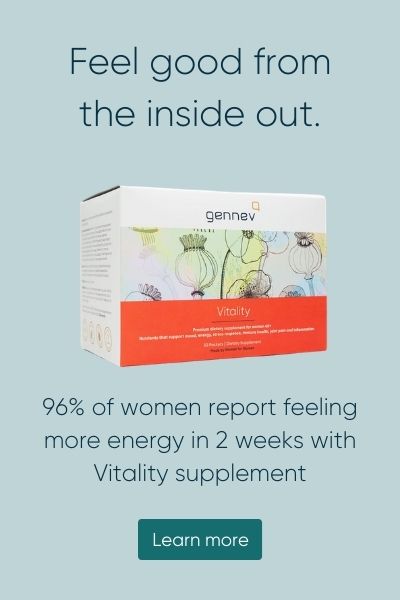
- Try Vitality “ the #1 daily multi-vitamin supplement for women aged 40+. It is packed with nutrients that support your whole body including mood, energy, stress response, immune health, joint pain, and inflammation. 96% of women report having more energy after just 2-weeks with Vitality.
- Magnesium is super-power supplement for women in menopause. It can help support your PMDD symptoms. It relieves joint pain, muscle cramps, Restless Leg Syndrome, headaches, depression, fatigue, anxiety and supports better sleep.
The information on the Gennev site is never meant to replace the care of a qualified medical professional. Hormonal shifts throughout menopause can prompt a lot of changes in your body, and simply assuming something is “just menopause” can leave you vulnerable to other possible causes. Always consult with your physician or schedule an appointment with one of Gennev’s telemedicine doctors before beginning any new treatment or therapy.