As an obstetrician-gynecologist who specializes in menopause, Dr. Lisa Savage hears all sorts of questions related to the menopause journey, and what one may expect to experience both physically and emotionally. Read on as Dr. Savage shares with us the top ten questions she is asked about menopause, along with her answers.
When does menopause start and does it end?
The definition of menopause is a year without a period at an appropriate age, although it is generally preceded by months to years of menstrual cycle changes and other symptoms during perimenopause. Perimenopause symptoms can start in a woman’s late 30’s as the ovaries’ output of the hormones estrogen and progesterone starts to become variable and decline. The average age of full menopause is 51. Everything after the cessation of periods is called post-menopause. Symptoms such as hot flashes are usually worst during the transition time and do tend to taper off as time goes by.
Why is my sleep so disrupted at this stage of life?
Perimenopause and menopause can lead to major sleep disruption, not only from night sweats, but from a change in the architecture or stages of sleep. Sleep disruption can play a role in the “downstream” symptoms of menopause such as brain fog and irritability.
What about weight gain in menopause?
Why have I gained weight and what can I do to manage it? Mid-section weight gain is common and is partly an adaptation to the loss of estrogen from the ovaries, since estrogen can be “made” (converted from other hormones) in fat tissue. Sleep disturbance can also contribute to metabolic changes and weight gain. An examination of your nutrition habits is a must”¦ since what worked before may no longer work”¦ and a commitment to physical activity/exercise is more important now than ever.
Has menopause made me sad? Irritable? Moody? Anxious? Angry?
Mood issues can be exacerbated or appear for the first time during the menopause transition. The varying and decreasing levels of estrogen affect brain chemistry at the same time the brain is becoming less sensitive to estrogen. Also, social, professional and inter-personal roles may be at a crossroads during this stage of life. This confluence can lead to a variety of mood issues, which can be addressed in the context of what is contributing to them.
Where did my interest in sex go and how can I get it back?
Sexual interest in women is multi-factorial, and hormones are just one part of it. During perimenopause and beyond, decreasing estrogen levels can cause physical changes in the genitals, with less lubrication and thinner, more fragile tissue, which can lead to pain. Pain chases away desire, of course. The good news is that these physical changes can be remedied in several ways, most effectively by the use of vaginal estrogen. Once pain is relieved, the other aspects of desire can be addressed. During the reproductive years, when you are still ovulating, the hormonal waves and cycles that occur can contribute to more interest at certain times. I call this “Mother Nature’s call to reproduce.” During those years, you might have more spontaneous desire than during mid-life, when you are no longer ovulating, and receptive desire may play a bigger role in your sex life. Desire, however, can be either spontaneous or receptive at any stage; all women are different. The good news is that are ways to re-kindle and support your interest in sex.
What is HRT and how can it help my menopause symptoms?
HRT is “hormone replacement therapy”. If started during the transition timeframe/within a few years of menopause, it can treat symptoms as well as have some long-term benefits, including bone, cognitive and heart health. Gennev physicians have the expertise to help patients weigh their options and are available for telemedicine appointments.
Doesn’t hormone therapy cause cancer?
The short answer is no, although a woman’s individual and family history must be taken into account. There is not one-size-fits-all regimen. Not all women need HRT and not all women can use it or wish to use it. As with any medication, risk can be related to dosage and duration of use. In many women, the short and long-term benefits far outweigh any potential risk.
What does “bioidentical” mean and are bioidentical products better for me?
The term bioidentical takes us back to chemistry class. If a hormonal therapy is molecularly/structurally just like what your ovaries make, it’s considered bioidentical. There are conventional, FDA-approved products that happen to be bioidentical, but this does not mean they are safer or more effective than products that are not bioidentical. This term is sometimes confused or conflated with “compounded”, which means it’s made at the pharmacy according to a certain recipe. Compounded products are not FDA-approved and can be inconsistent in dosing and absorption, which is why we at Gennev don’t prescribe them. A product can be compounded AND bioidentical”¦or not. For the most part, these two terms are used in marketing, and are not interchangeable.
What are some non-medical ways to feel better during the menopause transition?
Lifestyle modifications such as a healthy diet, adequate exercise and social connections can go a long way towards feeling your best. Practical considerations such as dressing in layers and avoiding any identifiable hot flash triggers are also helpful. At Gennev, our health coaches can address these issues and offer support along the way.
I feel alone because nobody ever talks about menopause.
Sister, you are not alone! Every woman will go through menopause and many of your peers/friends/co-workers can relate. At Gennev our mission is to support you in your experience, whether it’s physical, emotional, social or professional. We are an online clinic and resource, ready to make you part of an educated and empowered community of women. Welcome to our tribe!
Speak to a Gennev board-certified physician to get your questions about menopause answered, and connect with other women just like you in our private community on Facebook to share experiences and offer support to one another.
The information on the Gennev site is never meant to replace the care of a qualified medical professional. Hormonal shifts throughout menopause can prompt a lot of changes in your body, and simply assuming something is “just menopause” can leave you vulnerable to other possible causes. Always consult with your physician or schedule an appointment with one of Gennev’s telemedicine doctors before beginning any new treatment or therapy.
Menopause can be a time when we experience new and sometimes strange things happening with our bodies. There are at least 34 symptoms of menopause, and over the course of your journey, you may experience some symptoms that you are not aware of. If you do, it’s good to know you are not alone. The following are 5 lesser-known symptoms that women search for on Gennev.com:
Cold Flashes as The opposite extreme of hot flashes, you may feel chilled, start shivering or experience a bone-deep cold that makes it hard to warmup up from. Cold flashes usually pass within a few minutes and are likely caused by fluctuating hormones. As estrogen levels drop, the hypothalamusasthe part of your brain responsible for regulating your body temperatureasgets overly sensitive, and therefore temperature regulation can be unstable. Learn what to do about cold flashes.
Electric Shock Sensations– Described as sensations of zaps, shock or tingling in one area or all over your body, electric shock sensations (or ESS) are generally harmless and short-lived. Why this happens isn’t exactly clear, but these zaps could be related to aging, or possibly fluctuating hormones. Estrogen works with your central nervous system to send messages along nerves to the brain. When your hormones start to go haywire, signals may get crossed, amplified, short-circuited, or otherwise distorted, causing the sensations to occur. Learn more about electric shock sensations.
Facial Hair as Is coarse, darker hair showing up on your upper lip, chin, or jaw line? Why now? Estrogen keeps hair finer, softer, and lighter, where coarser, darker, and thicker hair is the result of testosterone. In perimenopause estrogen diminishes, but women’s testosterone levels may not. The higher ratio of testosterone to estrogen can cause these annoying outcroppings of male-like hairs to sprout. Find out how to get rid of unwanted facial hair.
Itchy Skin as You may have noticed your skin is drier, and you may feel itchy more often, no matter what the seasonal weather may be. One of estrogen’s many responsibilities is to trigger the body’s production of collagen and body oils, which keeps your skin moist and supports your body in retaining its natural moisture. As estrogen declines in perimenopause and menopause, so does your body’s moisture, resulting in dry, itchy skin, irritation, small bumps, even a rash. Learn how to relieve the itch.
Body Odor as Have you noticed your body smells differently? Does the deodorant or anti-perspirant you’ve used for years no longer work as well? While these changes may not be pleasant, they are normal as hormone levels shift. You may simply be sweating more with hot flashes and night sweats. And high levels of anxiety or stress can lead to perspiration as well. Sweat itself is odorless, but when it combines with bacteria on your skin things start to get stinky. Learn how to feel fresher.
Hormonal shifts throughout menopause can prompt a lot of changes in your body. To be sure what you are experiencing is related to menopause, consult your physician or schedule an appointment with one of Gennev’s menopause specialists.
We can help you with uncommon symptoms of menopause
Meet with a Gennev Doctor – our board-certified physicians are menopause specialists who can help you understand your symptoms, find the treatment that will help you take control of your journey and start feeling better
Feel better with Vitality – this nutrient-packed multi-vitamin supplement supports mood, energy, stress response, immune health, joint pain, and inflammation
The information on the Gennev site is never meant to replace the care of a qualified medical professional. Hormonal shifts throughout menopause can prompt a lot of changes in your body, and simply assuming something is “just menopause” can leave you vulnerable to other possible causes. Always consult with your physician or schedule an appointment with one of Gennev’s telemedicine doctors before beginning any new treatment or therapy.
About Gennev
Gennev offers a modern approach to women’s health and wellness for the second half of life. With telehealth services in all 50 states, our team consists of OB/GYNs, Naturopathic Doctors and Registered Dietitians that double as health coaches. Treatment options include prescription medications, natural solutions and supplement recommendations, along with lifestyle behaviors for symptom relief.
So many women ask, Why isn’t there a pill for menopause?
The reason is because menopause is basically estrogen withdrawal. And because we have estrogen receptors all over our bodies, the lack of estrogen shows up as a whole lot of different symptoms.
And even a single symptom, like poor sleep, may have a bunch of different causes, including joint pain, hot flashes, anxiety, and stress.
Sure, one solution can make a difference, but when problems are as challenging and multi-faceted as sleep, energy, or even feminine dryness, Gennev’s Menopause Systems can do a whole lot more.
Based on a deep understanding of how menopause affects bodies, Gennev’s menopause systems are designed to tackle problems from multiple angles, and the products are formulated to work better when used together.
In addition to working better together, bundling saves you money! When you purchase a system, you save 10 percent off the price of purchasing each item individually.
Gennev AM/PM Daily Menopause Pack
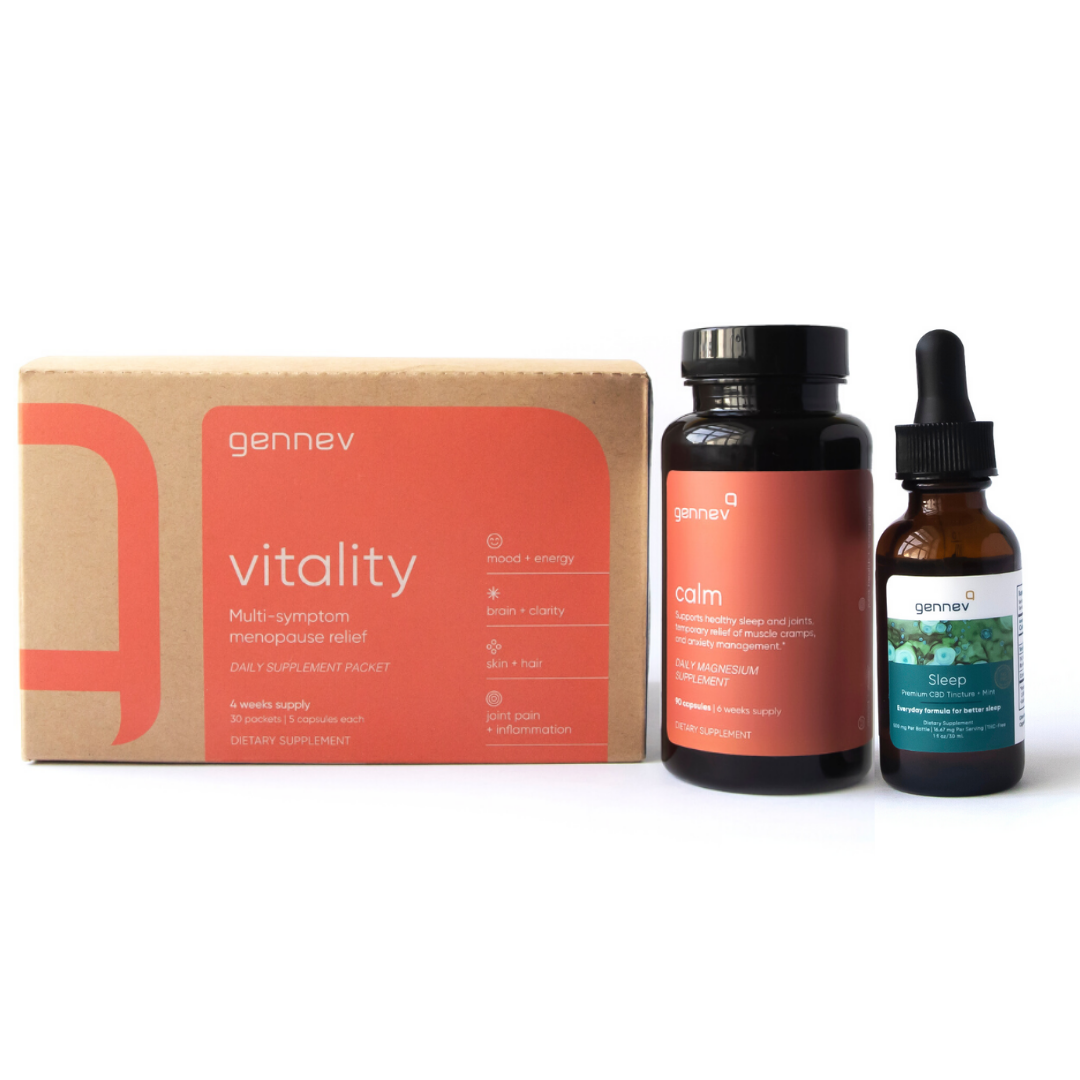
Are you craving the energy you used to have? Taken as part of your morning and bedtime routine, the AM/PM Daily Menopause Pack helps restore energy during the day and brings a peaceful sleep at night.
In the morning, take the Gennev Vitality multi-vitamin between breakfast and lunch to fight afternoon fatigue, regulate mood, and provide whole-body nutrition that can help bones, hair, and nails. Women rave about this new multi-vitamin formulated for women 40+. As one satisfied Gennev Vitality customer said: “I am not a vitamin person…never have been…. Vitality has been amazing. I have been taking them for over a month and I’ve never had an upset stomach – even if I don’t eat much in the morning first. I also don’t like to drink a lot of caffeine but I do feel tired in the afternoon but after taking Vitality I don’t get that afternoon energy slump.”
At night, add the Sleep CBD + Melatonin softgels and Magnesium Glycinate to your bedtime routine to help you get more rest at night. You’ll wake up feeling refreshed and free of morning anxiety. Our bodies naturally make melatonin, but as we age, we make less. Gennev Sleep CBD + Melatonin supplies just the right amount to help you fall asleep fast and stay asleep peacefully. With the natural stress- and pain-relief many get from CBD, the softgels are a powerful sleep aid that do not create dependency or the “boomerang” effect of worsening sleep you can get from OTC sleep aids.
Each of these products and can be purchased separately, but if taken together, you get the benefits of them working in harmony to help you feel your best. The AM/PM Daily Menopause Pack is priced at $89.95 for a 30-day supply (which equals a 10 percent savings on all products when purchased as a system).
Gennev Sleep System
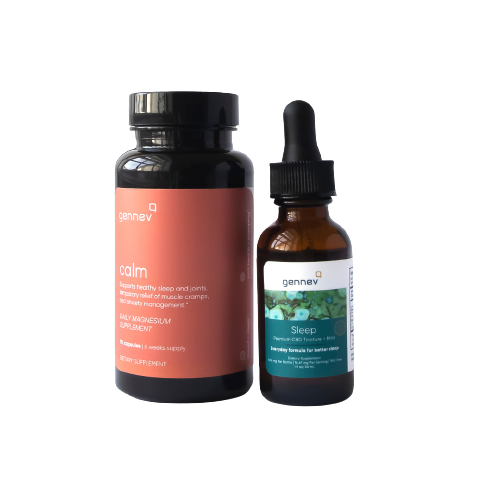
So. Many. Women are affected by interrupted sleep in perimenopause and menopause. And lack of sleep can make a very challenging time even harder to manage. So the Gennev Sleep System takes on all the reasons women aren’t getting good rest.
Sleep CBD Tincture absorbs quickly through the tongue so you fall asleep faster. Our Tincture is THC-free and can be used safely with kids, pets, and older adults without fear of getting “high.” The organic peppermint essential oil gives it a nice, refreshing flavor.
Magnesium for sleep is another natural aid, but up to 80 percent of us don’t get enough of this powerful nutrient. It can also relieve joint pain and menstrual cramps and relieve the morning anxiety many women experiences.
The Gennev Sleep Challenge addresses many of the other reasons women have trouble sleeping: food and drink choices, hydration, stress, movement, and more. Daily, users receive a text tip to their phone, helping them practice good sleep hygiene for natural sleep improvement.
Purchased together as the Gennev Sleep System, you get the compounding effects of these products working together. And, priced at $56.96 for a 30-day supply, you get a sweet 10 percent discount compared to purchasing the products individually.
Gennev Menopause Dryness Care
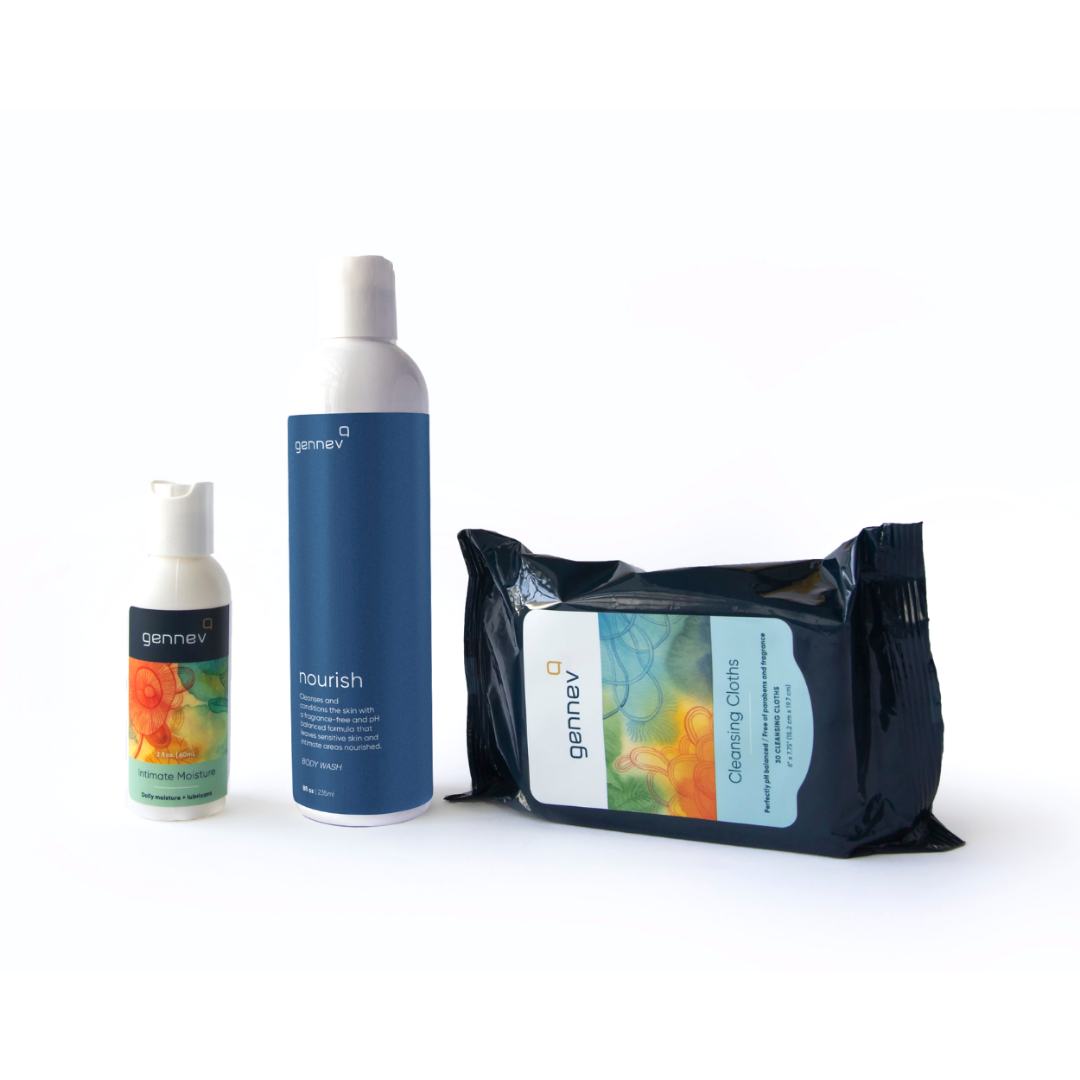
Are you craving better sex? Feminine dryness can really ruin the moment. Formulated by OB/GYNs and naturopathic doctors, the Gennev Menopause Dryness Care system soothes vaginal dryness. Gennev’s Ultra-Gentle Body Wash gently cleanses and balances the pH of a woman’s intimate area. Gennev’s Intimate Moisture feels and functions like a woman’s own moisture to relieve feminine dryness instantly, enhance intimacy, and help with painful sex. And the aloe-infused Cleansing Cloths are a fabulous way to freshen up afterwards or on-the-go.
These products used together work more effectively to ensure you feel like your old self down there, and we’ve priced the Gennev Menopause Dryness Care system at $34.95 for a 30-60 day supply, so you get a better value as well!
Why “systems”?
The Gennev systems were created for a number of reasons:
- Simplicity = consistency. For most menopause solutions, it takes time for your body to adjust and really feel the benefits. If you’re not consistent using the product, that time can be even longer and the benefits more gradual. We want you to feel the goodness as soon as possible, so making sure you have a good supply of everything you need makes that a whole lot simpler. (Hint: a monthly subscription that lets you set it and forget it is even better for helping you stay consistent, not to mention the additional discount.)
- Evidence-based research. Our systems were created using treatments that truly complement one another, like combining magnesium glycinate and CBD for better sleep. It’s the definition of synergy: combined, the effects of each solution are even greater. We have a whole team of medical professionals weighing in on the best combination of products for symptoms, so you don’t have to do the research!
- Price/footprint. When we can send products packaged in one shipment, you save money, we save money, and we use less packaging, which helps save the planet’s resources.
As women buy products, we learn what you need, and as women provide feedback on the systems, we’ll continue revising and improving our offerings. Please pass along feedback to info@gennev.com.
So, about that “magic pill” for menopause “¦
For many women, HRT can do a lot to alleviate menopause issues, so explore it as an option if you’re a good candidate. If HRT isn’t right for you, your “magic pill” for menopause might be more of a “magic packet.” But that’s OK. Our systems can help you put a lot of things right and manage your menopause in a new and healthy way.
Authored by Gennev Chief Medical Officer, ob/gyn Dr. Rebecca Dunsmoor-Su.
“There’s been yet another round of lay-press headlines about how estrogen plus progesterone hormone replacement may increase the breast cancer risk,” says OB/GYN Dr. Rebecca Dunsmoor-Su.
Headlines don’t tell the full story, and Dr. Dunsmoor-Su, who is an epidemiologist as well as an OB/GYN, helps us separate fact from fiction in this podcast.
If you’re dealing with menopause symptoms and are worried about taking HRT to manage them, you’ll want to give this a listen.
TRANSCRIPT:
Hi, this is Dr Rebecca Dunsmore-Su, the Chief Medical Officer here at Gennev. I wanted to put together a podcast today about hormone replacement therapy [HRT] and breast cancer.
I’m addressing this again because there’s been yet another round of lay-press headlines about how estrogen plus progesterone hormone replacement may increase the breast cancer risk. And that’s because of some data presented at a breast conference recently.
It’s important to note that this data is not new data. It is the same data from the Women’s Health Initiative that we’ve been talking about for many, many years. And the data from that study has been analyzed multiple times by multiple other investigators, and they all note that the data does not really show an increase of breast cancer in this population.
When you actually parse the data out and look at the women who started estrogen and progesterone and have had never seen hormone before and therefore likely younger and more close to the time of transition of menopause, there is no difference in breast cancer rate between them and people given a sugar pill in the same group.
Importantly, the only group in which they found a difference between them and the sugar pill is in women who had taken hormones before and stopped.
Two big issues with that: One, that’s not how we use hormones, and two, the group given a sugar pill in that subgroup actually had a much lower than average rate of breast cancer. So in comparing those two groups, you’re actually comparing to the wrong comparative group.
If you look at that group of women given estrogen plus progesterone, they really actually don’t have a higher rate of breast cancer than any other E plus P group that we’re not calling significant.
That’s a lot of statistics talk for saying if you work with your data enough, you can make something look like it causes harm. But really when you look at how we use hormones, estrogen plus progesterone really does not increase the risk of breast cancer.
But again, some studies say it does. Some studies say it doesn’t. Some big studies say it does. Some big studies say it doesn’t. And why are we seeing this back and forth? Why don’t we know the answer by now?
I think there are two real reasons why that’s true. The first reason is, in anything that may have a very small or no impact, if you do studies you’re going to see studies give you false data on both sides of that true estimate. It’s why we do large studies. It’s a statistical anomaly and so what we’re getting is all of these studies on either side sort of telling us, well maybe the reality is somewhere in the middle or somewhere around zero.
The second reason is probably genetic. Not all women are the same and we know from some studies that there are gene products that probably make it an increased risk to take hormones and with breast cancer and we know from other studies that there are women for whom taking hormones can be protective against breast cancer.
The problem is we just don’t know all of the genes that can impact this yet and so you’re going to see different responses from different women to hormone replacement therapy. The one thing I do know is that no matter which side of that genetic line you fall on, the actual overall impact of hormones on breast cancer is probably exceedingly low.
So what, you may ask, does that mean for you? Well, here’s how I approach hormone replacement therapy. I approach it by saying, well, what is it good for, and what could the risks be, and how do I balance those for my particular patient?
Benefits of hormone replacement therapy
So first of all, what is hormone replacement therapy good for?
Number one, it’s good for symptoms. If you are suffering significantly from hot flashes or night sweats or vaginal dryness or any of those symptoms, hormone replacement therapy is actually very a effective medication for that, and only you know how big the impact of those symptoms are on your life and how much you would value taking a medication that can make them go away.
The second thing we know it’s very good for is your bones. It’s one of the best medicines for preserving bone strength. We don’t typically use it just for that, but we certainly as providers understand that it does one of the best jobs with the least risk for protecting bones.
The third thing I’ll talk about with people is cardiovascular protection from hormone replacement therapy. The answer to that is very complicated and again, women are genetically very different. So there’s no one answer for each woman. But we do know that women who have estrogen have a different lipid profile and a different cardiac risk in terms of heart attack than women who are menopausal.
And so there is probably some protective effect from that perspective. But depending on how you use the hormone, it can also be dangerous because if a woman has already developed atherosclerotic plaques in her arteries, adding estrogen back can cause blood clots to form on top of those and could probably increase her heart attack or stroke risk.
So when you’re talking to a doctor about hormone replacement therapy and cardiac risk, you need to be having a very complex discussion about whether it might be beneficial or harmful for you.
The next thing that we sometimes use hormones for is mood, and in some women it really can be quite beneficial in balancing mood, especially in the perimenopausal time. However, we don’t have great evidence that it helps all women. And again, this is likely because women respond differently both to hormone and have different reasons for having mood symptoms.
And the last things women often ask me about are more what we typically think of as superficial things like their skin, their hair, their nails, and their weight gain. Hormones can be somewhat beneficial for those things, but I certainly don’t start women on it just for that because really its impact is quite low in those things and there are other things that are safer that we can use for that.
Risks of hormone replacement therapy
So if those are the things hormone replacement therapy can be good for, what are the risks? In my mind, the biggest risk is actually for blood clotting.
So we know that estrogen increases the risk of forming a blood clot in the body. We know that women who are pregnant have a higher risk of that. We know that women before menopause have a higher risk of that. It is a known risk of estrogen. It is not a huge risk.
The baseline risk of forming a blood clot if you don’t have a predisposition is quite low and the increase is relatively small from adding estrogen. But we do talk about it because it can be an important risk, especially in people who might be at higher risk of stroke. So it’s important to think about that risk and whether it applies to you.
The second thing we talk about when I counsel patients is breast cancer, and I tell my patients honestly I don’t think that estrogen really, on the whole, increases your risk of breast cancer. I think there are certain people for whom that might be true and there are certain people for whom it’s protective. But on the whole, for most women, it’s probably not a big risk.
The important thing to keep in mind also is one of the things they show in the Women’s Health Initiative that we don’t talk about a whole lot and in some of these other large studies is that when women do get breast cancer on hormone replacement therapy, it’s often a lower grade or earlier-stage cancer and easier to cure.
The last thing I always talk to my patients about is that one in eight women will get breast cancer in their lifetime. That’s your baseline risk, so it can be really hard to tell if something is actually increasing that risk when the risk is so common. And while breast cancer is very scary to us as women, we think a lot about it, in reality, it kills very few of us, and those of us who are at highest risk of dying from breast cancer and breast cancer complications or those of us getting it at earlier ages, and there’s a lot of genetic interplay with that.
The sort of breast cancer that we see as women age that contributes to the large portion of this one-in-eight risk is generally caught fairly early stage — if you’re getting adequate screening — and is curable.
Many, many, many more women will die of cardiovascular disease and many, many more women will die of hip-fracture related complications. So we need to be thinking and talking much more about cardiovascular disease and bone health in women in menopause.
Taking HRT safely
So I just gave you my counseling session that I give to women in my office for hormone replacement, and many of them after that counseling session say, well, what would you do? Or what should I do?
And I tell my patients that if you’re going to use hormone replacement therapy, which I often recommend, you need to be using it safely, and the most important thing you can do is know what you are taking.
I see many women in my office who have been told by other providers that they can be given a special, compounded, just-for-them hormone replacement, that will be better than anything made by an evil pharmaceutical company.
This is not true.
First myth: there is no “natural” hormone replacement. Estradiol and progesterone are synthetically made. If you get it compounded, it’s still synthetically made in the same pharmaceutical company that made the pills that I would prescribe you or the patches that I would prescribe you.
Second, no one can match it to the hormones that you had before menopause because those hormones are gone. We can’t predict what those were. So anyone who’s saying they’re making a blend especially for you really isn’t. They’re just making a blend that they’ve been taught to make.
And the third big thing that I tell people is when you are getting things mixed into creams or rubbing them on your skin, you do not know what dose you are taking. While they try to do their best to get it evenly mixed throughout that compounded cream or lotion or base, it is not evenly mixed and we know it’s not. And when the Lin tests have been done on these products, the variation in the amount of hormone actually in any given dose is quite wide. If you’re going to take something that might have a risk, you need to be taking something where you know what dose you’re getting.
And so I tell my patients, I only use the pharmaceutically generated and regulated products such as estradiol pills, estradiol patches, and progesterone pills and things like that. And that’s just for safety’s sake. If there might be a risk associated with this thing, I at least want to know what I’m giving you.
The second thing you can do is get your breast screening, get your mammograms, get your breast exams at the doctor. People don’t enjoy getting mammograms. Trust me, I don’t enjoy getting them either, but they are our best method of screening for early-stage cancer, and if we catch breast cancer early, it can be cured.
The third thing you can do is when these articles come out in the lay press, read them with a critical eye. Many headlines are generated to scare so that you’ll read the article. So just be aware there may be no new data behind this. They may just be rehashing the same data that we’ve heard over and over again, trying to get a new article out of it.
The fourth thing I tell people is, help us to understand better how genetics play into breast cancer risk and hormone. Go to an organization like MiraKind.org, and there’ll be a link on our website for this. That is a nonprofit organization that’s doing genetic research on how different gene factors play into the breast cancer risk in women. And it’d be great to sign up for one of their studies if you qualify.
And finally, when you’re thinking about using hormone replacement, find someone with genuine credentials, find a physician who has some training in menopause and really understands the issues behind this and doesn’t automatically do the same thing for every woman.
This should always be a discussion between you and your doctor and they should have a good understanding of the risks and benefits of hormones and be able to explain that to you and make a tailored decision for you.
Thank you so much for listening. I know this is a constant question and issue for us here at Gennev. And our goal, as always, is to give you the best, medically valid and evidence-based information we can find.
Join the conversation that continues on about HRT, breast cancer, all things midlife and menopause, and more in our Community forums. You are always invited.
So, last night you had popcorn and a Dr. Pepper for dinner.
Not exactly the most balanced meal, but you were hungry, it was too hot to fire up the oven, popcorn has”¦well, at least fiber, right? Could be worse.
Could also be better. But we get it: not every meal is going to be as nutritious as we might hope. And that’s OK. But chronically falling short of nutritional guidelines really isn’t great for your health, and many adults (particularly older women) don’t get enough of some pretty important nutrients.
So maybe you decide to take supplements, just to ensure you’re getting enough of everything you need.
During your weekly grocery shop, you venture into the “vitamins” aisle, take one look at the groaning shelves stocked to bursting with a million options, and back right out again, determined to eat more kale.
So let’s talk about how to buy supplements.
In this blog, we’re not going to discuss which nutrients you need (but you’re getting enough magnesium, right?). For now, we’re more concerned with how you choose supplements for menopause symptoms that are safe and effective.
Why is supplement safety a problem?
In the US, supplements are a multi-billion dollar industry. But because the government considers supplements to be more like food than like medicine, the regulation of supplements is far less rigorous than on drugs.
Why does it matter? Because safety. Drugs must prove they are safe before they can go on the market as via trials under well-controlled conditions. Supplements are considered “safe” until someone proves the supplement has caused harm.
With so much potential profit and so little regulation, it’s a great opportunity for the unscrupulous to prey on consumers, offering “supplements” that may do nothing as or may cause more problems than they solve.
Potential risks include:
- Misleading labeling. A studies found that after many herbal supplements were tested, less than half contained the herb claimed on the label.
- Because the supplements aren’t checked by 3rd parties, unscrupulous providers may use fillers or allow contaminants into the supplements.
- “Extra ingredients.” In order for their “supplement” to meet the company’s claims, some have added medications such as steroids or other drugs. These are not generally listed and can cause dangerous interactions or carry health risks of their own.
- “New ingredients.” Untested ingredients have found their way into supplements, causing “ in the case of DMAA “ several deaths.
- Just because something is natural doesn’t make it safe. (Box jellyfish are “natural” too, but you wouldn’t give one to your kids as a pet.) Some herbs can interact with medications, either making them less effective or putting your health at risk. If an ingredient isn’t listed, or risks aren’t added to the label, you could unknowingly put yourself in danger.
How do we choose safe supplements?

To figure out how to find credible sources among the vast quantities of supplement providers, we turned to Dr. Wendy Ellis, Naturopathic Physician and educator.
Want safe supplements? First, says Dr. Wendy, check that the supplement’s manufacturer followed the cGMP “ Current Good Manufacturing Processes “ and that they’ve been certified via a third party audit. You should see an endorsement like this one on the supplement label.
The cGMP are set by the Food and Drug Administration (FDA) and are “a set of requirements that ensure the quality and safety, including the testing, manufacturing, preparation, storage, and other quality assurance procedures. This ensures that the dietary supplement is packaged and labeled as specified in the master manufacturing record.”
Next, Dr. Wendy says, be sure the company has and follows specifications for all raw material and finished products. Meaning, they know where their ingredients come from and how they’ve been handled. They should be able and willing to provide documentation of this on request.
Third, be sure the manufacturer tests regularly for potency and to ensure against contaminants. These include solvents used in manufacture, heavy metals or pesticides that can be picked up in when ingredients are being grown, and pesticides and molds, as herbs and other food products can be at high risk for these.
Finally, the manufacturer should be able to guarantee that the product will remain safely stable and potent throughout its shelf-life.
There are several reports that may help you determine some good supplement manufacturers.
Here’s To Better Vitamin Safety
Obviously, it’s tough to get all this information on the label, so you may have to call the manufacturer or do some research on your own. But it’s worth it to be certain your supplements are safe and of good quality.
The health care world is still undecided about the effectiveness of supplements, but from our own experience and those of the women we work with, we know many supplements have had life changing (and menopause surviving) benefits. If you do decide to add to your diet with supplements, please do so safely, and check with your doctor to be sure supplements won’t interact with your medications.
Do you take supplements to complete your nutrition? How do you choose the ones you take? We’d love to learn more from you, so please comment below or join in the discussion on our community forums!
Thank you to Dr. Wendy Ellis, Naturopathic Physician and educator for her advice on choosing safe supplements.
What if we said you could improve your balance and maybe reduce urinary incontinence (leaking) as at the same time?
Menopause and falling
September 22, 2018 is Falls Prevention Awareness Day, according to the National Council on Aging. A study by the National Center for Health Statistics and the Centers for Disease Control and Prevention (CDC) found that falls are the most common cause of non-fatal injuries to women. While the Council is looking primarily at seniors, even younger women in menopause are more prone to falling than their pre-menopausal sisters.
Falls happen “ a lot “ and can cost us a lot more than dirty clothes and wounded dignity. According to Sixty and Me, “Roughly 1 percent of older Americans who experience a fall will die as a result of this fall. This amounts to approximately 32, 000 deaths per year or just under 90 deaths per day due to falls.” So it’s important to take the issue seriously.
Why? Well, loss of estrogen weakens muscles, and it can also affect a woman’s inner ears, which are critical to our sense of balance. Additionally, our proprioception as our conception of our body’s place in space as can be a bit untrustworthy during this time.
Given how common falls are in menopausal women (and how serious they can be, thanks to the weakened bones of osteoporosis), we thought we’d talk to our amazing PTs, Dr. Brianna Droessler-Aschliman and Dr. Meagan Peeters-Gebler, for advice on how to stay upright and in balance.
Better balance “¦ and a bonus
Turns out our pelvic experts had even better information than we expected!
Incontinence often occurs or worsens during perimenopause and menopause, Meagan reminded us, and here’s where things get interesting: because urinary continence and balance both rely on core muscles, solving for X may also mean solving for Y.
When this topic came up, Meagan decided to do some digging into the question of balance and incontinence. Is balance different in women who leak?
Answer: yep. The question, as far as the pelvic floor is concerned, is the center of pressure. You want your body to be in good alignment so the pressure on the pelvic floor is distributed evenly, including when your bladder is full. In women who leak, that center of pressure is displaced as not in alignment as and the uneven distribution may be part of what causes incontinence.
Women who don’t suffer from incontinence tend to have a more even distribution of pressure and experience fewer issues with balance.
Solve for X, solve for Y.
Breathing also plays a role here, so hang in with us for a second, it’s a bit complicated. Your inner ear gets input from your body on your position: sitting, standing, lying, stable, wobbly. That system communicates back and forth with your core and pelvic muscles (among others), making adjustments to keep you upright and in balance. It also communicates with your diaphragm, which is a muscle at the top of your core that regulates breath.
We know that breathing incorrectly can negatively impact your pelvic floor, so it’s important that your inner ear gets the right information to feed to your diaphragm.
Right breath, right balance, right alignment, right use of core muscles equals fewer falls and less tendency to leak. Ta da!
So, knowing all this, what do we do now?
How to fix it all?
There are a lot of factors involved in falling: your muscles, your proprioception, your environment. The best way to protect yourself from falling is to tackle them all.
Muscles
Integrate your pelvic floor in your work on balance, say our PTs. There’s a chicken-and-egg effect here where working on your pelvic floor may take some of the burden off lower stabilizer muscles in your feet and ankles, and working on greater strength and flexibility in feet and ankles may take the burden off your pelvic floor.
Stronger and more flexible feet and ankles. The muscles of our feet, particularly on the inside, are critical to our negotiation with the surface below us. The demand is different if we’re walking on a smooth sidewalk or a rooted and rocky forest trail. Our feet and ankles should be strong enough to catch us when the surface suddenly changes. If they’re not, the burden of correcting posture has to travel up the chain to hips and core.
Correct pelvic floor issues. Work with your PT or do your kegels to keep pelvic floor muscles fit. Having a strong core enables you to catch yourself should you start to fall. Also, Brianna reminds us, a stronger pelvic floor means less urinary urgency and fewer trips to the bathroom in the night. “Women who have to rush to the bathroom are at a much higher risk of tripping over the rucked up carpet or their cat,” says Brianna, “and I probably see the most falls from women who are sleepy, moving around their house in the dark, to go to the bathroom. If we can take you from three or four trips per night to one or none, your risk of falling goes way down.”
Balance and Proprioception
While the effects of estrogen on your inner ear are largely out of your control, you can train your body and brain to be more aware of your position in space. Tai Chi, yoga, and basic balance exercises can help you get stronger, be more in control of your movements, and be in better balance.
Also, learn the right way to regain balance when you go a bit wobbly. “We’re afraid to fall, so we immediately reach out our hands,” Meagan says. “But the wobble is your body doing what it’s supposed to do, it’s correcting. Take the big step; lift your foot as use the body’s built-in ways to catch itself.”
Environment
Be aware of tripping hazards, both PTs agree. Make sure throw rugs are taped down, pick up dog or kid toys, throw out those slippery piles of magazines. If you do have to get up in the night, illuminate your path with some dim nightlights. Have the right footwear for the occasion: Yaktrax on slippery sidewalks, good boots for hiking or rough trails, save the heels for the office. “Slow down!” says Brianna. “When you’re moving, put away your phone and pay attention to your environment. One of my patients reads the newspaper while walking. Aaaaaaand that’s why he’s a patient.”
So on Falls Prevention Awareness Day, we challenge you to take a moment to minimize your risk. Check your environment for hazards. Light the way from bed to bathroom. Check into a tai chi group at your local park, or just do a few kegels as you’re finishing up this blog and emailing it to a friend. Your bones, your brain as and your bladder as will thank you.
Have you dealt with balance issues or suffered from a fall? Share with us in the comments, talk with us in the Gennev community forums, or share on Gennev’s Facebook page or join Midlife & Menopause Solutions, our closed Facebook group.
Menopause is possibly the world’s worst-kept secret.
Half the world’s population goes through it, and yet many women we talk to are shocked to learn the headaches, anxiety, weight gain, insomnia, tingling fingers, restless legs, hearing loss, and rage they’re experiencing may all be symptoms of the perimenopause/menopause phase of life.
And that those symptoms can start as early as their mid-30s.
“I thought one day my period would just stop, maybe I’d have a few hot flashes and that was it,” one Gennev community member told us. “I had no idea how much menopause would impact every aspect of my life.” It’s a sentiment we hear again and again and again.
It’s a “challenging” time. And not knowing what to expect or how to handle it can make matters so much worse. We want the current group of transitioning women to be the last group to be mystified, embarrassed, scared, and overwhelmed by menopause. At team Gennev, we want women to have a healthier, happier, easier menopause as and we’re helping make that happen.
Midlife shouldn’t be something to dread. It’s a great, vibrant time of life when women feel freer, more independent, more creative, stronger, bolder, more themselves than they’ve ever felt before.
If you’re ready to step into your vibrant, glorious midlife, or if you’re there and want to share, we hope you’ll join us at an amazing occasion: the M event by Gennev.
What you’ll learn at the M event
On November 10, we’re gathering the foremost practitioners in women’s health to share their latest work across subjects like hormones and sex, brain fog and Alzheimer’s, cardiovascular health and skin health, cancer and aging.
We have an amazing lineup of experts to help you thrive through the transition and beyond:
Dr. Rebecca Dunsmoor-Su, MD MSCE, Board Certified Ob/gyn and Owner and Lead Physician, RenuvaGyn; Director of Health, Gennev, will take on the topic of “Vaginal health and sexual dysfunction.”
Dr. Lisa Mosconi, Neuroscientist, neuro-nutritionist, and Alzheimer’s researcher, Weill Cornell & New York Presbyterian, Author of Brain Food, The Surprising Science of Eating for Cognitive Power, will talk about “The link between estrogen, menopause, and Alzheimer’s risk.”
Dr. Sarah Speck, MD, Medical Director of Swedish Heart and Vascular Institute, Owner of Speck Health and co-founder of POTENTRx, will address “Heart disease risk after menopause.”
Nicole Negron, Certified Women’s Health, Nutrition and Lifestyle Consultant on female brain chemistry and hormonal health, will speak on “Weight, hormones, and the cycle of life.”
Dr. Arianna Staruch, Naturopathic Doctor and Dean for the School of Naturopathic Medicine at Bastyr University, will tell us about “”Naturopathic Support for Women in the Menopause Transition.”
Dr. Keira Barr, Certified Dermatologist and Chief Wellness Officer, Resilient Health Institute, Author of The Skin Whisperer, will discuss “Let’s get naked: Are you listening to your skin?”
Attendees of the event will have the opportunity to get even more information from our speakers during a live Q&A.
But wait”¦ there’s more!
The event will be held on the grounds of beautiful Bastyr University. We’ll enjoy a light breakfast and delicious lunch provided by their catering staff.
During breaks and at lunch, participants will have the opportunity to check out our expo, where vendors are showing and selling products and services tailored to the midlife woman.
After lunch, there will be a small-group session facilitated by Nancy Board, Co-Founder and COO at Global Women 4 Wellbeing. Group members will do a deep dive into “Menopause, hormones, and rage.”
Because we want women everywhere to have the opportunity to learn more about their bodies, their health, and their futures, the M event will be live-streamed on the day and available on-demand after. To get access to the free live-stream or on-demand, register for the event, and under “Tickets,” choose the “live stream” ticket option.
Giving back
Gennev is proud to be a Founding Member of Global Women 4 Wellbeing; 10% of all ticket sales will go towards women’s health and well-being research through GW4W’s global work.
How to register
Participation in the small group event is limited and available on a first-come-first-served basis. If you’re interested in participating in the small group, be sure to select the correct ticket on Eventbrite. Remember, to get the link to the free live-stream and/or on-demand versions, you’ll need to register, choose “Tickets,” then select the free live-stream option.
The details
The M event will be held Saturday, November 10, 2018, 8:00 AM as 2:00 PM PST at Bastyr University in Kenmore, WA.
Our non-profit partner

Our sponsors
Our Media Partners
In this podcast, Jill had the opportunity to talk with Dr. Angela Jones, award-winning ob/gyn, media professional, and author. She’s delivered thousands of babies and answered hundreds of thousands of questions on every aspect of her profession. From menses (first period) to menopause and beyond, Dr. Angela has the answers, so we jumped on the chance to ask “Menopause 101″ questions we have and have heard from you.
Introduction Into Menopause With An Award-winning OB/GYN
If you’re not always entirely sure what’s going on with your body, if you’re concerned what you’re going through isn’t “normal,” or if you want to be ready for what might lie ahead, Dr. Angela has guidance, reassurance, and answers for all.
2:04
One question we hear a lot is, what exactly is the difference between “perimenopause” and “menopause”? Dr. Angela gives us the lowdown on the definitions, what women might experience during these phases, and how to get a ballpark idea of how long the process might take for you.
4:06
So what exactly is going on in our bodies during these phases? Dr. Angela fills us in on the science of what’s going on in there.
5:10
Because the experience of menopause is still such a taboo subject, women don’t always know if what’s happening to them is “normal.” We asked Dr. Angela what we should know to take care of ourselves correctly.
6:26
Dr. Angela speaks specifically to the question of thyroid disorders, the symptoms of which can be mistaken for symptoms of perimenopause.
7:04
As we age, we may need to do a little more “maintenance” to stay healthy and vibrant. Dr. Angela talks us through some of the tests we should do or do more often as we get older to ensure we’re in the best of health.
8:30
Dr. Angela gives her recommendations on “lifestyle modifications” and why these can act as preventative medicine. As she says, the right diet and exercise will take you a long way.
12:08
When we hit our 40s, is it time to change up our birth control? First things first: “If you don’t want to get pregnant, you need to be doing something!” But you do need to be sure your birth control is right for you, and Dr. Angela gives some tips on how to move forward.
15:20
Low-dose hormonal birth control can have other benefits for the over 40s in addition to avoiding pregnancy, and Dr. Angela fills us in on how birth control can help alleviate or moderate perimenopausal symptoms.
17:20
We asked Dr. Angela to “coach” us on how to talk to our doctors, what information we need to have ready when we walk into our appointments, and what questions we should ask. Because women are often embarrassed to talk about their bodies, even with their ob/gyn, Dr. Angela has some best practices for getting the information you need.
21:40
Why is there so much shame and embarrassment about this completely normal phase of life? “I have no idea!” Dr. Angela says, but she offers some ways we might move forward to celebrate this time of our lives rather than dread it.
25:12
How does Dr. Angela feel about using supplements or other methods to manage menopause symptoms? While our doc adheres pretty firmly to ACOG (American Congress of Obstetricians and Gynecologists) standards, she says, “Go for it!” to patients who want to try acupuncture, black cohosh, or other alternative treatments. However, Dr. Angela does want anyone trying something new to follow important guidelines, which she outlines for us.
28:10
Need to find a new ob/gyn? Dr. Angela gives her insights on how to find a doc who’s current, certified, and reliable.
30:15
Dr. Angela offers her concluding thoughts about how to thrive during menopause. As she told us, “Aging doesn’t scare me, and it shouldn’t scare women. Women should be embracing the aging process.” Like a bottle of fine wine, Dr. Angela says, we’re just getting better.
What questions do you have for Dr. Angela? Add them to the comments below, or give us a shout out on Facebook or Twitter, and we’ll get them in front of her! You can also learn more from Dr. Angela by checking out her “SAY WHAT” blog and podcasts at askdrangela.com.
Never miss an episode from Gennev, subscribe to our feed on iTunes, Stitcher, or SoundCloud.
Women are not new to regular hormonal changes and their accompanying effects on the skin. By the time you’re in your mid-20s, collagen production starts to decrease. This can bring about a multitude of skin concerns such as the appearance of fine lines, dryness of the skin, hormonal dark spots/melasma, and more.
Unfortunately, collagen decreases even more after you reach menopause. It begins roughly one year after your last period and can bring with it some skin changes you may not be used to. Hormone levels will plummet, and you may notice that skin on your face gets dryer, duller, and thinner. You may also experience thinning of hair on your scalp but an increase in facial hair in menopause. Which makes menopause skin care that much more important.
It’s critical to understand what your body is going through during this time to maintain a youthful and healthy glow for your skin. With the right care, it’s possible to keep your skin in tip-top shape and lessen the effects of menopause.
If you need a doctor’s recommendation for skincare, a Gennev menopause-certified gynecologist can give you a trusted opinion, determine if medication is right for you, and they can provide prescription support. Book an appointment with a doctor here.
How to Care for Your Skin During and After Menopause
Invest in sunscreen
No matter what your age is, sunscreen should always be a priority in your skincare routine. But once you’re in menopause, the skin is more prone to showing age spots and discoloration. Once you get these spots, it might be trickier to correct, so it’s better to err on the side of prevention. Make sure to choose sunblock with broad spectrum UVA and UVB protection and an SPF of at least 30.
Also, here’s an important thing to remember: Layering two products with SPF 15 doesn’t add up to SPF 30! You’re better off with one product anyway, as some products react with the ingredients of others when mixed.
Cleanse with a moisturizing facial wash
With age, the skin loses some of its capability to retain hydration and moisture, which could lead to itchiness and unexpected menopause acne breakouts. Choosing a moisturizing cleanser or getting into oil cleansing will be better in restoring the softness and smoothness of the skin. Soaps may be too drying, so go to great lengths to invest in a product that can deliver the moisture your skin needs. Try hunting for glycerin in the ingredients list, as this helps in increasing the water retention of the skin.
Look for products with hyaluronic acid
One of the side effects of menopause is the loss of moisture of the skin. This can lead to dryness and roughness, and wrinkles might start to develop at a quicker rate. Products with hyaluronic acid should help with this. This ingredient is commonly found in serums and moisturizers. Invest and incorporate them into your skincare routine. Apply twice daily, and you’ll notice significant improvements in your skin after regular use.
Switch to gentle exfoliation methods
If you were used to abrasive exfoliants before, it’s time to put them down. As mentioned, skin gets thinner during menopause, so the use of harsh, chemical-based products and exfoliators may irritate the skin or cause it to tear or bleed. This is still a necessary step in your skincare routine since it can remove dead skin cells and clear pores. Exfoliation also stimulates blood circulation in the face, encouraging cell regeneration.
Get screened for skin cancer
In menopause, the risk of skin cancer increases. It’s critical to have a dermatologist who can run tests for you to ensure that you have no pre-cancerous growths and other skin conditions you must correct. You should also ask the doctor how often you should come for screening tests so that you can be regularly updated with your skin health.
Healthy Skin Starts Today
If you still have time before menopause kicks in, it’s never a bad idea to start with your preventive regimen right away. After all, caring for menopausal skin is similar to how it was when you were in your 20s and 30s”it’s all about finding the right products that fit your skin type and what addresses your concerns the best.
If you’re already in menopause, don’t fret. You can seamlessly incorporate these tips into your current skincare routine. It will also help if you have a dermatologist who understands the female hormonal changes to your skin, so that he or she may prescribe other topical products for specific skin concerns such as the growth of facial hair or the prominence of wrinkles. When in doubt, don’t be afraid to consult!
What is your skin-care routine like? Are you a products person, or more of a soap-and-go? Come talk with us (and invite other women!) on our Facebook page, or in Midlife & Menopause Solutions, our closed Facebook group.
“
Dry eyes and menopause: yes, there’s a link.
Now that many of us are in the thick of allergy season, it may be hard to differentiate itchy, burning eyes due to pollens and itchy, burning eyes due to other causes.
But if your gritty, blurry eyes are year-“rounders now, you may be dealing with Dry Eye Disease, or DED. Twice as common in women over 50 than it is in men of the same age, keratoconjunctivitis sicca is a symptom to not ignore.
If you are a woman suffering from dry eyes, a Gennev menopause-certified gynecologist can give you a trusted opinion, determine if medication is right for you, and they can provide prescription support. Book an appointment with a doctor here.
What is Dry Eye Disease?*
According to the National Eye Institute, dry eye is when your body doesn’t make enough tears, or when your eyes make the wrong kind of tears or tear film. Tears have three layers: oily, watery, and mucus. The oily on the outside (farthest from your eye) keeps the tear from drying too fast. The middle watery layer keeps eyes clean from dust, lashes, pet hair, and all that other stuff that seems to find its way to our eyeballs. Finally, the mucus layer on the inside keeps eyes moist. If normal production of one or more of these layers is disrupted, that can result in DED.
What causes dry eyes in menopause?
Like so many bits of the body that are moist, production of that moisture in the eyes depends in large part on the sex hormones estrogen and testosterone. As these hormones decline with menopause, so does the lubrication.
There are other causes of Dry Eye Disease, so if you believe you may be suffering DED, it’s a good idea to (a) check that there’s not a more serious underlying cause, and (b) avoid those factors that are within your control.
- Medications such as hormone replacement therapy (HRT), antihistamines, blood pressure meds, antidepressants, birth control pills, and decongestants can contribute to dry eye.
- People who have had laser eye surgery report a higher incidence of DED development.
- Those with autoimmune diseases such as rheumatoid arthritis, diabetes, Sjogren’s Syndrome, lupus, scleroderma, and some thyroid disorders are more likely to develop DED symptoms.
- Environmental factors are big contributors: smoke, wind, not giving your eyes relief from screens, a dry climate, even not blinking enough.
How do I know if I have Dry Eye Disease or normal irritation?
Those suffering DED usually have chronic stinging and burning. You may have blurred vision that’s briefly relieved by blinking, or feel like you have something in your eye. Your eyes are painful, red, gritty, and easily irritated by smoke or wind, and wearing contacts is painful or impossible. Oddly, if your eyes are generating excessive tears, that’s also a symptom of dry eye, as your body attempts to compensate for tears that aren’t the right consistency or that evaporate too fast. You may also experience sensitivity to light and impaired night vision.
If this sounds familiar, and it’s long-term and not associated with irritants like seasonal allergies, you should definitely get to an eye doctor for help. Leaving DED untreated can cause damage to the front of the eye, leave your eye more vulnerable to infection, and impair your vision.
Dry Eye diagnosis should be done by a licensed professional. An optometrist may want to add some dyed drops in your eyes to check if tear flow is normal and if there’s any damage to the eye already. The doc will check your eye to make sure the lid doesn’t turn outward or inward (both can cause dry eye) and to evaluate (my favorite medical term of all time) your ” blink dynamics” (if you’re blinking often enough).
Is there anything I can do about Dry Eyes and Menopause?
There are lots of things you can do about your dry eyes, including both lifestyle and environmental changes. For more serious cases, there are treatments by a health care practitioner that can relieve symptoms and head off long-term damage.
Ways to control your environment and reduce irritants
- Get a humidifier. In dry climates and over the winter, these can be a huge help by adding moisture to the air. If you’re in a dry place and can’t add a humidifier (like an airplane), be sure to close your eyes a lot and for a few minutes at a time. Make sure that airplane fan is tilted to hit the top or back of your head as you want to minimize air flow directly into your eyes.
- Cover your eyes. When you’re out and about, particularly in a windy place or on a bike, find wraparound sunglasses that protect your eyes completely. Hey, wraparounds are cool.
- Give your eyes a break. If you’ve been reading or focused on your screen a while, close your eyes. Blink. A lot. Try to remember to do this every few minutes, as we tend to blink less when focused on close-up tasks. Mayo Clinic says to lower your screen a little; looking down means your eyes aren’t as wide open.
- Stop smoking. Avoid others who smoke, at least while they’re actually smoking.
- Use eye drops. Unless you have a sensitivity to the preservatives in eye drops, you should be OK to use them as much as you need, even when your eyes seem OK.
- Adding omega-3 and omega-6s (try our women’s omega-3 supplement!) to your diet might help improve the situation: think flaxseeds, fatty fish, and some vegetable oils.
- Drink plenty of plain, still, unflavored, un-bubblied water.
- Wash your eyes gently with a very mild soap and warm water to make sure there’s nothing blocking the flow of oil to your eye.
Treatments for dry eye
If your dry eye is mild or moderate, over-the-counter eye drops may be enough to control your symptoms. For more severe cases, docs may recommend antibiotics to reduce inflammation, prescription eyedrops, eye inserts that release a lubricant, plugs to block tear ducts and keep tears in your eyes longer, light therapy and eyelid massage, or special contacts called “scleral” lenses that trap moisture next to the eye.
Yes, drier eyes may be part of getting older, but like so many things, you don’t have to just put up with the reduced quality of life. An eye doctor can diagnose the issue and get you set up to control the symptoms and avoid long-term damage.
*As always, these blogs are not intended as a self-diagnosis tool and should never be used to replace care by a licensed health care professional. If you think you have Dry Eye Disease, or any other serious medical condition, schedule a visit with your doctor.
How does menopause change, even disrupt, your gut microbiome, and what effects does that have on your health? Is there a way to build, protect, and maintain your gut health flora to make the menopause transition easier?
We were so excited to invite back surgeon and gut expert Dr. Erika La Vella to talk with us on the microbiome in menopause.
TRANSCRIPT TO FOLLOW
How’s your gut? If you’ve had gut issues (and particularly if you’ve fixed them), we’d love to know about it. Please share with us on the Gennev community forums!
Do you ever feel like there ought to be “¦ I don’t know “¦ more? You’re a high-achieving woman as great at your job and “successful” by modern measures as but you still feel like something’s missing, there’s something you haven’t accomplished yet.
Welcome to midlife.
A Conversation With Dr. Barbara Mark
It’s ME time! Women in their 40s and beyond often experience a pretty fundamental shift: it’s time to stop worrying what others think of me and concentrate on how I feel about myself, my place, my work, my creative side, my spiritual soul.
Great! Also “¦ dangerous. Frustration with finding yourself where you don’t want to be can lead to impulsive decisions.
How do you honor that part of yourself that’s ready for new challenges and new horizons without disrupting everything you’ve worked so hard to achieve?
Dr. Barbara Mark has some very good ideas for you. Dr. Mark is an elite leadership, career, and life strategies coach, advisor, and confidant to senior executive women. Trained in clinical psychology, Dr. Mark has great insights into human thought and how thought translates into action (or inaction). She focuses on working women in midlife, helping her clients find clarity during an often very challenging time.
We had a few questions for her. Listen in for her very good advice on discovering your rich, fulfilling midlife.
1:12 as What is an “executive coach”?
Executive coaches provide the opportunity for their clients to accelerate in their performance, Dr. Mark tells us: develop team rapport, increase confidence, develop work/life balance. And because her clients are women in midlife, they’re assessing where they are and deciding if they need help with impulse control
2:52 as Why did you choose to work with women in midlife in particular?
Dr. Mark says she has a lifelong passion for adult development, and women at this stage and interesting, powerful, and often impulsive, which makes them fascinating clients and people.
3:58 as What makes midlife “prime”?
Midlife can be a rich, exciting time, says Dr. Mark. Priorities are shifting, women are changing to be more “me-focused” and looking for new opportunities.
(Midlife really IS primetime, says author Juju Hook. Check out our review of Hot Flashes, Carpools, and Dirty Martinis)
5:18 as What’s at the root of wanting change at this time of our lives?
Dr. Mark says midlife is a developmental moment that happens. We start turning away from worrying about other people’s thoughts, opinions, and expectations to take a deep dive into “who do I want to be?”
7:07 as Is there a link between this change and societal expectations at this point in our lives?
Yes, says Dr. Mark, because finally we get a chance to look inward and observe how expectations affect us. But in addition, the developmental stages of adulthood also have an impact on both women and men.
8:34 as “Developmental stages of adulthood”? Do tell!
Listen in and find out! According to Dr. Mark these stages start in the 30s for both men and women and stick with us for many years. But what does it mean to “be out of sight of land” “¦ ?
11:17 as How does the workplace add another dimension to all this transition?
The workplace has it’s own demands, and in midlife, there are a lot of new decisions to make: Am I still in the right place? Or am I done and ready to move on?
(what’s it like to have menopause in the workplace? Anne Loehr talks risks and rewards of “coming out” as menopausal)
11:52 as Tell us more about the creativity that comes with midlife?
Says Dr. Mark, midlife is a moment where we’re left alone with ourselves, a time of deepening our connection with our inner selves. We’re often inspired to find ways to express our experience of that process and the woman we discover.
13:51 as Do women find new (and unexpected) ways to express themselves creatively?
Absolutely, Dr. Mark tells us; women in this time often find themselves more open to new avenues of expression, trying on lots of possibilities.
15:43 as How do you help women deal with the regimen and competitiveness of the workplace and still come into their own?
That depends on the age of the woman and where she is in her career, says Dr. Mark. Younger women are still building their career and reputation and looking for ways to participate that feel authentic. More mature women who have visibility and influence are asking, do I use my power to initiate something meaningful that’s wholly mine within my business? Do I start looking outside work for fulfillment? Or am I done here and ready to move on?
18:31 as Tell us more about impulse control.
In the midst of perimenopause, emotions can be a little heightened, and frustrations with life may lead to making hasty decisions. Some women need help understanding the impulses driving them so they can make the right choices.
20:27 as Is a desire for change pervasive among women at this time of life?
Oh, yes, Dr. Mark tells us. Women are different in how they show their restlessness and impulsiveness, but it is common.
22:40 as What are some things women need to watch for or be aware of in themselves?
According to Dr. Mark, to avoid over-hasty decisions, we should try to tune into our moods daily: how’s our satisfaction, our tolerance of life’s little frustrations?
Midlife can be a wonderful, freeing time as a chance to finally pursue your passions, old and new. Get the best, most fulfilling midlife you can have by entering into this time awake and aware of all the changes happening in your body, spirit, and life. For some, that may mean taking up poetry or pottery or dance; for others, it may mean launching a new initiative to take their workplace by storm. If you’re not sure which path looks right to you, a coach like Dr. Mark may help you sort out your priorities and move forward with confidence.
If you’ve made changes after 40, we’d love to hear the story. Please share in the comments below, on Gennev’s Facebook page, or in Midlife & Menopause Solutions, our closed Facebook group.